
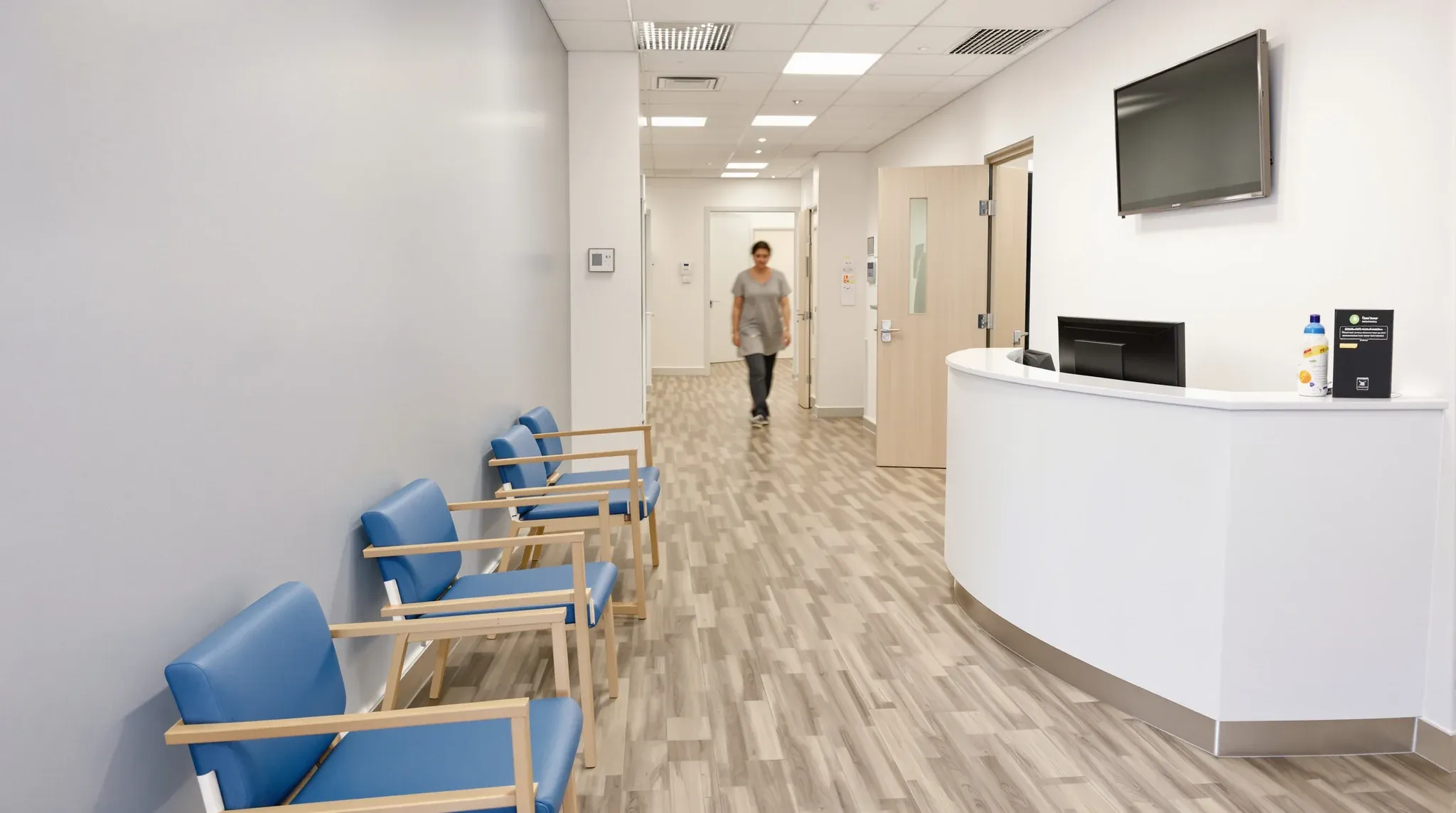
Medical and allied health practices have fitout requirements that differ fundamentally from standard commercial offices. The space needs to support clinical workflows, patient privacy, infection control, and regulatory compliance while also creating an environment that patients find calming and staff find functional. Balancing those demands within a commercial lease tenancy requires specific design thinking that general office fitout experience alone does not cover.
Whether the practice is a general medical clinic, a physiotherapy studio, a psychology practice, or a multi-disciplinary allied health centre, the layout, finishes, and services need to work together to support the particular way healthcare is delivered. A poorly planned medical fitout creates friction that accumulates quickly across dozens of patient interactions each day, affecting both the quality of care and the efficiency of the business.
What Makes Medical Fitouts Different from Standard Commercial Projects
The fundamental difference between a medical fitout and a commercial office fitout is that a medical practice receives patients rather than clients. Patients often arrive in discomfort, anxiety, or distress. They need to move through the space in a way that protects their privacy, minimises their wait time, and supports a positive experience with the practitioner. The layout needs to manage that patient journey from the moment they enter the waiting room to the moment they leave.
Medical fitouts also involve a layer of regulatory compliance that standard commercial fitouts do not encounter. Depending on the type of practice and the services offered, the fitout may need to satisfy requirements around consulting room dimensions, hand-washing facilities, ventilation, disability access, and clinical waste management. These requirements vary by state, by practice type, and by the specific services being delivered, so the fitout needs to be planned with an understanding of which requirements apply.
A complete fitout for a medical practice typically includes partitioning, flooring, ceilings, lighting, plumbing, electrical, data, joinery, signage, and building services coordination. The scope is comparable to a commercial fitout, but the specification decisions at each stage are driven by clinical function rather than corporate aesthetics.
Patient Flow and Waiting Area Design
Patient flow is the single most important layout consideration in a medical fitout. The sequence of arrival, waiting, consultation, treatment, and departure needs to be logical, efficient, and designed to minimise congestion at any single point. When patient flow is poorly planned, the practice experiences bottlenecks at reception, awkward corridor passing, and patients waiting in inappropriate locations.
The waiting area sets the tone for the patient experience. It needs to be adequately sized for the practice’s appointment volume, comfortably furnished, and positioned where patients can be called by practitioners without the call disrupting other consultations. Natural light, appropriate ventilation, and a level of acoustic separation from the consulting rooms all contribute to a waiting area that feels calm rather than clinical.
In multi-practitioner practices, the waiting area may need to accommodate patients for different services simultaneously. A physiotherapy patient arriving in active wear has different expectations from a psychology patient who may prefer discretion. Partition strategies for multi-practitioner medical suites can help separate different patient groups without requiring entirely separate waiting rooms, which is often impractical on smaller floorplates.
Consulting Room Layout and Privacy
Consulting rooms are the core functional spaces in any medical or allied health practice, and their design has a direct impact on clinical effectiveness. Each consulting room needs to accommodate the practitioner, the patient, and in many cases a companion or carer. The furniture layout needs to allow the practitioner to work with clinical equipment, access a computer screen, and maintain visual and conversational privacy within the room.
Acoustic privacy between consulting rooms is essential. Patients expect that their conversation with a practitioner will not be overheard from the corridor or the adjacent room. Achieving that expectation requires partition systems with adequate acoustic performance, proper door sealing, and attention to ceiling void treatment above the partition line. The standard commercial partition rarely delivers the level of acoustic separation that a medical consulting environment demands.
Room dimensions are another consideration. Some clinical activities require more floor space than others. A physiotherapy treatment room needs space for a treatment table, exercise equipment, and practitioner movement. A psychology consulting room needs a comfortable, non-clinical atmosphere with enough separation between seating positions to feel conversational rather than confrontational. The fitout brief needs to capture these specific dimensional requirements for each room type before the layout is finalised.
Clinical Compliance and Building Requirements
Medical fitouts attract regulatory requirements that vary depending on the type of practice, the services provided, and the jurisdiction. General practices may need to comply with the Royal Australian College of General Practitioners facility standards. Allied health practices may have their own professional body guidelines. Practices offering certain procedures may need to satisfy specific ventilation, sterilisation, or waste management requirements.
Disability access is a consistent requirement across most medical fitouts. The Disability Discrimination Act and the Building Code of Australia impose access requirements that affect door widths, corridor widths, bathroom design, and the provision of accessible consulting rooms. These requirements need to be incorporated into the layout from the earliest design stage, because retrofitting access compliance into a completed fitout is expensive and disruptive.
Plumbing is another area where medical fitouts differ from standard offices. Consulting rooms in many practices need hand-washing basins, which require hot and cold water supply, waste drainage, and positioning that meets clinical standards. The plumbing scope can significantly affect the layout because drainage routes are constrained by the building’s slab construction and the available riser locations. Planning the plumbing early allows the layout to accommodate these constraints without compromising the clinical functionality of the rooms.
Flooring, Finishes, and Infection Control Considerations
Flooring in a medical practice needs to be durable, easy to clean, and appropriate for the clinical environment. Carpet tile, which is common in commercial offices, is generally not suitable for consulting rooms or treatment areas because it is difficult to clean thoroughly and can harbour allergens. Commercial flooring options for medical environments typically include vinyl sheet, vinyl plank, or polished concrete, each with different cost, maintenance, and aesthetic characteristics.
The flooring selection also affects infection control. Practices that perform any clinical procedures, even minor ones, need floor coverings that can be cleaned and sanitised without degrading over time. The junction between the floor and the wall is an infection control detail that is often overlooked. A coved vinyl skirting that eliminates the right-angle junction between the wall and the floor is easier to clean and less likely to harbour bacteria than a standard skirting detail.
Wall finishes in consulting rooms and treatment areas should be smooth, washable, and resistant to impact damage from trolleys and equipment. Standard painted plasterboard works in most consulting environments, but areas subject to splash, spillage, or frequent cleaning may benefit from vinyl wall sheeting or a more durable paint system. The specification should match the actual cleaning regime that the practice intends to follow.
Technology and Equipment Integration
Medical and allied health practices rely on technology for patient records, billing, imaging, and communication. The fitout needs to provide adequate power and data infrastructure to every consulting room, the reception desk, and any shared workstations. Many practices now use wireless connectivity for some functions, but the core network infrastructure, patient management systems, and imaging equipment typically require wired connections for reliability and speed.
Equipment integration extends beyond IT. Physiotherapy practices may install ceiling-mounted sling tracks or wall-mounted exercise equipment. Dental and dermatology practices may require compressed air, suction, or specialised electrical supply. Even general practices may need plumbed sterilisation areas, specimen refrigerators, or vaccine storage with temperature monitoring. Each of these requirements affects the fitout scope and needs to be captured in the design brief before construction begins.
Glass partitions in medical environments require a different approach from standard commercial applications, because patient privacy expectations are higher and the visual exposure of a consulting room to corridors or waiting areas can undermine the patient’s sense of confidentiality. Where glass is used in a medical fitout, the treatment, positioning, and context need to support the clinical environment rather than simply borrowing the transparency that works well in corporate offices.
Reception, Administration, and Practice Management Zones
The reception area in a medical practice handles more transaction volume and complexity than a corporate reception. Patients check in, provide personal and clinical information, make payments, book follow-up appointments, and collect documents, all at the reception counter. The counter design needs to accommodate multiple staff positions, screen privacy from adjacent patients, and provide accessible height options for wheelchair users.
Behind the reception desk, the administration zone supports the practice’s scheduling, billing, records management, and communication functions. This area needs to be acoustically separated from the waiting room to prevent patient information from being overheard, and it needs adequate desk space, storage, and technology provisions for the administrative workload.
Practice management rooms, staff break areas, and storage for consumables and equipment round out the back-of-house requirements. These spaces are often squeezed in medical fitouts because the clinical rooms take priority, but under-sizing the back-of-house areas creates daily operational frustration that accumulates over the life of the tenancy. A well-planned fitout allocates proportionate space to both clinical and support functions, because both are necessary for the practice to run smoothly.
If you are planning a medical or allied health fitout and need a team that understands the specific requirements of clinical environments, we can help with the layout, compliance considerations, and delivery.
Call us on 1300 60 93 93