
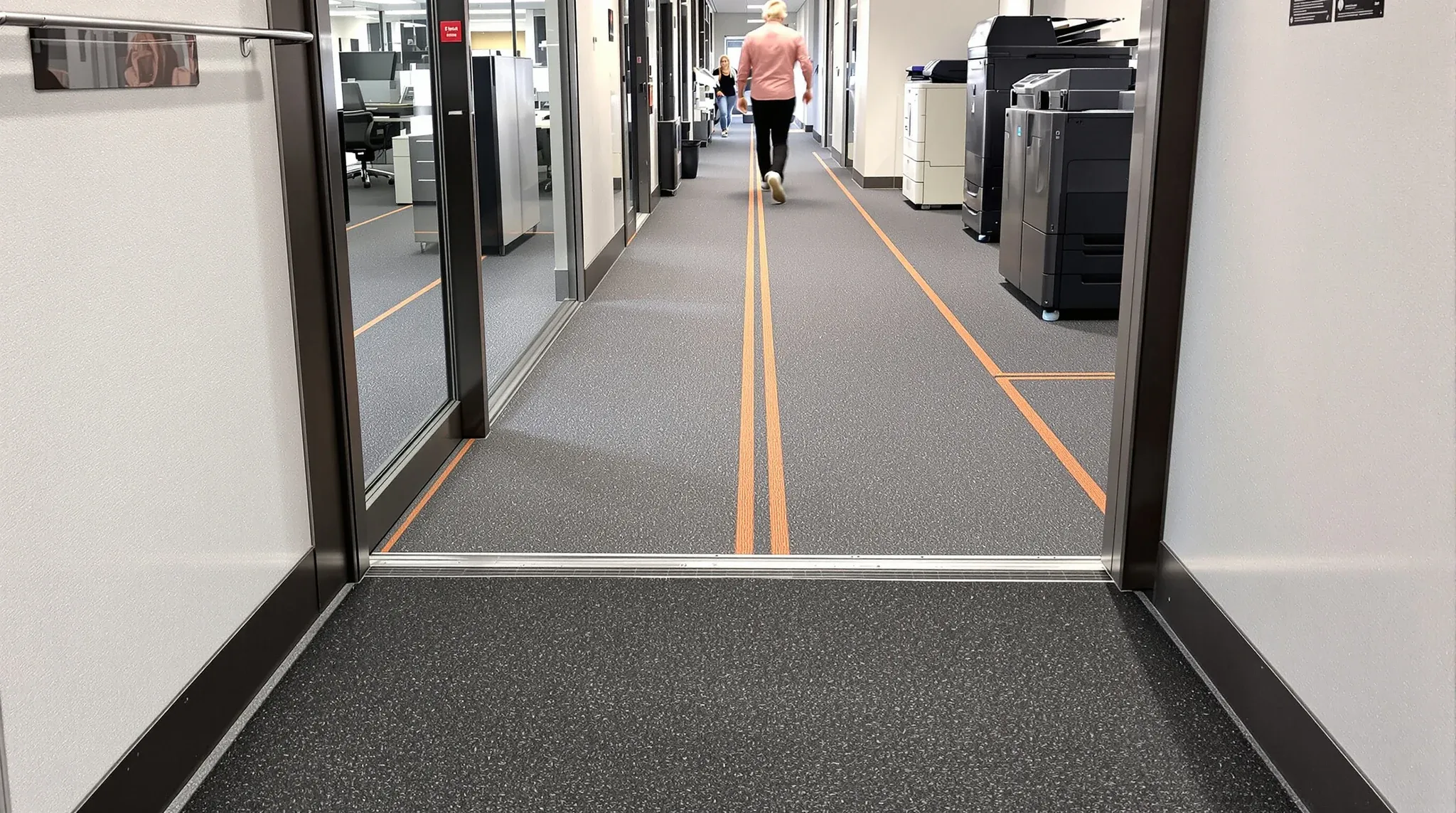
Flooring takes more physical punishment than any other surface in a commercial office. It is walked on constantly, rolled over by office chairs, scraped by furniture legs, splashed in kitchens, and ground down by grit tracked in from outside. Yet flooring is often specified with more attention to colour and price than to how the product will hold up under real office conditions over the full lease term. The result is floors that look worn within two or three years, creating a tired-looking workspace and a potential make good liability before the lease is even halfway through.
Specifying flooring for durability is not about choosing the most expensive product. It is about understanding what actually causes flooring to fail in commercial environments and selecting products and installation methods that address those specific wear mechanisms. The difference between a floor that lasts five years and one that lasts ten is often a modest increase in specification quality, applied to the right zones.
What Causes Office Flooring to Wear Out
The primary wear mechanisms in a commercial office are foot traffic, chair castor rolling, grit abrasion, moisture exposure, and furniture movement. Each mechanism attacks the flooring differently, and different products resist each mechanism to varying degrees.
Foot traffic compresses and flattens the face fibre of carpet and gradually wears the surface finish of vinyl. The wear is concentrated along consistent paths: the route from the lift lobby to the workstation area, the path to the kitchen, and the corridor between meeting rooms. These traffic lanes develop visible wear patterns long before the rest of the floor shows any deterioration.
Chair castor rolling is the most aggressive wear mechanism in workstation zones. A typical office chair castor rolls back and forth thousands of times a day, applying concentrated load to a small contact area. In carpet, this crushes the pile and breaks down the fibre structure. In vinyl, it can gouge the wear layer and create visible tracking marks. The type of castor matters: hard nylon castors cause more damage than soft rubber ones, and castor condition deteriorates over time, with worn or damaged castors creating sharp edges that accelerate flooring damage.
Grit abrasion is the silent destroyer of office flooring. Fine particles of sand, dirt, and road grime tracked in on shoes act as an abrasive between the shoe sole and the floor surface. Each footstep grinds these particles into the flooring, dulling the finish of vinyl and cutting into the fibre structure of carpet. Without effective entry matting to capture grit before it reaches the main floor area, even the most durable flooring product will degrade faster than its specification suggests.
How to Specify Carpet for Durability
Not all carpet tiles are equally durable, and the specification choices that affect longevity are not always the ones that get the most attention during selection. The three most important durability factors in carpet tiles are face fibre construction, pile weight, and backing quality.
Loop pile construction is inherently more durable than cut pile in commercial environments. The uncut yarn loops resist crushing from chair castors and foot traffic better than cut fibres, which tend to splay and flatten under load. For any zone with heavy castor traffic or high foot traffic, loop pile is the practical choice regardless of aesthetic preference.
Pile weight, measured in grams per square metre, is a rough indicator of density and durability. Heavier pile weights mean more fibre per unit area, which distributes wear across more material and maintains appearance longer. For high-traffic and castor zones, specifying a pile weight of 500 grams per square metre or above provides a meaningful durability advantage over lighter products. In low-traffic zones like storage rooms or infrequently used meeting rooms, lighter pile weights are adequate.
Solution-dyed nylon fibre resists fading and staining better than piece-dyed alternatives, which matters for longevity in two ways. Fading from UV exposure near windows makes carpet look older than it is, and staining from spills creates permanent blemishes that detract from the floor’s appearance even if the fibre itself is structurally sound. Both effects reduce the visual lifespan of the carpet, which is often more important than the structural lifespan in a commercial setting where appearance matters for staff satisfaction and client impressions.
Vinyl Durability and Wear Layer Thickness
In luxury vinyl planks and tiles, the wear layer thickness is the single most important durability specification. The wear layer is the transparent top coating that protects the printed design layer beneath from foot traffic, chair castors, and cleaning chemicals. When the wear layer wears through, the printed layer is exposed and quickly deteriorates, making the flooring look visibly damaged.
Commercial-grade vinyl products typically offer wear layers ranging from 0.3mm to 0.7mm. For general office use, a 0.5mm wear layer provides adequate durability for most zones over a five to seven-year period. For high-traffic corridors, entry areas, and zones with heavy castor use, specifying a 0.55mm or 0.7mm wear layer provides additional headroom that can extend the floor’s useful life to ten years or more with proper maintenance.
The quality of the surface treatment applied over the wear layer also affects durability. Many commercial vinyl products include a polyurethane reinforcement that increases scratch and scuff resistance. Products with this treatment require less frequent stripping and recoating to maintain their appearance, which reduces both maintenance cost and the cumulative wear from repeated chemical cleaning over the lease term.
Entry Matting and Its Impact on Floor Lifespan
Entry matting is the single most cost-effective investment a tenant can make to protect office flooring. A well-specified entry mat system captures grit, moisture, and debris from shoes before they reach the main floor surface, dramatically reducing the abrasion and soiling that cause premature wear.
The industry guideline for effective grit capture is approximately three to four metres of matting at each external entry point. This length allows several footsteps on the mat, which is necessary because grit is not released from shoe soles in a single step. Shorter mats capture some debris but allow a significant proportion to pass through to the office floor.
Recessed mat wells, where the matting sits in a shallow tray set into the floor surface, are the most effective entry matting solution because the mat sits flush with the surrounding floor, creating a smooth transition with no trip hazard. Surface-laid mats are simpler to install but can shift, curl at the edges, and create a trip risk if not properly secured. In a fitout that prioritises long-term flooring performance, recessed mat wells at key entry points are worth specifying as part of the floor design rather than adding mats as an afterthought.
Maintenance Practices That Extend Flooring Life
The maintenance regime applied to office flooring has as much influence on its lifespan as the product specification. A premium product with poor maintenance will deteriorate faster than a mid-range product that is properly maintained throughout the lease.
For carpet, the critical maintenance practices are regular vacuuming to remove embedded grit, prompt spot treatment of spills, and periodic hot-water extraction cleaning to remove deep-seated soil. The vacuuming frequency should match the traffic level: daily in high-traffic zones, every second day in moderate zones, and weekly in low-traffic areas. Delaying vacuuming allows grit to work deeper into the pile, where it acts as an abrasive that accelerates fibre degradation with every footstep.
For vinyl, regular damp mopping removes surface soil and prevents the buildup of a film that dulls the floor’s appearance. Periodic stripping and recoating of the surface finish restores the protective layer and fills minor scratches in the wear layer surface. The recoating frequency depends on traffic levels, but most commercial vinyl floors benefit from an annual strip and recoat in high-traffic zones and every two to three years in moderate zones. Businesses that take a deliberate approach to fitout maintenance and upgrades find that their flooring lasts significantly longer than businesses that leave maintenance to reactive response.
Durability Planning by Zone
The most practical approach to durable flooring specification is to allocate the durability budget where it matters most, rather than applying a uniform specification across the entire office. A high-durability product in a rarely used meeting room is wasted budget, while a budget product in the main circulation corridor will need replacing years before the lease expires.
The zones that warrant the highest durability specification are entry areas, main circulation corridors, and workstation zones with dense castor traffic. These areas receive the most concentrated wear and are the first to show visible deterioration. Specifying heavier carpet tiles or thicker-wear-layer vinyl in these zones extends the floor’s useful life where it matters most.
Secondary zones like individual offices, meeting rooms, and breakout areas receive moderate traffic and can typically be specified with mid-range products without sacrificing acceptable longevity. The lowest-specification products are adequate for storage rooms, plant rooms, and back-of-house areas where appearance is not a concern and traffic is minimal.
This zoned approach allows the overall flooring budget to be distributed more intelligently, putting the highest-performing products where they deliver the most value and using standard products where the demands are lower. It also simplifies replacement planning, because the zones most likely to need attention during the lease are identified upfront and can be monitored as part of the regular maintenance programme. Understanding which fitout elements age poorly helps tenants anticipate where flooring investment pays off and where it is unnecessary.
When Replacing Flooring Is Cheaper Than Over-Specifying
There is a point of diminishing returns in flooring durability specification. A product that lasts fifteen years is not necessarily better value than one that lasts eight years if the lease is only five years. For tenants on shorter leases, the most cost-effective approach may be to specify a mid-range product that will look acceptable for the lease term, rather than investing in a premium product that outlasts the tenancy.
The calculation depends on the lease length, the make good requirements, and whether the landlord is likely to accept the flooring as part of the base condition for the next tenant. If the landlord typically strips the fitout at lease end regardless of condition, then over-specifying flooring durability provides no benefit to the outgoing tenant. If the landlord accepts well-maintained flooring in place, then a durable product that still looks good at lease end can reduce the make good obligation.
For longer leases of seven years or more, durability specification becomes more important because the floor needs to perform acceptably for the full term. A mid-lease flooring replacement in a live, occupied office is disruptive and expensive, often more expensive than the incremental cost of specifying a more durable product at the outset. When fitout quality is not treated as an afterthought, the flooring specification reflects the full lease period rather than just the installation budget.
If you are specifying office flooring and want to ensure the products you select will hold up for the full lease term in your specific traffic and use conditions, we can advise on product selection, zone-by-zone specification, and maintenance planning.
Call us on 1300 60 93 93