
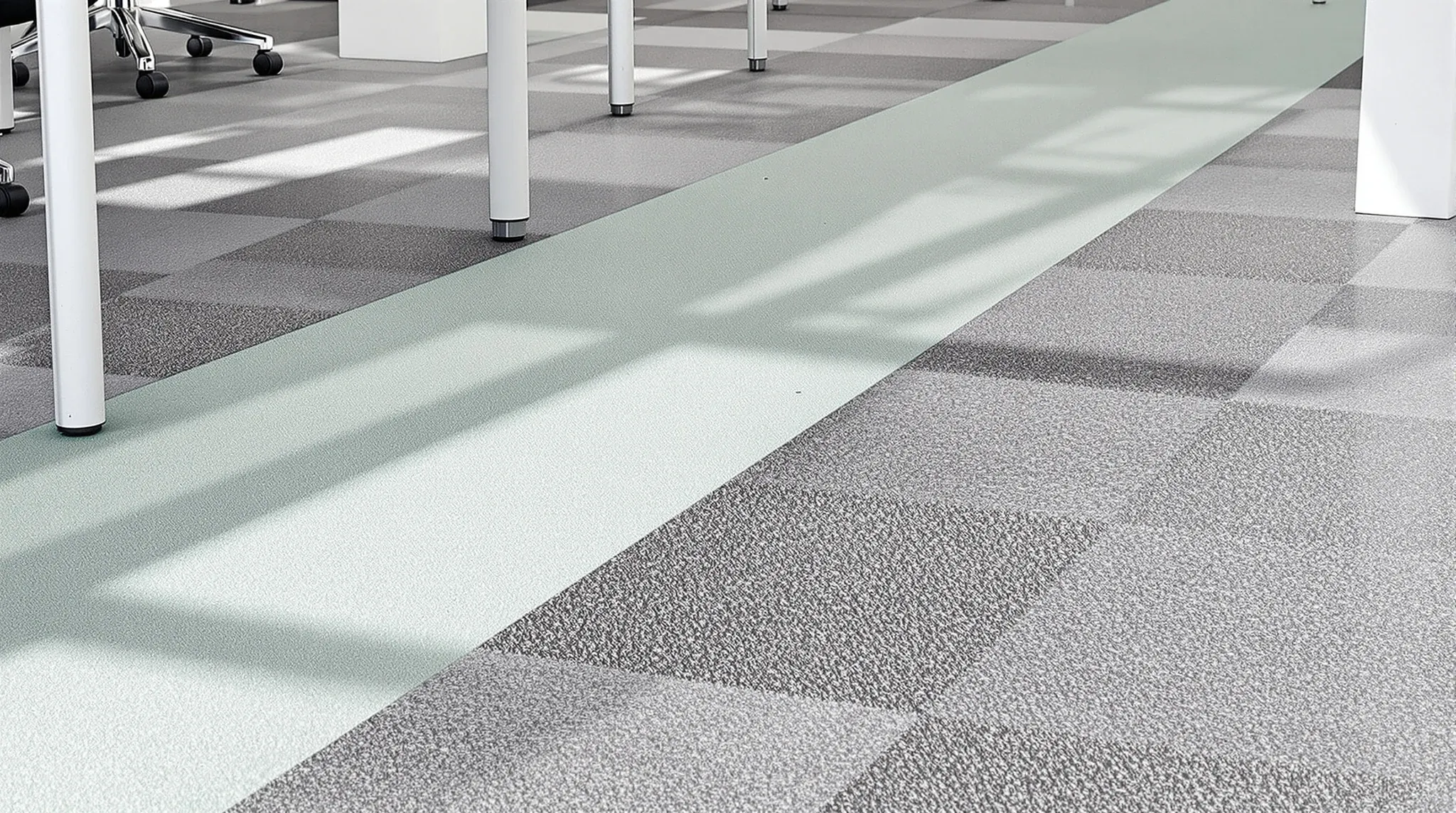
Carpet tiles are the most widely used flooring product in Australian commercial offices, and for good reason. They offer a combination of durability, acoustic performance, and practical flexibility that broadloom carpet and hard flooring alternatives struggle to match in day-to-day office use. Yet despite their prevalence, many tenants specify carpet tiles without fully understanding the differences between product types, construction methods, and backing systems, all of which affect performance, lifespan, and total cost over the lease term.
Choosing carpet tiles well requires more than picking a colour from a sample board. The fibre type, pile weight, backing system, and installation method all influence how the floor performs under real office conditions, including chair castors, foot traffic, spills, and the wear patterns that develop over years of use. This article covers what carpet tiles actually are, how the main product types differ, and what to consider when specifying them for a commercial office fitout.
What Carpet Tiles Are and How They Differ from Broadloom
Carpet tiles are modular carpet squares, typically 500mm by 500mm, designed to be laid in a grid pattern across the floor. Unlike broadloom carpet, which comes in wide rolls and is fixed edge to edge across the entire floor area, carpet tiles are individually removable and replaceable. Each tile consists of a face fibre layer bonded to a backing system that provides dimensional stability, acoustic cushioning, and adhesion to the subfloor.
This modular format is the single biggest practical advantage of carpet tiles over broadloom in a commercial setting. When a section of broadloom carpet is damaged or stained, the only options are spot repair, which is rarely invisible, or replacing a large section, which is expensive and disruptive. With carpet tiles, individual tiles can be lifted and replaced in minutes, restoring the floor to its original appearance without affecting the surrounding area.
The modular format also simplifies access to underfloor services. In offices with floor boxes or raised access flooring, carpet tiles can be lifted to reach cables, junction boxes, or air plenum chambers beneath, then replaced without cutting or patching. This matters more than most tenants realise during the life of the lease, particularly in offices where desk layouts change or data cabling needs to be modified.
Types of Carpet Tile Construction
Not all carpet tiles are built the same way, and the construction method significantly affects performance. The three most common face fibre constructions in commercial carpet tiles are loop pile, cut pile, and cut-and-loop combinations.
Loop pile tiles have uncut yarn loops on the surface. They are highly durable, resist crushing well, and tend to retain their appearance over time in high-traffic areas. Loop pile is the most common construction in commercial offices because it handles the rolling loads from office chairs better than cut pile and shows footprints and vacuum marks less visibly. Most entry-level and mid-range commercial carpet tiles use loop pile construction.
Cut pile tiles have the yarn loops cut, creating a softer, more textured surface. They feel more luxurious underfoot and are often specified for executive areas, boardrooms, and reception spaces where a premium finish is desired. However, cut pile tiles are more susceptible to crushing from chair castors and can show tracking patterns in high-traffic corridors. They typically cost more than equivalent loop pile products and may need replacement sooner in heavily used zones.
Cut-and-loop tiles combine both constructions to create patterned surfaces with visual depth. They offer a balance between the durability of loop pile and the aesthetic richness of cut pile. These tiles work well in areas where appearance matters but traffic levels are moderate, such as breakout spaces and internal meeting areas.
Backing Systems and Why They Matter
The backing system on a carpet tile is at least as important as the face fibre when it comes to long-term performance. The backing provides dimensional stability, which prevents tiles from shrinking, curling, or shifting over time. It also contributes to the acoustic properties of the floor, absorbing impact noise from foot traffic and reducing the transmission of sound through the floor structure.
Bitumen-backed tiles are the traditional standard in commercial applications. They are heavy, dimensionally stable, and relatively inexpensive. However, bitumen backing is not recyclable and can become brittle in very cold conditions, which is rarely a concern in Sydney office environments but worth noting for warehouse conversions or ground-floor tenancies with minimal climate control.
PVC-backed tiles offer better dimensional stability and are lighter than bitumen-backed products. They are commonly used in raised access floor environments because their lower weight reduces the load on the floor pedestals. Many PVC-backed tiles also include an integrated cushion layer that improves underfoot comfort and acoustic performance.
Felt-backed tiles are the premium end of the market. They provide excellent acoustic performance, are lighter and more flexible than bitumen or PVC alternatives, and many are partially or fully recyclable. Felt backing has become increasingly popular in fitouts where sustainability is a genuine consideration rather than just a checkbox, because the environmental profile of felt-backed tiles is significantly better than bitumen alternatives over the full lifecycle.
Where Carpet Tiles Work Best in Commercial Offices
Carpet tiles are suitable for most areas of a commercial office, but they perform differently depending on the zone. In open-plan workstation areas, loop pile carpet tiles in mid-range pile weights handle the combination of chair castor rolling, foot traffic, and occasional spills well. These zones typically account for the largest floor area and the highest cumulative wear, so specifying a durable loop pile product here makes practical sense.
Meeting rooms and boardrooms are often specified with a higher-grade product, either a heavier loop pile or a cut pile, to create a visual distinction from the general workspace. The traffic in these rooms is lighter and more intermittent, so the durability trade-off of using a premium product is less significant than in open-plan areas.
Corridors and circulation routes are the highest-wear zones and benefit from the most durable tile specification. Heavy loop pile with a dense backing system resists the crushing and flattening that occurs when the same path is walked hundreds of times a day. Specifying a slightly darker or more patterned tile in these areas also helps mask the soil lines that inevitably develop along primary traffic paths.
Kitchen and breakout areas are sometimes tiled with carpet tiles but require careful product selection. Spills are more frequent in these zones, so a solution-dyed fibre with stain resistance treatment is advisable. Some tenants opt for vinyl or hard flooring in kitchen areas instead, reserving carpet tiles for the dry zones. The choice depends on how the breakout area is used and whether food and drink spills are a realistic daily occurrence rather than an occasional event.
What to Consider When Specifying Carpet Tiles
Specifying carpet tiles for a commercial office fitout involves more than selecting a colour and a brand. The specification should address fibre type, pile weight, backing system, installation method, and the commercial terms around supply and future availability.
Solution-dyed nylon is the preferred fibre for commercial applications because it resists fading, staining, and wear better than other fibre types. Piece-dyed products are less expensive but more vulnerable to bleaching from cleaning chemicals and fading from UV exposure near windows. In a Sydney office with significant glazing, solution-dyed fibre is worth the incremental cost for any zone that receives direct or reflected sunlight.
Pile weight, measured in grams per square metre, affects both appearance and durability. Heavier pile weights generally indicate a denser face fibre, which resists crushing and maintains its appearance longer under traffic. Commercial specifications typically range from 400 to 700 grams per square metre, with higher weights reserved for premium areas and lower weights adequate for back-of-house and storage zones.
Future availability is an often-overlooked specification consideration. If the tenant expects to replace individual tiles over the lease term, the product needs to remain available in the same colour and construction. Choosing a product from a major manufacturer’s core range, rather than a limited or seasonal collection, reduces the risk of the replacement stock being discontinued before the lease expires.
Installation and Replacement
Carpet tile installation is faster and generates less waste than broadloom carpet installation. Tiles are laid in a grid pattern from a starting point, typically the centre of the room or a visually prominent feature like the entrance or a window wall. The most common installation method uses a tackifier adhesive applied to the subfloor, which holds the tiles in position but allows them to be lifted and repositioned without damaging either the tile or the subfloor.
The subfloor condition matters more than many tenants assume. Carpet tiles will telegraph any bumps, ridges, or debris in the subfloor surface through the face of the tile, particularly in lighter colours and finer pile constructions. The subfloor needs to be smooth, clean, dry, and level before tiles are laid. In older buildings, this often requires a levelling compound to fill cracks and even out slab undulations, which adds time and cost to the flooring programme but is essential for a good result.
Replacement is one of the key practical advantages of carpet tiles. Most commercial installations include a percentage of spare tiles at handover, typically between five and ten per cent of the total quantity, stored by the tenant for future replacements. These spares ensure colour and batch consistency when individual tiles are swapped out. Without spares, replacement tiles ordered later may not match the installed floor exactly, because dye lots can vary slightly between production runs.
Make Good and End-of-Lease Considerations
Carpet condition is one of the most common points of contention during end-of-lease make good negotiations. Landlords assess whether the floor has been maintained to a reasonable standard and whether the tenant’s fitout flooring can remain in place or needs to be removed. Carpet tiles that have been well-maintained and remain in good condition may be accepted by the incoming tenant or the landlord, which can reduce the make good scope and cost.
Tiles that are heavily worn, stained, or from an inconsistent patchwork of replacements over the lease term are more likely to require full removal as part of the make good obligation. The cost of removing carpet tiles and disposing of them is a real expense that tenants should factor into their lifecycle planning. Choosing fitout products that reduce make good costs at lease end is a practical consideration that affects the total cost of occupancy, not just the initial fitout budget.
For tenants on shorter leases, the durability specification matters even more. A carpet tile that looks worn after three years creates a make good liability that could have been avoided by specifying a more durable product at the outset. The hidden costs of a fitout often include end-of-lease flooring replacement that was never anticipated in the original budget, and selecting the right carpet tile from the start is one of the most effective ways to manage that risk.
If you are specifying carpet tiles for an office fitout and want guidance on product selection, installation, and lifecycle planning, we can help you choose the right product for your space and usage.
Call us on 1300 60 93 93