
Vinyl and carpet tiles are the two most commonly specified flooring products in Australian commercial offices, and most fitouts end up using both. They solve different problems, suit different zones, and create different environments underfoot. Yet many flooring decisions treat them as interchangeable options rather than complementary products, leading to spaces where the flooring does not quite match the way the area is used.
Understanding the practical strengths and limitations of each product, and knowing when to deploy one over the other, leads to a more functional office and a more efficient flooring budget. The choice between vinyl and carpet tiles is not about which product is better overall; it is about which product is better for each specific zone in the office.
Two Products, Different Strengths
Carpet tiles and vinyl planks share some characteristics. Both are modular, both are designed for commercial use, and both can be installed relatively quickly over a prepared subfloor. But the similarities end there. Carpet tiles are soft, acoustically absorbent, and comfortable underfoot. Vinyl is hard, moisture-resistant, and easy to clean. These fundamental differences make each product better suited to different parts of the office.
Carpet tiles are manufactured as 500mm squares with a face fibre bonded to a backing system. They are typically installed using a tackifier adhesive that holds them in place but allows individual tiles to be lifted for replacement or underfloor access. The face fibre absorbs sound, provides thermal comfort, and hides minor soil between cleaning cycles.
Vinyl planks or tiles are rigid or semi-rigid products with a printed and embossed wear layer over a core substrate. They mimic the appearance of timber, stone, or other hard surfaces while being considerably more durable and moisture-resistant than the materials they imitate. Vinyl is installed either with adhesive or as a loose-lay click-lock system, depending on the product and application.
Where Carpet Tiles Outperform Vinyl
Carpet tiles are the stronger choice in any zone where acoustic comfort, thermal warmth, and a soft surface underfoot are priorities. In open-plan workstation areas, carpet tiles absorb the airborne noise from conversations, keyboard use, and phone calls that would otherwise reflect off a hard surface and increase the overall noise level. They also reduce impact noise from foot traffic, which matters in multi-storey buildings where the tenancy below can hear every step on a hard floor.
Comfort during long periods of seated work is another practical advantage. Staff who spend eight hours a day at a desk benefit from a floor surface that does not amplify the ambient noise around them and that feels warmer underfoot during cooler months. These are subtle effects, but they accumulate over a full working day and contribute to the overall experience of the workspace.
Carpet tiles also handle office chair castor traffic well, provided the product is specified correctly. Loop pile construction with a dense backing resists the crushing and pile distortion that constant chair rolling can cause. Vinyl, by contrast, can develop surface scuffing and castor tracking in zones with heavy chair movement, particularly with rubber castor wheels that leave marks on the wear layer.
Where Vinyl Outperforms Carpet Tiles
Vinyl is the practical default in any zone where moisture, spills, or heavy cleaning are part of daily operations. Kitchen and breakout areas where food and drink are prepared and consumed need a floor that can be wiped clean quickly and that does not absorb liquids into its surface. Carpet tiles in these zones tend to develop staining around high-use areas like sinks, coffee machines, and refrigerators, regardless of how promptly spills are treated.
Bathrooms and utility areas are exclusively vinyl or hard-flooring zones in commercial fitouts. Moisture exposure in these spaces rules out carpet entirely, and vinyl provides a waterproof, cleanable surface that meets both practical and hygiene requirements. Slip resistance ratings are important in wet areas, and most commercial vinyl products are available in textured finishes that provide adequate grip when the surface is damp.
High-traffic corridors and entry zones are another area where vinyl can be a strong choice. The wear layer on commercial-grade vinyl is designed to withstand thousands of footsteps per day without showing significant wear patterns. In entry lobbies where dirt and moisture are tracked in from outside, vinyl is easier to maintain than carpet tiles, which tend to show soil lines along primary traffic paths. Vinyl also pairs well with entry matting systems, creating a transition from exterior conditions to the interior office environment.
Acoustic Differences in Practice
The acoustic difference between carpet tiles and vinyl is one of the most significant factors in the choice between them, and it is often underestimated during specification. Carpet tiles typically achieve an impact sound improvement rating that is several decibels better than vinyl, meaning they transmit less noise through the floor structure to the level below. In a multi-tenancy building, this difference can determine whether the tenancy above generates noise complaints from the occupant below.
Within the room itself, carpet tiles absorb airborne noise that would otherwise bounce off a hard vinyl surface and contribute to the overall noise level. In an open-plan office with exposed ceilings and glass partitions, a hard floor can increase the ambient noise level noticeably compared to carpet. This effect is cumulative: the more hard surfaces in a space, the louder it becomes, and the more effort is required from other acoustic treatments to compensate.
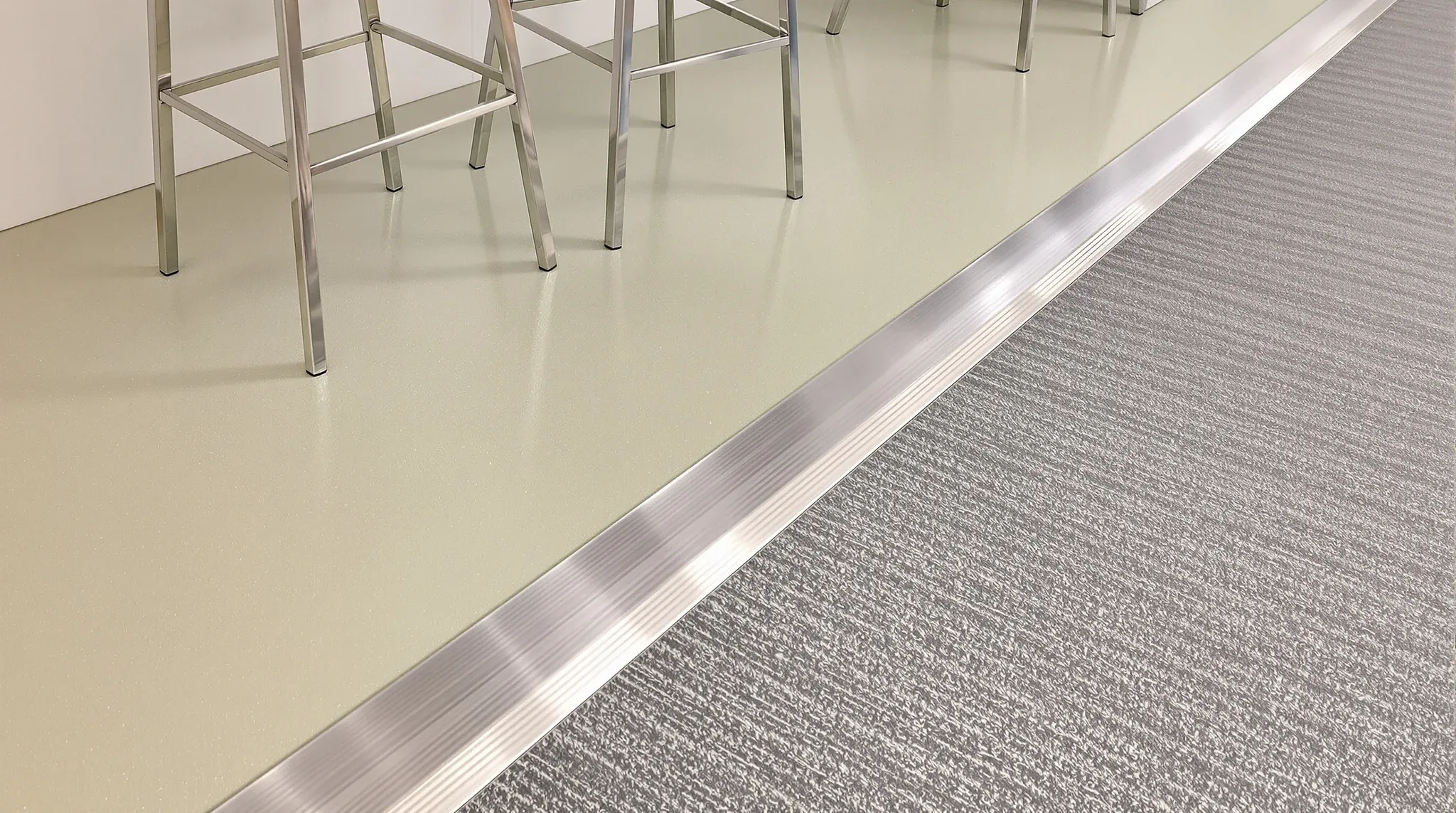
Some tenants manage this by using carpet tiles in open-plan and meeting areas while specifying vinyl in circulation, kitchen, and utility zones. This approach captures the acoustic benefit of carpet where people spend the most time while using vinyl where moisture resistance and cleanability matter more. The transition between the two products is handled with a trim strip or a natural break at a doorway or partition line, creating a clean visual and functional boundary between zones.
Using Both Products in the Same Fitout
Most well-designed commercial fitouts use both vinyl and carpet tiles, assigned to different zones based on their strengths. The typical allocation puts carpet tiles in workstation areas, meeting rooms, boardrooms, and quiet zones, and vinyl in kitchens, bathrooms, breakout areas, entry lobbies, and high-traffic corridors.
The visual transition between the two products is an important design consideration. A sudden change from carpet to vinyl in the middle of an open floor looks unplanned. Aligning transitions with partition lines, doorways, or furniture boundaries creates a natural visual break that feels intentional. Some fitouts use a contrasting vinyl or carpet tile strip at the transition line to make the change a deliberate design feature rather than an awkward junction.
Colour and tone coordination between the two products matters more than many tenants realise. A warm grey carpet tile next to a cool grey vinyl plank can look mismatched, even though both products are technically grey. Viewing the samples together under the actual office lighting conditions, rather than under showroom lights, helps ensure the two products complement each other across the floor plan.
Height difference between products is a practical installation consideration. Carpet tiles and vinyl planks have different thicknesses, and where they meet, the subfloor may need to be adjusted to create a level transition. If the two products have significantly different buildups, a ramped transition strip is required to prevent a trip hazard. Specifying products with similar thicknesses simplifies installation and creates a smoother junction.
Cost Comparison Over the Lease
On initial installed cost, carpet tiles and commercial vinyl are broadly comparable in mid-range specifications. Vinyl can be slightly more expensive per square metre in premium ranges, particularly for products with thick wear layers and realistic timber or stone embossing. Carpet tiles in entry-level and mid-range specifications tend to be marginally less expensive, though premium cut-pile or patterned tiles can match or exceed vinyl pricing.
The lifecycle cost picture is different. Carpet tiles offer lower replacement costs because individual damaged tiles can be swapped from spare stock without affecting the surrounding floor. Vinyl repairs are more complex, as a damaged plank typically requires removing and replacing several planks in the row, which may involve colour matching from a different production batch. Over a five or ten-year lease, the repair and replacement cost for carpet tiles in a typical office is usually lower than for vinyl.
Maintenance costs favour vinyl in zones where spills and moisture are common, because cleaning is simpler and faster. In dry zones, carpet tiles and vinyl have comparable ongoing maintenance costs, with carpet requiring regular vacuuming and periodic deep cleaning, and vinyl requiring regular mopping and periodic stripping and recoating of the surface finish. Understanding what the full fitout includes from the start helps tenants budget for these ongoing flooring costs rather than being surprised by them during the lease.
How to Decide Between Them
The decision framework is straightforward once the zone-by-zone requirements are mapped. For each area of the office, ask whether moisture resistance or acoustic absorption is the higher priority. If moisture resistance wins, specify vinyl. If acoustic comfort wins, specify carpet tiles. If neither has a clear advantage, consider the maintenance regime the tenant will realistically commit to and choose accordingly.
For tenants who want a consistent visual appearance across the entire office, some manufacturers offer carpet tiles and vinyl products in coordinated colour ranges specifically designed to work together in a single fitout. These collections take the guesswork out of colour matching and ensure that transitions between zones look cohesive.
The flooring decision should also account for the make good position at lease end. Carpet tiles installed with tackifier adhesive are easier and cheaper to remove than vinyl installed with permanent adhesive. For tenants on shorter leases, this removal cost difference can influence the product choice, particularly in areas where the performance of both products would be adequate. Tenants who refurbish existing offices also benefit from the easy-lift properties of carpet tiles when partial replacements are needed during the lease.
If you are selecting flooring for an office fitout and want to match the right product to each zone, we can help you plan the flooring layout and select products that perform well together across the full floor plan.
Call us on 1300 60 93 93