
Every office fitout starts looking fresh, but some elements begin showing their age within a few years while others hold up for the life of the lease. Understanding which parts of a fitout deteriorate fastest, and why, helps tenants make better specification decisions during the design phase and plan for the maintenance and replacements that the fitout will inevitably need over time. The elements that age poorly are not always the ones that receive the least investment; sometimes it is the most visible and heavily used components that wear out first, regardless of what was spent on them initially.
This is not about quality defects or poor workmanship. Even a well-built fitout has components with different lifespans, and the ones that interact most with daily use, environmental conditions, and changing technology are the ones that age the fastest.
Carpet in High-Traffic Zones
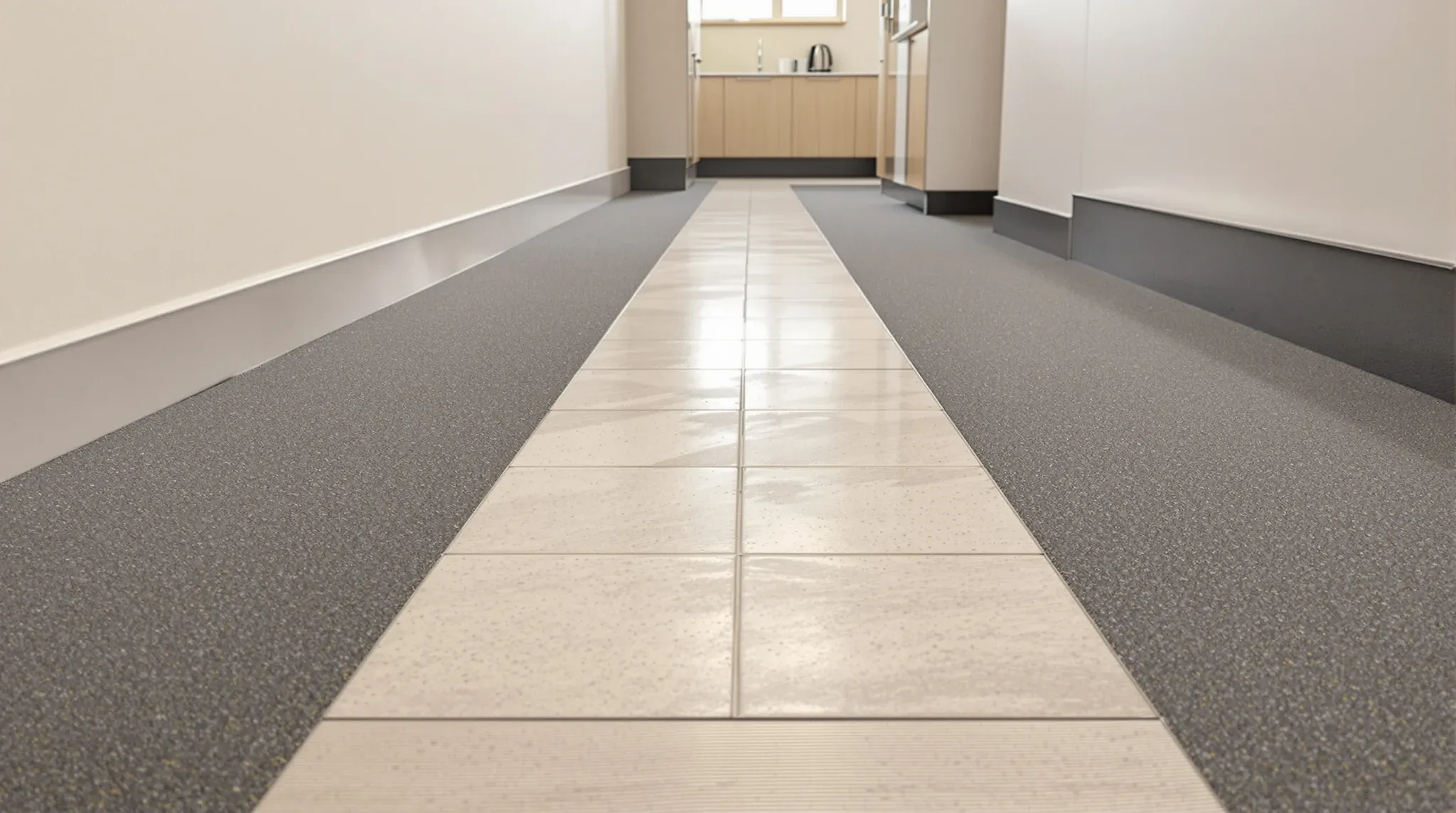
Flooring is the fitout element that ages most visibly in the majority of offices, and carpet in particular shows its age in the zones where foot traffic and chair castor rolling are most concentrated. Corridors, the path from the lift lobby to the workstation area, the area around the kitchen, and the approach to meeting rooms all develop traffic lanes where the carpet is noticeably more worn, flattened, and soiled than the surrounding floor.
The rate of deterioration depends on the product specification, the traffic intensity, and the maintenance regime. A heavy loop pile carpet tile with solution-dyed nylon and regular vacuuming will hold up for years. A lighter cut pile with piece-dyed fibre and infrequent cleaning will look tired within eighteen months in a busy office. The specification choice made during the fitout determines whether the carpet is a durable workhorse or an early replacement candidate.
The areas most likely to need carpet replacement during the lease are the entry zone, the main circulation corridor, and the area immediately around kitchen and breakout facilities. Tenants who specify spare tiles at handover and maintain a regular cleaning schedule can manage these replacements incrementally. Tenants who do not plan for carpet ageing often face a full floor replacement three to four years before the lease expires, at a cost that was never budgeted.
Painted Surfaces and Wall Finishes
Paint is one of the most cost-effective finishes in any fitout, but it is also one of the most vulnerable to visible ageing. Scuff marks from furniture, hand marks around door handles and light switches, fading from UV exposure near windows, and general dulling from dust and air-handling deposits all accumulate over time and gradually shift the painted surfaces from fresh to tired.
The rate of ageing varies by location. Corridors and high-traffic areas show scuffs and marks within the first year. Areas near kitchen facilities accumulate grease and moisture stains. Walls adjacent to workstations develop marks from chair backs and shoulder contact. And any wall painted in a light, flat finish shows marks more readily than darker colours or higher-sheen finishes.
Touch-up painting can extend the life of painted surfaces, but only if the original paint colour is recorded and available. Many tenants cannot touch up effectively because the paint supplier or colour code was not documented at handover. Even with the correct paint, touch-ups on walls that have aged and faded can create visible patches where the new paint does not match the surrounding surface. Specifying a washable paint finish in high-traffic areas, documenting the colour codes, and including a mid-lease repaint in the maintenance budget addresses the ageing of painted surfaces before it becomes a visible problem. Planned maintenance and upgrades keep the fitout looking professional throughout the lease rather than allowing gradual deterioration to undermine the workspace.
Kitchen Appliances and Fixtures
Kitchen equipment is subject to heavy daily use by multiple people with varying levels of care, and it ages accordingly. Dishwashers, microwaves, and refrigerators in a commercial office kitchen typically last three to five years before they need replacement, compared to seven to ten years in a residential setting. The higher usage volume, the lack of individual ownership that comes with shared equipment, and the concentrated loading patterns during lunch periods all accelerate the ageing process.
Kitchen benchtops and cabinetry also age faster than equivalent elements in other parts of the fitout because they are exposed to moisture, heat, cleaning chemicals, and constant physical contact. Laminate benchtops develop swelling and edge damage from moisture ingress, particularly around sink cutouts. Cabinet hinges and drawer runners loosen and wear from the volume of daily openings. Tap fittings develop leaks, and sink bowls develop staining that becomes progressively harder to remove.
Specifying commercial-grade appliances and fixtures for the office kitchen costs more upfront but typically delivers better value over the lease because the equipment is designed for the usage intensity it will actually experience. Domestic-grade appliances in a busy office kitchen are being asked to perform beyond their design capacity, and they fail accordingly.
Technology and AV Equipment
Technology ages in a way that other fitout elements do not: it becomes obsolete even when it is still functional. A video conferencing system that was state-of-the-art at the time of the fitout may be incompatible with current platforms within three to four years. A meeting room display that uses a connector standard that has since been superseded requires adapters that are clumsy and unreliable. A wireless access point that supported twenty concurrent devices adequately at handover may struggle with the density of connections that modern work patterns demand.
The pace of technology evolution means that AV equipment, network infrastructure, and control systems should be specified with replacement in mind. Running conduit and cabling infrastructure that supports future upgrades is more important than the specific equipment installed on day one, because the infrastructure has a longer life than the devices it connects. A meeting room that has been wired with adequate conduit, power, and data connections can have its display, camera, and conferencing system upgraded in a single afternoon. A meeting room where the cabling was installed to suit only the original equipment may require wall and ceiling disruption to accommodate a technology refresh.
Door Hardware and Ironmongery
Door handles, hinges, and closers are some of the most heavily used mechanical components in a fitout, and they show their age through loosening, misalignment, and visible wear. A door handle that is operated hundreds of times a day develops play in the spindle, looseness in the rose plate, and visible surface wear on the grip. Hinges develop squeaks and sag, causing the door to rub on the frame or the floor. Door closers lose their adjustment, causing doors to slam or fail to close completely.
The quality of the original hardware specification determines how quickly these issues develop. Commercial-grade hardware from reputable manufacturers is designed for the operating volumes of a busy office and will typically perform reliably for the full lease term with occasional lubrication and adjustment. Budget hardware uses lighter materials and less precise mechanisms that wear out faster and are more difficult to repair or adjust. For any door that is used more than fifty times a day, specifying commercial-grade hardware is a practical decision that avoids the frustration and cost of premature replacement.
Glass partition doors and sliding systems are particularly sensitive to hardware quality. The weight of a full-height glass door puts significant stress on the pivot or hinge mechanism, and any wear in the hardware creates visible misalignment that is more obvious in glass than in a standard timber door. Maintaining frameless glass systems includes regular inspection and adjustment of the hardware to prevent minor wear from developing into visible problems.
Ceiling Tiles and Grid Systems
Suspended ceiling tiles age through discolouration, sagging, and damage from moisture or access. The tiles absorb airborne contaminants from the air handling system, cooking odours from the kitchen, and humidity from bathrooms and kitchens, all of which gradually change the colour of the tile surface. Over a five to ten-year lease, the difference between the original colour and the aged colour can be significant, particularly in tiles near air vents, kitchen areas, and bathrooms.
Sagging occurs when tiles absorb moisture or lose their structural rigidity over time. Tiles near kitchen areas and bathrooms are most susceptible because the humidity in these zones is higher than in general workspace areas. Sagging tiles look neglected and can fall if the condition is not addressed, which is both a safety concern and a reputational issue in a client-facing office.
Ceiling tile replacement is relatively straightforward in a suspended tile system because individual tiles can be lifted out and replaced without affecting the surrounding grid. Keeping spare tiles from the original installation ensures colour consistency, because tiles from a different production batch may not match the existing ceiling exactly.
Soft Furnishings and Upholstery
Upholstered furniture in breakout areas, reception spaces, and meeting rooms ages through fabric wear, staining, foam compression, and general deterioration that makes the furniture look tired even when the structure remains sound. The rate of ageing depends on the fabric quality, the foam density, the usage intensity, and the cleaning regime.
Breakout furniture typically ages fastest because it is used informally and often less carefully than meeting room or workstation furniture. Food and drink spills are more common, people sit on arms and lean against backs in ways that stress the upholstery, and the furniture may be moved or reconfigured frequently. Specifying commercial-grade upholstery fabrics with a Martindale abrasion rating of at least 50,000 rubs provides durability for these high-use settings.
Reception seating ages more slowly in terms of physical wear because the usage is lighter, but it ages aesthetically because it is the most visible furniture in the office and any deterioration is noticed immediately. A reception sofa that develops a visible sag or a stain becomes a negative first impression for every visitor. Specifying dark, patterned, or heavily textured fabrics in reception seating helps mask minor soiling and wear, extending the time before the furniture needs reupholstering or replacement. A well-planned fitout accounts for the lifespan of soft furnishings in the maintenance budget rather than treating them as permanent installations.
If you want to understand which elements of your fitout need the most durable specification and where to budget for maintenance and replacement over the lease, we can advise on product selection and lifecycle planning.
Call us on 1300 60 93 93