
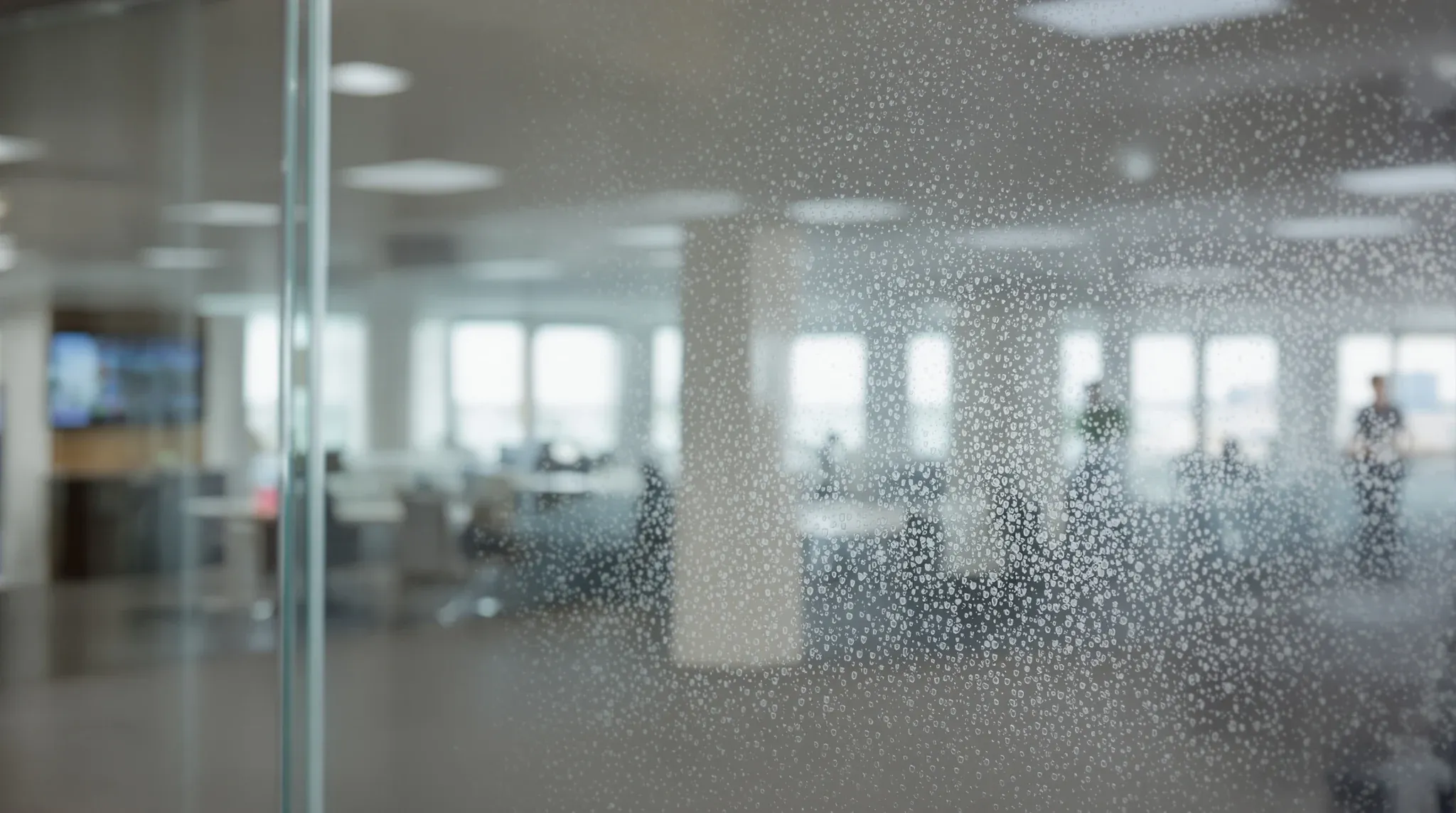
Frameless glass partitions look exceptional on day one. The clean lines, uninterrupted transparency, and sleek hardware create the kind of visual impression that photographs well and impresses clients walking through the door. What is less frequently discussed is what happens on day thirty, day three hundred, and day one thousand, when the daily reality of an occupied office starts to test the surface, the seals, and the patience of whoever is responsible for keeping the glass looking presentable.
The maintenance demands of frameless glass are not extreme, but they are consistent and unforgiving. Unlike framed glass partitions where the aluminium channels absorb visual imperfections and protect vulnerable edges, frameless systems put every surface, every edge, and every hardware connection on full display. That transparency extends to every fingerprint, water mark, and cleaning streak that the glass collects during normal office use.
What Frameless Glass Demands Day to Day
The daily maintenance reality of frameless glass partitions is defined by visibility. Because there are no frames to break up the glass surface, every mark on the panel is visible from multiple angles and under changing light conditions throughout the day. A smudge that is barely noticeable under artificial office lighting becomes clearly visible when direct sunlight hits the glass in the afternoon, and a cleaning streak that looked acceptable from one direction may be obvious from another.
This means that the cleaning standard for frameless glass is inherently higher than for framed systems. Framed partitions can tolerate a degree of imperfection because the aluminium mullions provide visual interruptions that draw the eye away from minor marks on the glass. Frameless panels offer no such distraction. The glass is the entire visual field, and anything on its surface competes with the view through it.
In offices with high foot traffic, particularly around meeting rooms, reception areas, and thoroughfares where people routinely touch or lean against the glass, the accumulation of marks between cleaning cycles is rapid enough to affect the overall appearance of the space within hours of the last clean. This is not a design flaw but a characteristic of the material, and any business choosing frameless glass needs to account for it in their cleaning schedule and budget.
Fingerprints, Smudges, and the Constant Battle
Fingerprints are the single most persistent maintenance issue on frameless glass partitions. The natural oils on human skin leave visible marks on glass that are difficult to remove completely without proper technique and the right cleaning solution. Standard office cleaning products that work well on desks and screens can leave residue on glass that creates a haze or streaking pattern, which replaces one visible problem with another.
The areas most affected are predictable. Door handles and the glass immediately surrounding them accumulate fingerprints with every use. Glass panels adjacent to desks or workstations collect marks where people lean or rest their hands while standing to talk. Meeting room glass at seated height shows marks from people pushing back from the table or touching the glass absentmindedly during discussions.
Anti-fingerprint coatings are available for commercial glass and can reduce the visibility of marks between cleans. These coatings create a hydrophobic surface that causes oils to bead rather than spread, making individual fingerprints less conspicuous and easier to remove. However, the coatings are not permanent. They typically degrade over 12 to 24 months of normal use and cleaning, and they need to be reapplied periodically to maintain their effectiveness. The reapplication process is straightforward but adds a recurring cost that is rarely factored into the original partition specification.
Edge Vulnerability and Chip Management
Frameless glass panels have exposed edges that are vulnerable to impact damage in ways that framed panels are not. In a framed system, the aluminium channel wraps around the edge of the glass, protecting it from contact with furniture, trolleys, vacuum cleaners, and the general bumps that occur in a busy office. In a frameless system, the edge is exposed, polished, and visible, making it both a design feature and a liability.
Edge chips on toughened glass are irreparable. Once a chip occurs, the glass cannot be ground or polished to remove it without compromising the toughening treatment. Small chips on non-critical edges may be cosmetically acceptable and structurally insignificant, but larger chips or chips on edges that are at eye level can be visually distracting and may require panel replacement to maintain the aesthetic standard of the installation.
The risk of edge damage increases in offices with hard flooring surfaces where furniture legs and wheeled equipment make direct contact with the base of the glass. Carpet tile provides a degree of cushioning that absorbs minor impacts, but polished concrete, vinyl, and timber flooring offer no such protection. In those environments, protective buffers or edge guards at the base of the glass can reduce the risk, though they add a visible element that partially compromises the frameless aesthetic.
Seal Maintenance and Hardware Servicing
Frameless glass partition systems rely on silicone seals, gaskets, and precision hardware that all require periodic attention. The silicone seals between glass panels and between the glass and the floor or ceiling channel are load-bearing components that degrade over time. Exposure to cleaning chemicals, UV light from adjacent windows, and the constant minor movement of the building structure all contribute to seal deterioration.
When silicone seals begin to fail, the first sign is usually a change in acoustic performance. Sound that was previously contained within a glass-enclosed room begins to leak through the gaps, and occupants notice that conversations feel less private. Resealing the affected joints restores the performance, but it needs to be done by someone who understands the specific sealant type and application method for the partition system. General-purpose silicone from a hardware store is not a suitable replacement for structural glazing sealant, and using the wrong product can create adhesion problems and further deterioration.
Door hardware on frameless glass partitions is another maintenance area that receives insufficient attention. Floor springs, hydraulic closers, and pivot mechanisms in frameless glass doors carry significantly more weight than their equivalents in framed systems because the glass door panel itself is heavier. These mechanisms need periodic adjustment and servicing to maintain smooth operation, and neglected hardware eventually leads to doors that do not close properly, that drag on the floor channel, or that slam rather than closing softly.
How Office Behaviour Affects Glass Condition
The way people use an office has a direct impact on how much maintenance the glass requires. Open plan offices where glass partitions line circulation routes experience more incidental contact than offices where the glass is set back from main walkways. Offices with a culture of standing meetings, casual conversations at desk edges, and frequent room turnover accumulate marks faster than offices where most work happens at individual desks with less movement throughout the day.
Tenant fit-out choices also influence maintenance demands. Offices that use frameless glass adjacent to kitchenettes or break areas face additional challenges from food splatter, steam condensation, and the oils that transfer from hands after eating. Positioning glass away from food preparation and consumption zones reduces this load, but in smaller offices where space is tight, that separation is not always possible.
Well-designed glass partition layouts account for these behavioural patterns during the planning stage. Placing frameless glass in areas where it will receive the least incidental contact and using framed or treated glass in high-traffic zones is a pragmatic approach that preserves the visual impact of frameless glass where it matters most while reducing the maintenance burden in areas where it would be heaviest.
Cleaning Regimes That Actually Work
Effective cleaning of frameless glass partitions requires a consistent approach that goes beyond the general office clean. The standard cleaning contract for most commercial offices includes glass as part of the weekly or fortnightly schedule, but that frequency is rarely sufficient for frameless partitions in busy areas. High-contact glass surfaces typically need cleaning every two to three days to maintain an acceptable appearance, and reception area glass may need daily attention.
The cleaning method matters as much as the frequency. Spray-and-wipe techniques using standard glass cleaner tend to push oils around the surface rather than removing them, creating streaks that are visible under certain lighting conditions. Professional glass cleaning using a squeegee, purified water, and a microfibre applicator produces a significantly better result because the squeegee removes the water and dissolved oils in a single pass rather than redistributing them.
Internal glass partitions also need different treatment from external windows. External window cleaning typically uses detergent solutions that cut through environmental grime, but internal glass accumulates different contaminants, primarily skin oils, cosmetic residue, and cleaning product buildup. A solution designed for internal glass, used with the right applicator and technique, produces a better result than repurposing external window cleaning methods.
Long-Term Maintenance Costs Tenants Underestimate
The ongoing maintenance cost of frameless glass partitions is consistently underestimated at the specification stage. Most tenants budget for the installation and the standard office cleaning contract, but the additional cleaning frequency, the periodic seal replacement, the hardware servicing, and the occasional panel replacement due to edge damage all add costs that accumulate over the lease term.
On a typical five-year lease, the additional cleaning cost for frameless glass over framed glass can amount to several thousand dollars, depending on the extent of the glazing and the frequency of cleaning. Seal replacement, which is typically needed once during a five-year period, adds further cost. Hardware servicing for frameless glass doors should be scheduled annually, and the cost of a floor spring replacement, which is the most common hardware failure, can be $800 to $1,500 per door including labour.
Understanding which fitout elements age poorly helps tenants plan their maintenance budgets more realistically. Frameless glass partitions do not age poorly in a structural sense, but their visual condition is highly sensitive to maintenance quality, and the gap between well-maintained and poorly maintained frameless glass is more visible than with almost any other fitout element.
At the end of the lease, the condition of glass partitions affects the make good process and any negotiations around restoration. Damaged edges, failed seals, and deteriorated hardware all count against the tenant’s condition obligations, and the cost of rectification at lease end is typically higher than the cost of ongoing maintenance would have been during the tenancy.
If you are considering frameless glass partitions and want a realistic picture of the ongoing maintenance demands for your specific office layout and usage patterns, we can help you plan the specification and the maintenance approach together.
Call us on 1300 60 93 93