
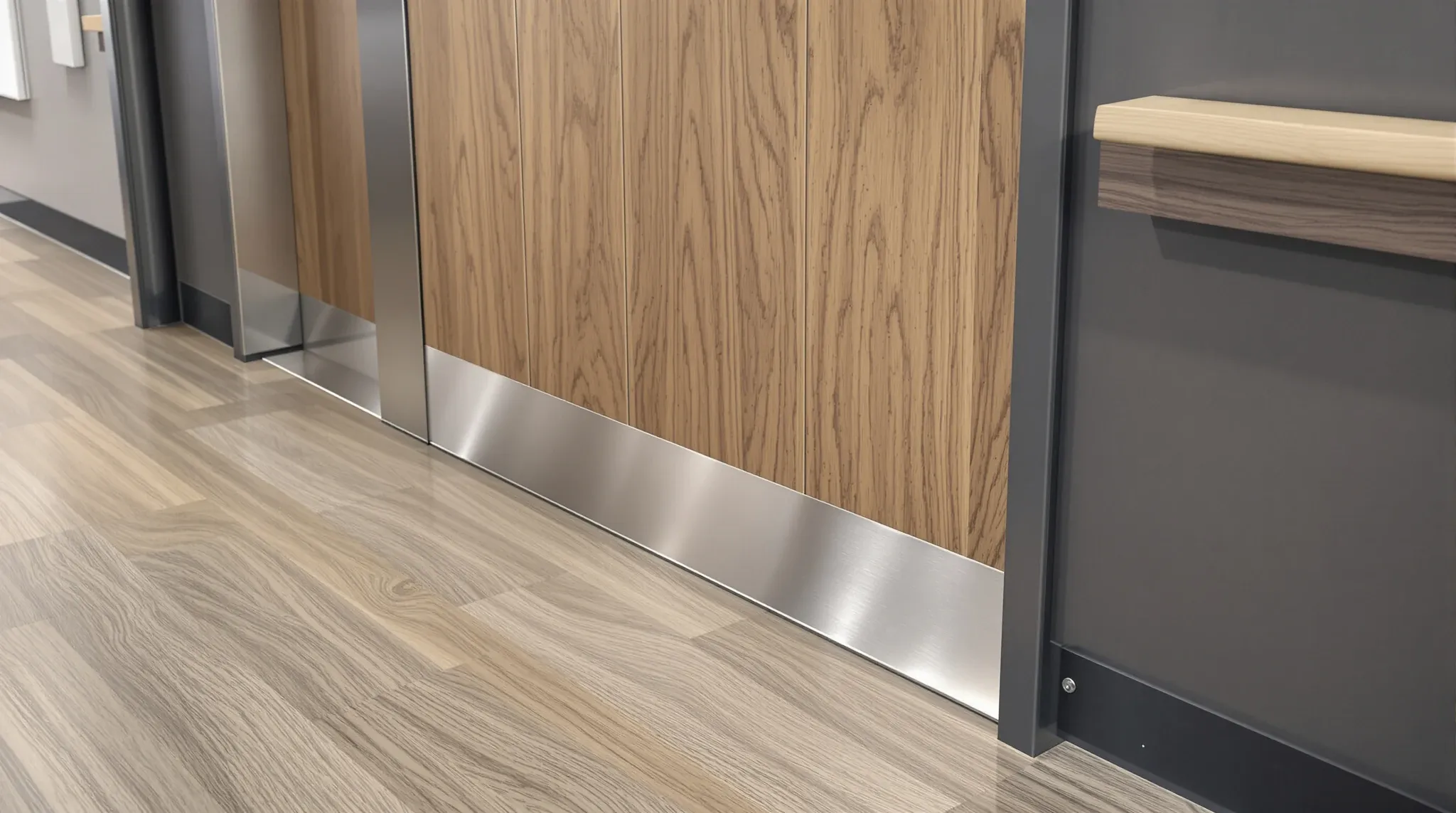
Some offices need constant attention. Walls get scuffed and repainted. Door hardware loosens and gets tightened. Carpet tiles stain and get replaced. Ceiling tiles discolour and get swapped. The business absorbs these costs incrementally, often without tracking the total, and by the third or fourth year of the lease the cumulative remedial spend represents a significant fraction of the original fitout cost. Other offices, built at a similar price point for a similar business, look and function essentially the same on year five as they did on year one. The difference is not budget. It is the material and construction choices made during the fitout, which determine whether the office degrades under daily use or maintains its quality without ongoing intervention.
This article covers the fitout decisions that separate offices requiring annual repair from offices that hold up over the full lease term, and where the most common durability failures occur.
Why Some Offices Need Constant Attention and Others Do Not
The offices that need constant maintenance are almost always the ones where the finish quality or material selection was mismatched to the use the space actually receives. A thin paint finish in a corridor that carries all the foot traffic on the floor will show marks within months. A lightweight door closer on a meeting room that gets used fifteen times a day will loosen within a year. A standard carpet tile in a kitchen area will stain within weeks. None of these are manufacturing defects. They are specification errors: the right product in the wrong location, or the wrong product chosen to save a small amount on the fitout budget.
The offices that hold up well are the ones where the specification was matched to the actual use of each area rather than applied uniformly across the floor. Higher-durability paint in corridors and high-touch areas. Commercial-grade closers on high-use doors. Hard-wearing floor coverings in areas exposed to food and drink. These are not expensive upgrades when they are included in the original fitout. They only become expensive when they are omitted and the business pays for the consequences in annual repairs.
Material Selection That Accounts for Daily Wear
The materials that age best in office environments are the ones designed for commercial use rather than residential or light-commercial applications. This distinction matters most for paint, floor coverings, door hardware, and ceiling tiles, because these are the elements that receive the most direct contact from the people using the space every day.
Commercial-grade paint in a washable or semi-gloss finish resists marking and can be wiped clean, while residential-grade flat paint absorbs marks permanently and requires repainting. Commercial carpet tiles with solution-dyed fibres resist staining and maintain their appearance under heavy foot traffic, while cheaper tiles with topical dye fade and wear faster. Commercial door hardware rated for high cycle counts maintains its function for years, while residential-grade hardware wears out under the repetitive use that an office door receives daily. Understanding which parts of a fitout age poorly allows the budget to be concentrated where durability matters most rather than spread uniformly across elements with different wear profiles.
Partition Systems That Maintain Performance Over Time
Partition performance is not just about the acoustic rating on the day of installation. It is about whether that rating is still being achieved three, five, or seven years later when the seals have been compressed thousands of times by door operation, the hardware has been adjusted by accumulated use, and the junctions between the partition and the ceiling or floor have been stressed by building movement and thermal cycling.
Plasterboard partitions maintain their acoustic performance well over time because the performance depends on the mass and construction of the wall rather than on seals or hardware. A plasterboard wall that was rated at a certain level on the day it was built will still achieve that level years later unless it is physically damaged. Glass partition performance is more dependent on the condition of the seals, the door hardware, and the gaskets at the head and base, all of which can degrade over time if the initial specification was marginal or the hardware quality was low.
Hardware, Doors, and the Components That Wear First
The components that fail first in an office fitout are almost always the moving parts: door closers, pivot hardware, latch mechanisms, and the seals around door frames. These components are operated hundreds of times per week in a busy office, and their lifespan depends directly on their specification. A commercial door closer rated for 500,000 cycles will comfortably last the full lease term on most meeting room doors. A closer rated for 100,000 cycles may need replacement within two to three years, and the replacement cost including labour typically exceeds the cost difference between the two closers at installation.
Maintenance realities of glass systems are worth understanding during the fitout because frameless glass systems in particular have hardware that is more sensitive to wear and more expensive to replace than the hardware in framed systems. The aesthetic choice between framed and frameless glass should include a realistic assessment of the maintenance each system requires over the lease term, not just the appearance on day one.
Finish Quality and the Difference Between Day-One and Year-Five Appearance
Every office looks good on the day the fitout is completed. The walls are clean, the carpet is new, the joinery is unmarked, and the glass is spotless. The question is how the office will look after five years of daily use, and this question is answered by the quality of the finishes rather than by the quality of the design. A well-designed office with poor finishes will look tired within two years. A modestly designed office with durable finishes will still look professional after five.
The finishes that make the most difference to long-term appearance are wall paint, floor covering, and joinery surfaces. A paint system with a quality primer and two coats of commercial-grade washable paint maintains its appearance far longer than a single coat of residential paint. Joinery with a factory-applied finish, either laminate or two-pack polyurethane, resists marking and moisture damage better than site-applied paint on MDF, which is softer, more porous, and more prone to edge damage at the points where people handle doors and drawers daily. Kitchenette and breakout area joinery is particularly vulnerable because it is exposed to moisture, heat, and frequent cleaning, and underspecified surfaces in these areas show deterioration faster than anywhere else in the office. Investing in quality surfaces for these high-exposure elements prevents the cycle of touch-up and replacement that consumes maintenance budgets over the lease term.
Acoustic Performance That Does Not Degrade With Use
Acoustic performance is one of the fitout qualities that tenants notice immediately when it fails and rarely notice when it works. A meeting room that was quiet when the office opened but becomes noticeably less private after two years suggests that something has changed, and the most common culprits are door seal degradation, hardware wear that prevents the door from closing fully, and ceiling tile displacement from building movement or maintenance access that was not properly restored.
Preventing acoustic degradation means specifying components that maintain their function under years of use: compression seals that recover reliably after each door closure, door hardware that keeps the door aligned and fully latched over thousands of cycles, and ceiling tile systems that can be lifted and replaced without affecting the acoustic seal at adjacent partitions. Poor plasterboard installation can also create acoustic problems that emerge over time as settlement cracks develop at junctions, gaps open between the partition head and the ceiling, or services penetrations that were not properly sealed during construction allow sound to flank the wall.
Investing Once vs Repairing Repeatedly
The financial case for durable fitout choices is straightforward. A fitout that costs 10 percent more at installation because it uses commercial-grade materials, better hardware, and more durable finishes saves far more than 10 percent over the lease term by eliminating the annual repair cycle that cheaper fitouts generate. The additional cost at installation is known, budgeted, and paid once. The repair costs that a cheaper fitout generates are unknown, unbudgeted, and recurring, and they accumulate steadily over the full lease term in a way that is easy to ignore year by year but genuinely significant when totalled.
The offices that their occupants enjoy most after five years are the ones where the fitout was built to last the full lease without needing the kind of ongoing attention that distracts the business from its actual work. This is not about spending more overall. It is about spending deliberately on the right things in the right places, and understanding which specific elements of the fitout will determine how the office looks and functions over time rather than just on the day the doors open.
We deliver complete office fitouts built for long-term performance. If you want an office that still works well in year five, we can help.
📞 Call us on 1300 60 93 93