
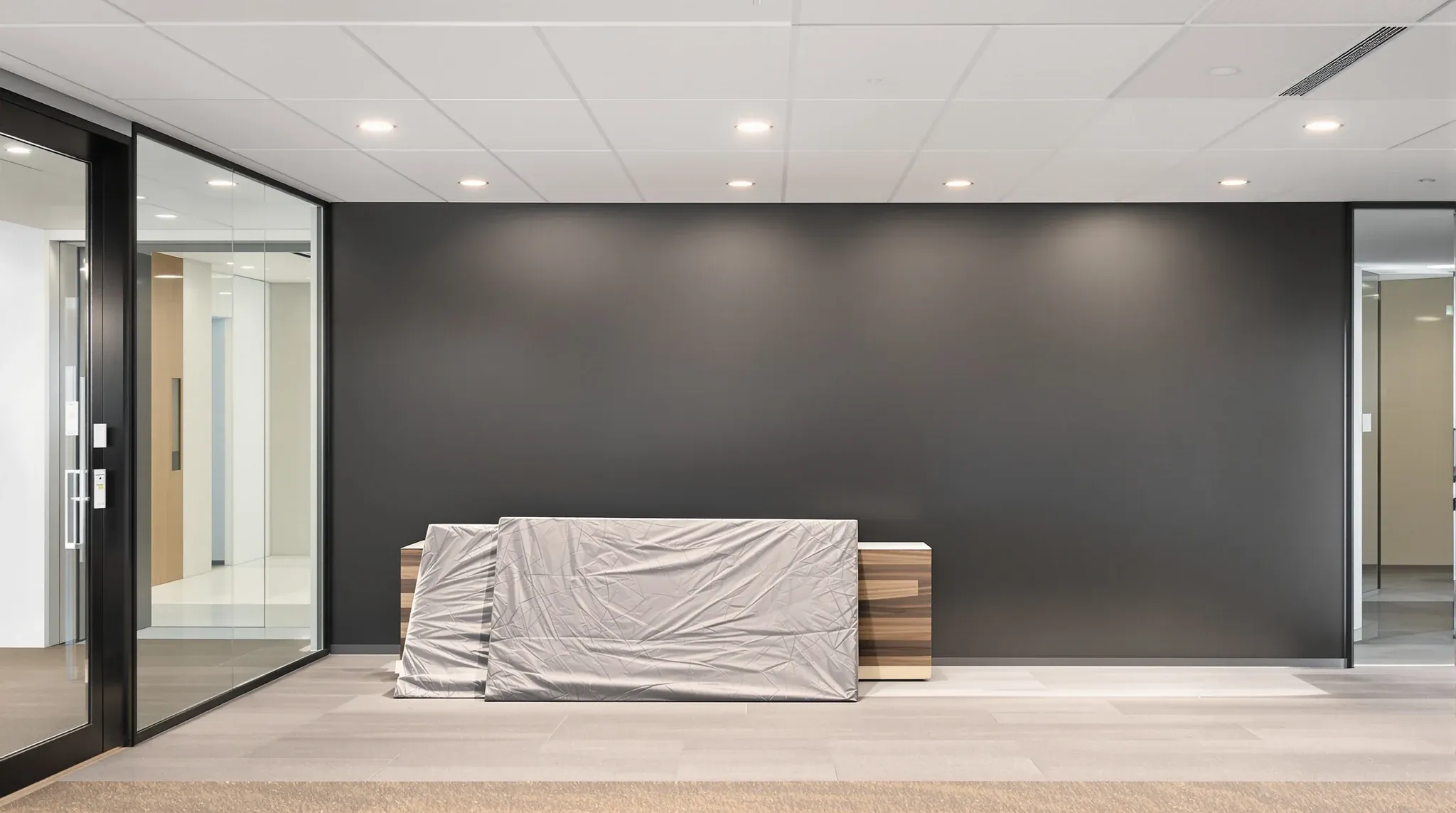
Most tenants planning a defit think carefully about the partitions, the ceilings and the services, and then underestimate the signage. The reception logo, the wayfinding panels above the meeting-room doors, the vinyl applied to the glass partitions, the printed posters in the break-out area, the fire-exit graphics that were overlaid with branded versions, the directory listing in the lift lobby, and the building-facade sign are all, in typical Sydney commercial leases, part of what the tenant put into the space and therefore part of what the tenant is usually expected to remove at lease end. Getting this scope right is rarely about cost but almost always about surprises if it is missed.
The practical takeaway is that signage removal at make good is best treated as a distinct scope with its own walk-through, its own removal method per type, and its own reinstatement of whatever substrate the signage was applied to. Bundled in as an afterthought inside the general strip-out, it tends to either leave damage behind or get missed altogether, both of which turn into conversations at the final inspection.
What Signage And Wayfinding Scope Actually Covers
Signage at lease end typically includes everything the tenant installed that carries identification, wayfinding, branding, or decorative graphics. Under most commercial lease structures, this is tenant’s property rather than the landlord’s, which means the lease generally contemplates it being removed and the substrate being restored, consistent with the make good obligations that apply to most commercial office leases.
The common categories are: reception signage including logos, raised-letter signs, backlit panels and decorative feature walls; internal directional wayfinding including meeting-room identification, floor plans, and door vinyls; branded graphics on glass partitions, walls and columns; branded overlays on fire-service signage and other compliance items; posters, prints, and larger artwork; external building signage including facade signs, entry totems and directory listings; and digital signage including mounted screens and any associated data or power infrastructure.
Each category has a different removal method, a different reinstatement scope, and a different level of potential substrate damage. Treating them as a single line item in the defit quote almost always understates the real work, because the difference between removing a vinyl and removing a raised-letter metal sign with concealed fixings is significant.
Reception Signage: The Sign, The Backing, The Mounts
The reception sign is usually the largest single piece of signage in a commercial office and the most demanding to remove cleanly. The full office signage and workplace graphics package put into the space at fitout stage typically combines individual raised letters mounted to a feature wall, a backlit or edge-lit panel, a decorative backing surface (timber, acrylic, painted MDF or metal), and concealed power for any illumination.
Removing the raised letters usually leaves a pattern of small fixing holes in the wall, which have to be filled, sanded and repainted. If the backing wall was a feature finish (timber veneer, acoustic panel, textured plaster), the fixing holes cannot simply be filled; the panel typically has to be removed and the underlying substrate restored. If the sign was backlit, the power supply and cabling that fed it has to be decommissioned and the cable capped or removed in accordance with the relevant electrical trade requirements.
The feature wall itself is often the point of confusion. Some leases treat a decorative reception wall installed by the tenant as removable, which means the whole wall comes back to standard painted plasterboard at make good. Other leases have been varied to treat the wall as a fitout feature that stays. Confirming which applies before the strip-out begins saves rework either way.
Where the wall comes off, the reinstatement is a small fitout job in itself: reframing, re-lining, skimming, sanding, two-coat painting. It takes a trade sequence rather than a single-day visit. Budget and programme should reflect that.
Door Vinyls And Applied Graphics On Glass Partitions
Internal door vinyls, meeting-room identification graphics, and branded manifestation on glass partitions are usually the easiest category to remove and the most commonly underestimated on the cleaning side. The vinyl itself peels off in most cases; older vinyls or those applied over long terms may leave adhesive residue, which requires specialist glass cleaning with solvent-safe products and care not to damage any remaining manifestation.
The important distinction is between manifestation that is tenant-applied branding and manifestation that is compliance-required on glass partitions. Manifestation on large glazed panels is a safety detail that has to remain, either in the original landlord-supplied form or in an equivalent replacement. Stripping a tenant-branded manifestation from a glass partition without checking what the base compliance manifestation was creates a panel that may not meet the handover condition the landlord expected.
The practical approach is to identify which vinyls are branding (remove) and which are compliance (replace with standard manifestation if needed). A confident glass trade can do both in the same visit, and the result is a clean glass partition that reads as move-in condition rather than as a partially stripped former tenant’s space.
Adhesive residue from older or heavy-application vinyls can take longer than expected. Budget half a day for a floor of significant glass signage, not an hour.
Back-of-House Wayfinding And Branded Fire Signage
Back-of-house signage tends to be the easiest to forget because it is not visible from the main work areas. Floor plans posted in the lift lobby, branded maps in kitchen areas, printed evacuation diagrams, and branded overlays on fire-exit signs are all tenant-installed in most fitouts and typically come out at make good.
Fire-exit signage deserves specific attention. Tenants sometimes apply branded overlays to the standard running-person fire-exit signs to align them with the office’s colour palette. At make good, those overlays come off and the base-building compliant sign has to be visible and legible. If the overlay was applied with adhesive that damaged the original sign, the original sign may need to be replaced. This is usually a small cost but it is a regulated trade with its own paperwork.
Printed evacuation diagrams posted on walls come off easily, and the hooks or fixings holding them come out with minor wall repair. The landlord usually expects the base-building evacuation signage to be visible and current at handover, which means any tenant-added overlays or replacements have to be reverted to the base-building standard.
Directional wayfinding on back-of-house doors (staff only, cleaner’s room, comms) is often tenant-applied and comes off with the same vinyl or sign-removal process as any other internal signage. The underlying door finish and paintwork is usually restorable without full repainting if the vinyl was not on for years.
External Signage And Directory Listings
External signage is the category most likely to require landlord or building-management coordination. A tenant’s facade sign, entry totem, or ground-floor window graphic is usually governed by the lease’s signage clause, and removal typically has to be coordinated with the building manager for access, traffic management, and reinstatement of the substrate.
Facade signs mounted to the building’s external fabric often leave fixing holes in render, cladding, or stone, all of which require specialist reinstatement. On premium-grade buildings, the landlord may stipulate the exact reinstatement method, including which contractor performs the repair. Confirming this early in the defit planning avoids the contested variation at handover.
Directory listings in the lift lobby are usually a tenant responsibility to remove (or to request removal of, depending on the lobby signage system). A missing or still-present directory listing at handover is a small issue but one that landlords notice, and it is usually a quick fix if it is flagged in time.
Window graphics on ground-floor glass require specialist removal and glass restoration, especially if the graphics were large-format printed vinyl applied with industrial adhesive. Residue on large glass panels requires patient work to clean without leaving visible streaks or abrasion marks.
Reinstating The Substrate: Wall Repair, Glass Cleaning, Paint
Every signage removal leaves a substrate that needs to be restored to the condition the lease expects. The usual categories are: plasterboard walls requiring fill, sand, and paint; glass partitions requiring adhesive residue removal and cleaning; painted timber or metal doors requiring vinyl removal and either polish or touch-up paint; feature walls requiring either panel replacement or substantial finishing work.
The reinstatement scope is often underpriced because the removal quote focuses on the signage itself rather than what is left behind. A reception-wall sign might be removed in an hour, and the subsequent wall repair and repaint might take two days. Pricing the two separately, and sequencing them so the paint has time to cure before handover, is what keeps this part of the scope on track.
Colour-matching is a consideration on partial repairs. A localised paint repair often does not blend perfectly into a wall that has aged for five years, especially if the original paint batch is no longer available. The choice is between a visible patch and a full wall repaint. Most leases anticipate this and either the scope includes full repainting as standard, or a touch-up is accepted subject to a reasonable appearance standard. Knowing which applies before the work starts saves the conversation at inspection.
Timing The Removal Within The Wider Defit Programme
Signage removal sits awkwardly in the defit programme. It is too finicky to be done alongside the main strip-out of partitions and ceilings, where dust and activity would compromise the cleaning work. Understanding the difference between strip-out and make good helps put signage in the right window: the substrate-dependent work belongs after the strip-out clears the space and before the make-good finishing begins.
A typical programme puts signage removal in the middle of the defit window, after the main strip-out has cleared the space but before the final wall repairs and repaints are scheduled. This allows the signage team to work in a cleaner space, access the substrates without obstruction, and hand over the bare substrate to the painters and glaziers for finishing.
External signage usually comes off earlier, because it requires building management coordination and is independent of the interior defit sequence. Scheduling it at the start of the defit window, with the building manager briefed in advance, avoids the end-of-programme rush.
The final inspection from the landlord or landlord’s representative usually catches any signage that was missed. Having a pre-inspection walk with the defit team a day or two before the formal handover, specifically looking for forgotten signage and incomplete reinstatement, almost always catches items that would otherwise become post-handover variations. Running the walk against a structured defit checklist for commercial tenants makes the inspection faster and the scope easier to close out.
If you are planning a commercial office defit in Sydney and want the signage and wayfinding scope handled as a distinct piece of work rather than an afterthought, we can walk the space with you, categorise what has to come out, and deliver the removal and substrate reinstatement as part of the wider defit and make good service. Planned this way, it stops being the category that causes last-minute scope surprises at handover.
📞 Call us on 1300 60 93 93