
Strip-out and make good appear in almost every commercial lease in Sydney, and they are treated as interchangeable terms in most conversations between tenants, agents, and landlords. They are not the same thing. A strip-out is a demolition scope: removing what the tenant installed. A make good is a reinstatement scope: returning the space to the condition the lease requires. The first is about subtraction. The second is about restoration. A tenant who budgets only for the strip-out and discovers later that the make good includes ceiling reinstatement, floor replacement, painting, and services restoration faces a cost that may be two to three times what they expected, and the surprise typically arrives at the worst possible time, when the lease is ending, the new premises need attention, and the budget has already been allocated elsewhere.
Understanding the distinction between these two scopes prevents the most common source of lease-exit cost blowouts in commercial tenancies.
What a Strip-Out Actually Covers
A strip-out is the removal of tenant-installed fitout elements. Partitions come down. Workstations are removed. Joinery is dismantled. Floor coverings installed by the tenant are taken up. Signage is removed. Tenant-installed lighting, data cabling, and power circuits are stripped back to the base building connection points. The scope is defined by what the tenant put in during the fitout and any subsequent modifications made during the lease.
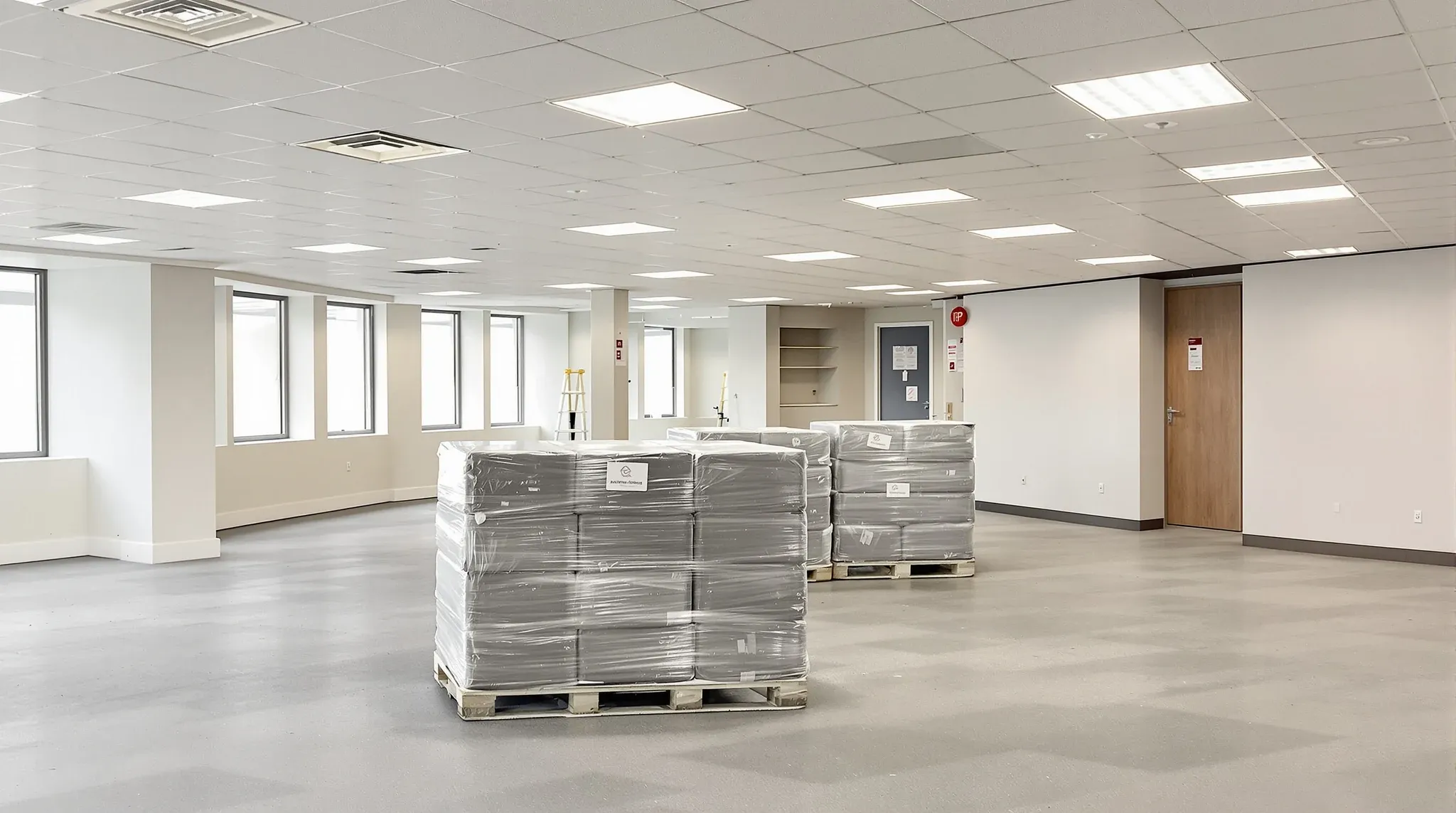
The strip-out does not restore anything. It removes. The space after a strip-out is raw: exposed slab, disconnected services, missing ceiling tiles where partitions penetrated the grid, and wall surfaces marked by fixings, adhesive, and patching from the removed elements. This is the correct outcome for a strip-out because the scope was defined by removal, not by reinstatement. The defit process encompasses both the strip-out and the make good, and treating it as just the removal phase is where most budget shortfalls originate.
What Make Good Actually Covers
Make good begins where the strip-out ends. The space has been cleared of tenant fitout elements, and the make good scope restores it to the condition defined in the lease, typically the condition the space was in when the lease commenced or a condition the landlord specifies as the required standard for the incoming tenant. This restoration scope includes reinstating ceiling tiles and grid where partitions were removed, patching and painting walls to a consistent finish, reinstating floor coverings if the lease requires it, reconnecting base building services to their original configuration, and repairing any damage to the base building caused by the tenant’s fitout or occupation.
The make good scope is where the cost accumulates, because the restoration work involves finishing trades: plasterers, painters, ceiling installers, flooring contractors, and electricians working to produce a presentable result rather than simply removing what was there. The make good standard is not a construction site. It is a presentable commercial space ready for the next tenant to either occupy or build their own fitout within.
Why Tenants Confuse the Two
The confusion between strip-out and make good is partly linguistic and partly structural. Linguistically, both terms appear in the same lease clause, often in the same sentence, and the lease language does not always define them separately. A clause that requires the tenant to “strip out the fitout and make good the premises” reads as a single obligation rather than two distinct scopes with different cost profiles. Structurally, the confusion persists because tenants do not encounter these obligations regularly. A tenant who leases an office every five to seven years encounters strip-out and make good obligations twice in a decade, which is not enough repetition to build a working understanding of what each involves.
The practical consequence of confusing the two is underbudgeting. A tenant who gets a strip-out quote and assumes it covers the full lease-exit obligation will discover the make good requirement after the strip-out is complete, when the space is raw, the deadline is approaching, and the make good trades need to be engaged, scheduled, and completed within whatever time remains. End-of-lease obligations are more manageable when both scopes are quoted and budgeted as distinct line items from the start of the lease-exit planning, not combined into a single number that obscures how the cost is distributed.
How the Lease Defines What Each Scope Includes
The lease is the governing document for both scopes, and the specific language in the lease determines what the tenant must strip out and what standard the make good must achieve. Leases vary. Some require the tenant to remove all fitout elements including ceiling modifications. Others allow certain elements to remain, such as partitions or floor coverings, if the landlord agrees. Some define the make good standard as “base building condition,” meaning the space must be returned to the condition it was in before the tenant’s fitout. Others define it as “broom clean” or reference a schedule of condition that was prepared at lease commencement.
The schedule of condition, if it exists, is the most valuable document in the make good process because it records the state of the space when the tenant took possession. Without it, the make good standard becomes a negotiation between tenant and landlord about what “original condition” means, and that negotiation rarely resolves in the tenant’s favour because the tenant has less leverage at lease exit than they had at lease commencement. Tenants who did not prepare or retain a schedule of condition at the start of their lease should assume the make good obligation will be interpreted broadly, and budget accordingly.
Cost Differences Between Strip-Out and Make Good
Strip-out costs are relatively predictable because the scope is defined by the physical extent of the fitout: how many partitions, how much joinery, what floor area, and how much cabling needs to be removed. The labour is demolition and removal, which is less expensive per hour than finishing trades. The waste disposal costs are significant but quantifiable. A strip-out for a typical 200-square-metre tenancy is a known cost that experienced contractors can quote accurately from a site inspection.
Make good costs are less predictable because the scope depends on the condition the strip-out reveals and the standard the lease requires. A space that was in good condition when the tenant took it and has been maintained well during the lease may need minimal make good: patching, painting, and ceiling tile replacement. A space that was in poor condition when the lease started, or where the fitout caused significant penetrations and modifications to the base building, may need extensive restoration that approaches the cost of a new fitout in some areas. Understanding make good scope before the strip-out begins allows the total cost to be estimated accurately rather than discovered incrementally as the strip-out reveals what needs to be restored.
Why Sequence Matters: Strip-Out Before Make Good
The strip-out must be completed before the make good can be accurately scoped, because the make good scope depends on what the strip-out reveals. Ceiling damage hidden behind partitions only becomes visible when the partitions are removed. Floor condition under carpet tiles only becomes apparent when the tiles are lifted. Slab penetrations and services modifications only become clear when the fitout elements that concealed them are stripped away. This sequencing means that the make good scope is finalised after the strip-out rather than before it, and the make good cost may change from the initial estimate once the revealed conditions are assessed.
This is why lease-exit budgets should include a contingency specifically for make good scope changes, separate from the strip-out budget. The strip-out cost is relatively fixed. The make good cost is provisional until the strip-out exposes the full extent of restoration required. Treating both costs as fixed from the outset creates a budget that is accurate for the strip-out and optimistic for the make good, which produces the shortfall that catches tenants off guard at the worst possible moment.
Common Disputes That Arise From Confusing the Two
The most frequent lease-exit disputes in Sydney commercial tenancies arise from tenants and landlords having different understandings of what the make good standard requires. The tenant completes the strip-out and considers the obligation largely discharged. The landlord inspects the space, identifies ceiling damage, floor marks, wall penetrations, and services that were modified during the tenancy, and issues a make good notice that describes a restoration scope the tenant did not anticipate. The dispute is not about whether the work needs to be done. It is about whether the tenant understood the obligation when they planned and budgeted for the lease exit. Separating the two scopes from the beginning, with clear definitions and separate costings, prevents the dispute by ensuring both parties are working from the same understanding of what each scope includes.
Getting Both Scopes Right From the Start
The businesses that manage lease exit well are the ones that separate strip-out and make good into distinct scopes from the beginning of their exit planning. They get separate quotes for each. They build separate timelines for each. They identify the make good standard in their lease and confirm it with the landlord before the strip-out begins. They allow time between the strip-out completion and the make good commencement for the revealed conditions to be assessed and the make good scope to be finalised. And they retain a schedule of condition from lease commencement that provides a reference point for what “original condition” means when the time comes to restore it.
We deliver defit and make good projects where both scopes are managed as distinct workstreams with clear budgets and timelines. If your lease exit is approaching and you need clarity on what strip-out and make good will actually involve, we can help.
📞 Call us on 1300 60 93 93