
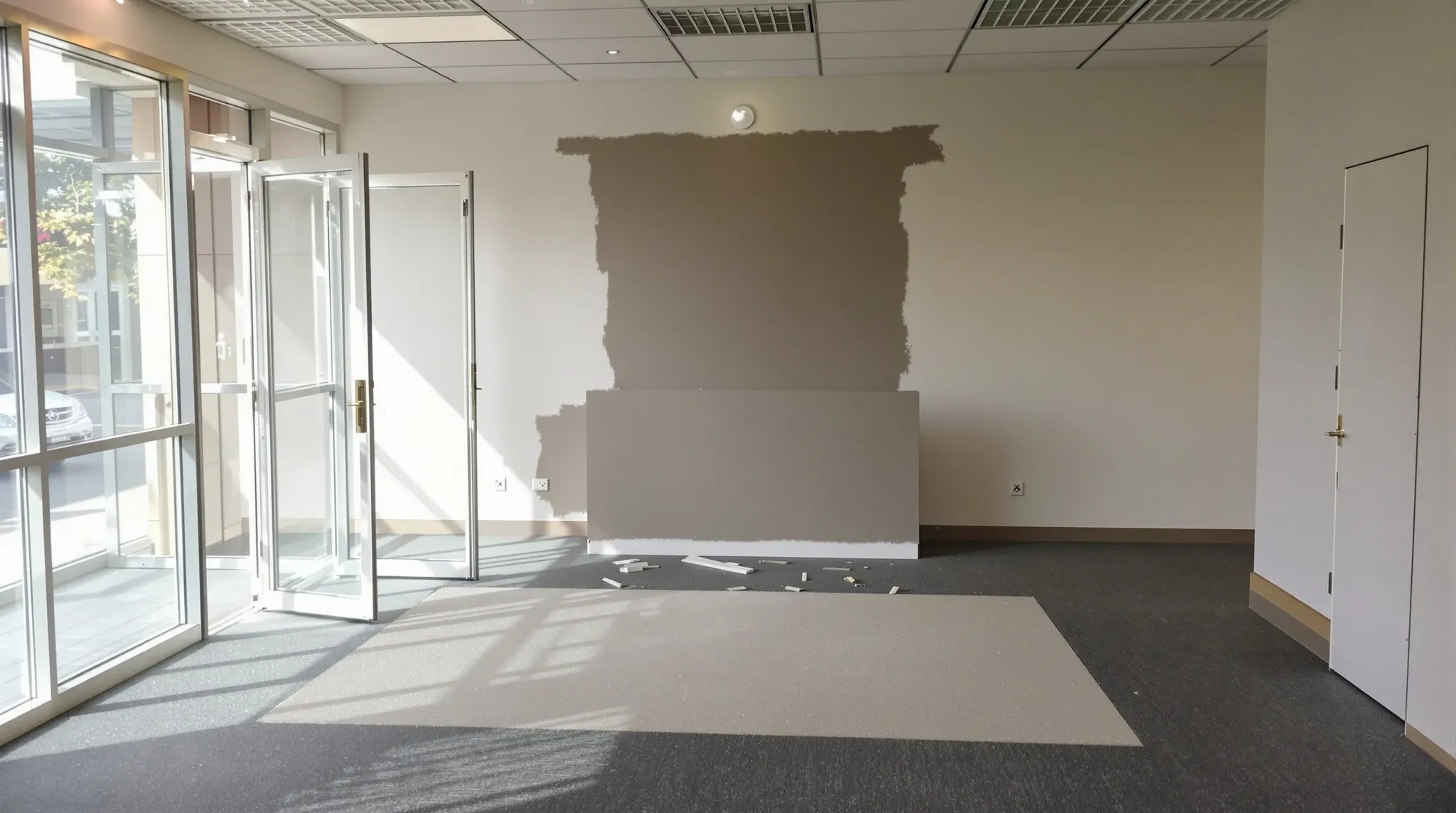
When a commercial office lease reaches its end, the tenant’s obligations extend well beyond handing back the keys. Most leases contain specific provisions that require the tenant to remove their fitout, restore the premises to an agreed condition, and do so within a defined timeframe. These obligations are contractual, and failing to meet them exposes the tenant to financial claims that can significantly exceed the cost of doing the work properly in the first place.
For many tenants, particularly those reaching the end of their first commercial lease, the formal obligations around defit and make good are poorly understood until they become urgent. The lease document itself is often the last thing reviewed before exit, and the obligations it contains are frequently more extensive than the tenant anticipated when they signed it years earlier.
What Lease End Obligations Typically Require
Commercial lease obligations at lease end generally fall into two categories. The first is the defit obligation, which requires the tenant to remove everything they installed during the lease term. The second is the make good obligation, which requires the tenant to restore the premises to a specified condition, typically base building standard or the condition recorded in a schedule to the lease.
These are distinct obligations, and meeting one does not satisfy the other. A tenant who removes all their fitout elements but leaves the premises in poor condition has met the defit obligation but not the make good obligation. Conversely, a tenant who paints and cleans but leaves partitions and joinery in place has attempted make good without completing the defit. Both obligations need to be addressed, and the scope of each depends on what the lease specifically requires.
The challenge for most tenants is that these obligations are described in legal language that does not translate easily into a practical scope of works. Tenants frequently misunderstand what constitutes non-structural works and which elements of their fitout the lease actually requires them to remove. Getting clarity on this distinction early is one of the most effective ways to control both scope and cost.
How Make Good Clauses Are Structured in Commercial Leases
Make good clauses vary in their specificity. At one end of the spectrum are clauses that simply state the tenant must return the premises in the condition they were in at the commencement of the lease, fair wear and tear excepted. At the other end are detailed schedules that specify exactly what needs to happen, down to the type of paint finish on the walls and the pattern of ceiling tiles to be reinstated.
The fair wear and tear exception is one of the most commonly contested elements. What constitutes fair wear and tear is not defined in most leases, and the landlord’s interpretation often differs from the tenant’s. Scuff marks on walls, minor carpet wear in high-traffic areas, and faded paint in sun-exposed locations are generally accepted as fair wear. Damage from partition fixings, stained ceiling tiles from HVAC modifications, and adhesive residue from signage are typically not.
Where the lease references a condition report prepared at the commencement of the tenancy, that report becomes the primary reference point for what the premises need to look like at the end. Tenants who reviewed and agreed to that report at the start of the lease are in a stronger position than those who signed without reading it, because any ambiguity in the make good clause defaults to the condition report baseline.
Defit Obligations: What Removal Actually Means
The defit obligation in most commercial leases requires the tenant to remove all tenant improvements. In practical terms, this means every element that the tenant installed or had installed on their behalf during the lease. Partitions, joinery, kitchen fitouts, supplementary air conditioning, additional lighting, data cabling, security systems, and any modifications to base building services are all within scope unless the lease specifically excludes them.
What catches many tenants off guard is the extent of removal required below the visible surface. Removing a plasterboard partition is not just about taking down the wall. It includes removing the framing, stripping out any services that ran through the cavity, making good the floor where the bottom plate was fixed, repairing the ceiling where the partition head met the grid, and patching any damage to adjacent surfaces. Each partition removed creates a chain of consequential works that extends well beyond the partition itself.
Services decommissioning is another area where the obligation extends further than tenants expect. Electrical circuits added during the fitout need to be removed back to the switchboard or disconnected and made safe. Data cabling needs to be pulled from the ceiling void. Plumbing connections for kitchens or wet areas need to be capped and the affected areas made good. First-time tenants are particularly vulnerable to underestimating this scope, because the services they installed at the start of the lease were handled by their fitout contractor and they may not have a clear record of exactly what was done.
Make Good Obligations: Restoring Beyond Just Removal
Once the defit is complete, the make good obligation requires the tenant to restore the premises to the agreed standard. This is where the cost often exceeds expectations, because the restoration work addresses not just the fitout modifications but the general wear that accumulated during the lease term.
Ceiling tiles are one of the most significant cost items in a make good. Tiles that were cut to fit around partition heads need to be replaced. Tiles that have discoloured from age, dust, or HVAC condensation may need to be replaced even if they were not physically modified by the tenant. The extent of replacement depends on the landlord’s requirements and the condition of the existing tiles relative to the baseline.
Floor coverings present similar issues. Where carpet tiles were laid over the base building floor, removing them reveals the subfloor condition beneath. Adhesive residue, moisture damage, and uneven surfaces all need to be addressed before the floor is in a condition suitable for the next tenant. In some cases, the lease requires the tenant to install new carpet tiles to match the base building specification, which adds a material cost on top of the labour involved in preparation.
Painting is typically required across all wall surfaces that were part of the tenancy, regardless of whether the tenant modified them. The rationale is that paint ages and fades over a lease term, and restoring the premises to a fresh standard requires a full repaint rather than spot repairs. The paint specification may also be defined in the lease or the building’s fitout guide.
What Happens When Obligations Are Not Met
The consequences of failing to meet defit and make good obligations vary depending on the lease, but they generally follow a predictable pattern. The landlord conducts a final inspection, identifies deficiencies, and issues a notice to the tenant specifying what has not been completed. If the tenant does not rectify the deficiencies within the specified timeframe, the landlord typically has the right to engage contractors to complete the work and recover the cost from the tenant, usually plus a management fee.
This recovery mechanism almost always costs the tenant more than doing the work themselves. The landlord’s contractors are pricing the work at market rates without the benefit of competitive tendering, and the management fee typically adds 10 to 15 per cent on top. Where the landlord needs to recover costs through the bond or through a formal claim, the legal and administrative costs add further to the total.
Beyond the immediate financial impact, an incomplete make good can affect the tenant’s reputation in the commercial leasing market. Managing agents and landlords share information, and a tenant who is known for leaving premises in poor condition may face more onerous terms in their next lease, including higher bond requirements or more detailed make good schedules.
How the Condition Report Defines the Baseline
The condition report, when one exists, is the single most important document in determining the make good scope. It records the state of the premises at the commencement of the lease and provides the benchmark against which the premises are assessed at the end. A detailed condition report with photographs and written descriptions gives both parties a clear reference point and reduces the scope for disputes.
Where no condition report was prepared, the make good baseline becomes a matter of negotiation. The landlord will typically argue that the premises should be returned to a standard consistent with the building’s base building specification. The tenant may argue that the premises were already in a condition that reflected wear from previous tenants, and that the make good obligation should not require them to improve on what they received.
The practical lesson for tenants entering a new lease is to insist on a thorough condition report at the start and to keep a copy throughout the lease term. Decisions made during the lease, including modifications, subleasing arrangements, and mid-term refurbishments, all affect the eventual make good scope, and having a clear baseline makes it much easier to manage that scope at the end.
Managing Obligations Before They Become Disputes
The most effective way to manage end-of-lease obligations is to treat them as a project that begins well before the lease expires. A practical timeline starts twelve months out with a review of the lease clause and the condition report, followed by a scope assessment at nine months, landlord engagement at six months, and physical work commencing at least eight to twelve weeks before the handover date.
This timeline allows for negotiation, which is where the most significant cost savings typically occur. Landlords are often willing to agree to a reduced make good scope when approached in good faith and with reasonable time to consider the proposal. They may accept a partial defit if the outgoing fitout suits the incoming tenant. They may waive the painting requirement if the walls are in good condition. They may accept professional carpet cleaning instead of full replacement. None of these concessions are available to a tenant who raises the conversation two weeks before lease end.
Understanding the terminology used in lease documents also helps tenants engage more confidently with their landlord and managing agent. When both parties are working from a shared understanding of what the obligations actually require, the process is more efficient and the outcome is more likely to satisfy everyone involved.
If your lease is ending and you need to understand the full scope of your defit and make good obligations, we can review your lease requirements and provide a practical assessment of what is involved.
Call us on 1300 60 93 93