
Make good obligations in NSW commercial leases sit within a legal framework that gives landlords significant protection but also provides tenants with more room to negotiate than many realise. The obligations are primarily contractual, meaning they are shaped by what the lease says rather than by a single piece of legislation. But the broader legal environment in NSW, including the rules around commercial leasing, dispute resolution, and property condition requirements, all influence how those obligations play out in practice.
For tenants operating under a NSW commercial lease, understanding where the obligations come from, how they are typically structured, and where the negotiating room sits is essential to managing the make good process effectively and avoiding disputes that are expensive for both sides.
How NSW Commercial Lease Law Frames Make Good
NSW does not have a single statute that governs make good obligations in commercial leases. Unlike residential tenancies, which are tightly regulated by the Residential Tenancies Act, commercial leases operate primarily under common law and the specific terms of the lease agreement. This means the lease document is the primary source of the make good obligation, and its terms will govern the scope, standard, and timing of the work required.
The Conveyancing Act 1919 (NSW) provides some background rules about leases and property obligations, but it does not prescribe specific make good requirements. The Property Law Act and related legislation deal with broader property rights but again do not set out the detail of what a commercial tenant must do when a lease ends. The practical effect is that the make good obligation is whatever the lease says it is, which is why the quality of the lease drafting matters so much.
This contract-first framework means that tenants who negotiate their lease carefully at the start of the term are in a much stronger position at the end than those who accept standard form clauses without amendment. Understanding what compliance actually means in commercial fitouts begins with understanding that the standard is set by the lease, not by a generic industry benchmark.
What Standard Lease Provisions Typically Require
While there is no legislated standard, NSW commercial leases follow well-established drafting conventions. Most leases require the tenant to remove all tenant improvements, reinstate the premises to the condition at the commencement of the lease (or to base building condition), and complete this work by the lease expiry date. The clause typically allows the landlord to complete the work at the tenant’s cost if the tenant fails to do so.
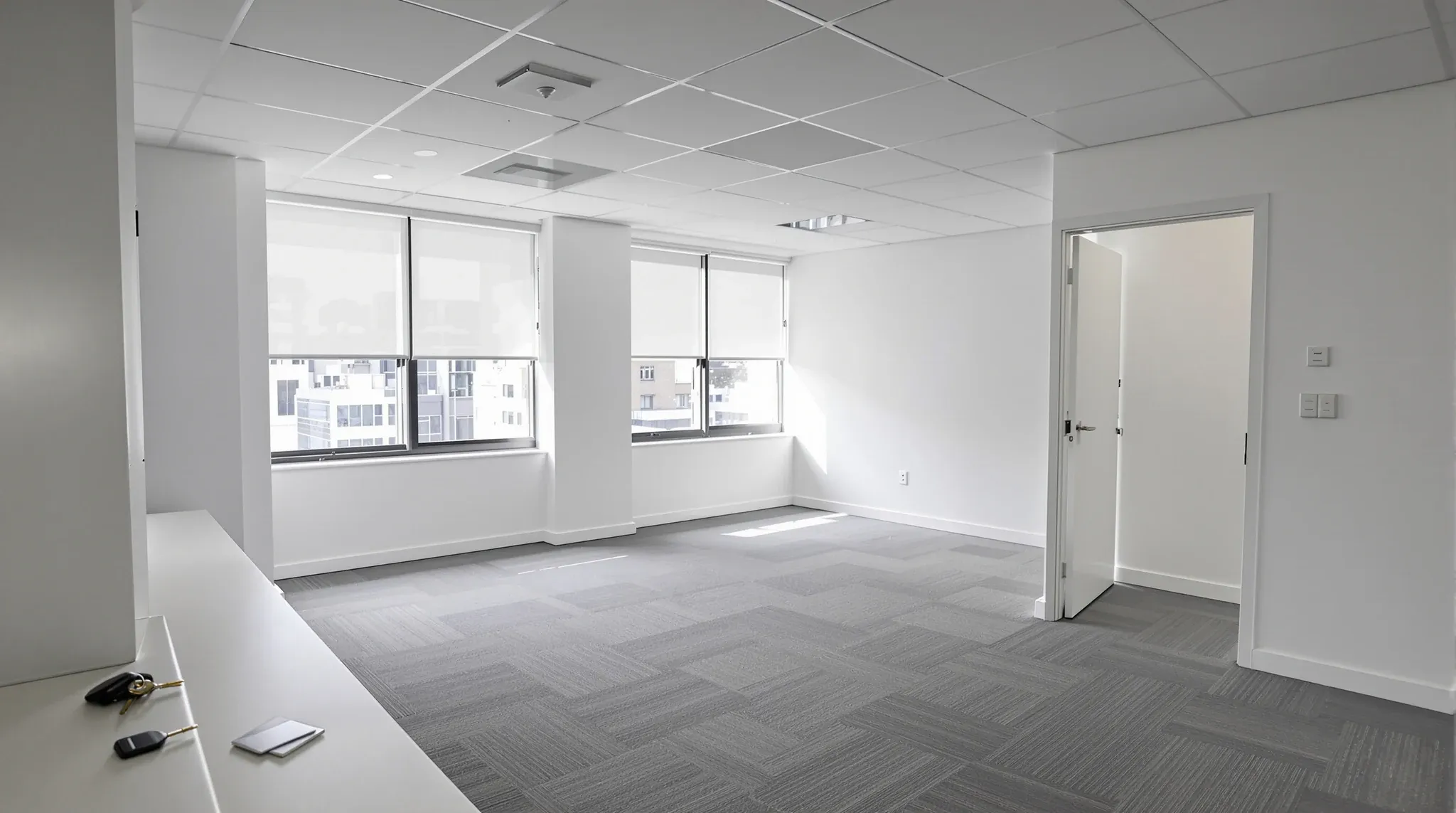
The phrase “base building condition” is used frequently but is not legally defined. In practice, it means the condition of the premises before the tenant made any modifications: bare floors or standard floor coverings, intact ceiling grid with matching tiles, base building lighting, no partitions, no joinery, and services in their original configuration. What this looks like varies from building to building, which is why the condition report is such an important document.
Most standard leases also include a fair wear and tear exception, though the scope of that exception is rarely defined in the lease itself. The general legal position is that fair wear and tear covers the gradual deterioration that occurs through normal use without negligence, but the boundary between fair wear and tenant-caused damage is frequently contested. Scuff marks on walls may qualify. Carpet stains, damaged ceiling tiles, and holes from partition fixings typically do not.
How the Retail Leases Act Affects Some Commercial Tenants
While most office leases are not covered by the Retail Leases Act 1994 (NSW), some tenants in mixed-use buildings or retail-adjacent commercial spaces may find that their lease falls within its scope. The Act applies to leases of premises in retail shopping centres and to some other commercial premises where the lease is for a retail shop, regardless of whether it is in a shopping centre.
Where the Act applies, it provides tenants with additional protections including requirements for disclosure, restrictions on certain lease terms, and access to dispute resolution through the NSW Civil and Administrative Tribunal (NCAT). The make good provisions under the Act require the landlord to provide a make good condition report at the end of the lease, and limit the scope of make good to what is fair and reasonable in the circumstances.
Most commercial office tenants in Sydney are not covered by the Retail Leases Act, but tenants who occupy premises on the ground or lower floors of commercial buildings, particularly those with a shopfront or client-facing presence, should check whether their lease falls within its scope. The protections it offers can significantly affect the make good obligation and the process for resolving disputes.
Condition Reports and Their Legal Weight
The condition report prepared at the commencement of a lease is the most important evidentiary document in any make good dispute. It establishes the baseline condition of the premises and provides the reference point against which the tenant’s make good performance is measured. In NSW, there is no statutory requirement for a condition report in a standard commercial lease, but it is standard practice in professionally managed buildings.
The legal weight of the condition report depends on how it was prepared and agreed. A report prepared jointly by the landlord and tenant, with photographs and written descriptions, signed by both parties, carries strong evidentiary weight. A report prepared unilaterally by the landlord and not acknowledged by the tenant is weaker but still relevant. The absence of a condition report creates ambiguity that typically works against the party who had the opportunity to prepare one and did not.
Tenants entering a new lease in NSW should always insist on a thorough condition report and should review it carefully before signing. Items noted in the report as existing damage or wear at the start of the lease are excluded from the make good obligation at the end. Items not noted may be presumed to have been in good condition, which places the burden on the tenant to demonstrate otherwise.
Dispute Resolution When Make Good Terms Are Contested
Make good disputes in NSW commercial leases are resolved through the mechanisms specified in the lease, or through the courts if no mechanism is specified. Most well-drafted leases include a dispute resolution clause that requires mediation before litigation, which provides a faster and less expensive path to resolution for both parties.
Common dispute triggers include disagreement about the scope of work required, disagreement about the standard to which work has been completed, claims for the cost of work the landlord completed after the tenant failed to meet the requirement, and disputes about whether particular items fall within or outside the fair wear and tear exception.
Council approval requirements for fitouts occasionally become relevant in make good disputes, particularly where the tenant’s fitout included works that required development consent and the make good process involves reversing those works. In most cases, the make good itself does not require separate approval, but there are exceptions for heritage buildings, premises in specific development zones, and works that affect the building’s fire safety systems.
The best way to avoid disputes is to agree on the make good scope with the landlord well before work begins, document that agreement in writing, and ensure the work is completed to the agreed standard with photographic evidence. Most make good disputes arise from ambiguity that could have been resolved through a conversation six months earlier.
How Lease Negotiations Shape the Obligation Before It Begins
The most effective time to manage make good obligations is when the lease is being negotiated, not when it is about to expire. Tenants who negotiate their make good clause at the start of the lease can limit the scope of the obligation in ways that save significant money and friction at the end.
Common negotiated amendments include capping the make good obligation to a fixed dollar amount per square metre, excluding specific fitout elements from the make good requirement (such as ceiling-height glass partitions that the landlord may want retained), limiting the painting obligation to areas actually modified by the tenant, and agreeing that floor coverings in serviceable condition do not need to be replaced.
Landlords are often more willing to agree to these amendments than tenants expect, particularly in a competitive leasing market where the landlord is motivated to secure a tenant. The amendments cost the landlord nothing at the time of signing but can save the tenant tens of thousands of dollars at lease end. Reducing fitout risk extends to negotiating the exit terms at the same time as the entry terms.
What Tenants Should Understand Before Signing
Tenants entering a commercial lease in NSW should understand several key points about make good before they sign. The obligation is contractual and is defined by the lease, not by legislation. The condition report is the critical baseline document, and investing time in getting it right at the start pays dividends at the end. The fair wear and tear exception is narrower than most tenants assume, and relying on it without evidence is risky.
The timing of make good work is typically specified in the lease, and tenants who miss the deadline face financial consequences including the landlord’s right to complete the work at the tenant’s expense plus a management fee. Early engagement with the landlord about the make good scope almost always produces a better outcome than late engagement, because it allows for negotiation while both parties still have time and options.
Starting the right way with a commercial lease in NSW means understanding the make good obligation from day one, not leaving it as a problem for the future. The tenant who reads the clause, negotiates the scope, documents the condition, and plans the exit from the beginning of the lease will always achieve a better outcome than the tenant who discovers the obligation in the final months.
If you are entering or exiting a NSW commercial lease and need practical guidance on the make good scope, we can review your lease requirements and help you plan accordingly.
Call us on 1300 60 93 93