
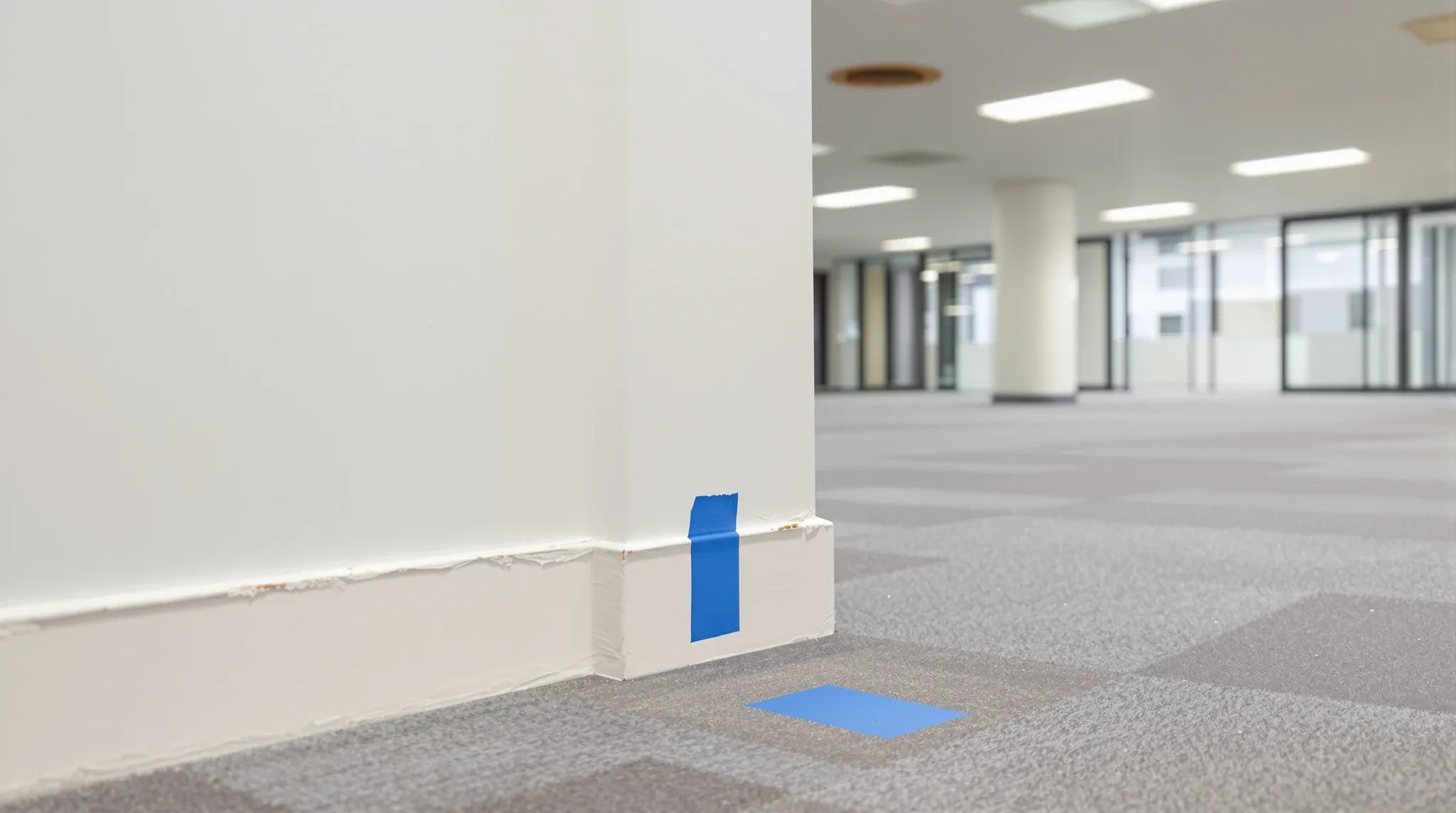
The photographs and notes you take in the first week of a commercial tenancy set the ceiling on what can reasonably be charged to you at lease end. That is how make good tends to play out in a Sydney commercial office. Years later, when the space is being assessed for defit and reinstatement, the conversation sits on top of whatever record was captured at the start. If the record is thin, the conversation drifts toward whatever the landlord’s agent remembers, and whatever the next tenant’s fitout happens to reveal. If the record is detailed, signed, and stored somewhere both parties can find, the scope that gets scoped is narrower and cheaper.
Tenants who have been through two or three lease cycles understand this instinctively. Tenants signing their first commercial lease often do not, and by the time the relevance becomes obvious, the moment to capture the record has already passed. What a fitout-aware condition record should actually contain, when it needs to be captured, and how it is used on the other end of the lease when make good is being scoped, is the ground covered below.
Integrating Photographic Records With Condition Schedules
Most commercial leases reference a schedule of condition, an annexure, or an equivalent written document that describes the state of the premises at handover. That schedule is usually prepared by the landlord or their agent, and it tends to be short, general, and quicker to draft than it is to contest later. A standalone photographic record sits alongside that schedule and complements it. It is not a substitute for reading the schedule carefully, and it does not replace the lease’s own provisions about make good and reinstatement, which should be read and, where the stakes justify it, taken advice on.
What the photographic record does is capture the specific finishes, condition, and configuration of the premises in a way a written schedule rarely can. Scratches on a ceiling tile, water staining around a riser, a chip in a door frame, the state of carpet seams in the high-traffic zones, the condition of glazed door sets, the finish of painted walls, the specific level of wear on skirtings. None of that survives in a typical two-page written schedule, but all of it can surface at lease end as items the tenant is asked to rectify.
Optimal Timing For Handover Documentation
Timing matters more than most tenants realise. A photographic record taken after the tenant has moved furniture, started their own fitout, or begun trading is already compromised, because it becomes hard to prove that anything visible in the photograph was there before the tenant’s own works began. The right moment is after the landlord’s works are complete and the premises have been formally handed over, but before any tenant-side fitout, delivery, or occupation has started.
For most tenancies that means scheduling the record for the day of handover or the morning after. If a tenant fitout is starting immediately, the record needs to happen before trades arrive on site. This is usually a half-day exercise for a medium-sized tenancy, longer for floors above a few hundred square metres, and it rewards a methodical approach over a quick phone walkthrough.
Where the landlord is delivering works under a fitout contribution or reinstatement-of-services arrangement, the handover date can slip. The record should slip with it. Capturing photographs of the wrong moment, with contractor tools still on the floor or rubbish not yet removed, creates ambiguity about what state the premises were actually delivered in. A clean handover deserves a clean record.
Essential Photographic Targets For Commercial Tenancies
The scope of the record should cover every surface and service a tenant could reasonably be asked to reinstate or make good. That is a longer list than most tenants expect, and missing items tend to be the ones that become contentious later.
The ceiling plane warrants close attention. Suspended ceiling tiles often carry stains, sags, or impact damage from previous tenancies, and landlords sometimes ask outgoing tenants to replace tiles that were already compromised on arrival. Floor finishes, including carpet, carpet tiles, hard flooring transitions, and any visible seams or wear paths, need coverage at both wide-angle and close-detail levels. Walls, skirtings, door frames, and glazed partitions need photographs of their general condition and close-ups of any existing damage.
Base-building services should also be captured. The condition of the main switchboard, distribution boards, data racks, lighting fittings, air conditioning diffusers, thermostats, sprinklers, and exit signage is all fair game for a future dispute. So is the state of meter readings at handover, which should be photographed and timestamped. Glazing to the outside of the tenancy, any existing signage or manifestation, and the condition of ceiling bulkheads or dropped features all belong in the record.
Where a tenancy includes amenity spaces such as kitchens, shower rooms, or a store area, those spaces need the same level of coverage as the main office floor. Amenity spaces are often where disputes start, because they carry fittings and finishes that are easy to damage and easy to forget about until lease end.
Establishing Durable Levels Of Visual Detail
A useful record combines wide context shots with close detail. The wide shot establishes the room, the orientation, and the overall state. The close shot proves the specific condition of a surface or an item. Both together are stronger than either alone, because a dispute over carpet staining in a future conversation is easier to resolve with a wide shot showing the area plus a close-up showing the specific stain, than with either one in isolation.
Metadata matters. Photographs should carry their original timestamps and, where possible, their original location metadata. Many modern cameras and phones preserve both automatically. Written annotations describing what each photograph shows, keyed to a floor plan, turn a visual archive into a usable reference document. A record stored only as loose files on a phone tends to become hard to use after a year and unusable after three.
The format most commonly defensible later is a dated PDF or digital report, compiled soon after capture, with each photograph labelled, the floor plan referenced, and the date of capture recorded on the cover. Specialist dilapidation or property condition report providers produce exactly this kind of document, and for tenancies with substantial make-good exposure the cost of commissioning one is modest relative to the exposure it protects against. Tenants capturing their own record should produce the same output in structure, even if the photographs are taken in-house.
Protocols For Sign Off Storage And Validity
A photographic record is most useful when both parties have seen it and acknowledged it. The usual practice is to share the record with the landlord or their agent soon after capture, ask for any comments or disagreements to be raised within a reasonable window, and then archive the record with a cover note confirming it was delivered and not contested. This does not require the landlord to sign anything, though a countersignature is stronger if it can be obtained without friction.
Where a landlord declines to acknowledge the record, the tenant’s position is still improved by the fact of timely delivery. A record shared on day one and not objected to reads differently in a later dispute than a record produced for the first time at lease end. Deliver, date, and archive, and the record has done most of its work.
Both the landlord and the tenant should keep copies. For the tenant, the copy should sit somewhere organisationally durable rather than on a personal device. Leases outlast individual staff, and a record stored on the laptop of someone who has since left the business is a record that may not be found when it matters.
Leveraging Records During Defit And Make Good
When the lease winds down and the premises are being assessed for defit and make good, the condition record is the reference point for what needs to be restored and what was never the tenant’s to begin with. Scope items that match the original condition typically fall off the make-good list. Items that the tenant changed during occupation, and any damage caused during the term, sit on the list to be handled as part of the defit programme.
A detailed record shortens the pre-defit assessment, because the fitout contractor scoping the works can compare current condition to handover condition quickly, rather than spending time on items that turn out to have been pre-existing. It also shortens the conversation with the landlord’s agent, because items flagged for dispute can be resolved against the record rather than left to negotiation. Tenants who engage a fitout company for the defit and make-good scope usually find the record is one of the first documents the contractor asks for.
Even where parts of the defit are negotiated with the landlord as a cash settlement in lieu of physical works, the record shapes the starting point of that conversation. A tenant arriving at settlement negotiations without a condition record is starting from the landlord’s position. A tenant arriving with a detailed, signed, dated record is starting from a position of evidence.
Defining The Limitations Of Photographic Evidence
A photographic condition record is a documentation tool, not a legal strategy. It does not override the lease. It does not change the tenant’s obligations under make-good clauses, reinstatement clauses, or any other contractual provisions. It does not protect against obligations the tenant agreed to in writing. The lease itself sits above the record, and reading the lease carefully at the start, and taking advice where the stakes justify it, remains the foundation of any make-good strategy.
What the record does is reduce ambiguity. It gives both parties a shared reference point for the state of the premises at handover, and that shared reference point makes the later conversation shorter, cleaner, and harder to distort. On a tenancy of any size, that reduction in ambiguity is worth the modest effort the record requires.
Early Documentation As A Strategic Safeguard
The common thread in tenant make-good disputes is not bad intent on either side. It is the absence of a clear, shared account of how the premises were delivered in the first place. That account has to be captured at the start, because it cannot be reconstructed years later with any credibility.
A photographic record taken at handover does most of its work years later, but only if the record actually gets made. If your lease is winding down and the make-good scope is about to land, we can build that scope against the handover record and the lease rather than against whatever the landlord’s agent remembers. We run defit and make good as a standalone programme across Sydney commercial offices.
📞 Call us on 1300 60 93 93