
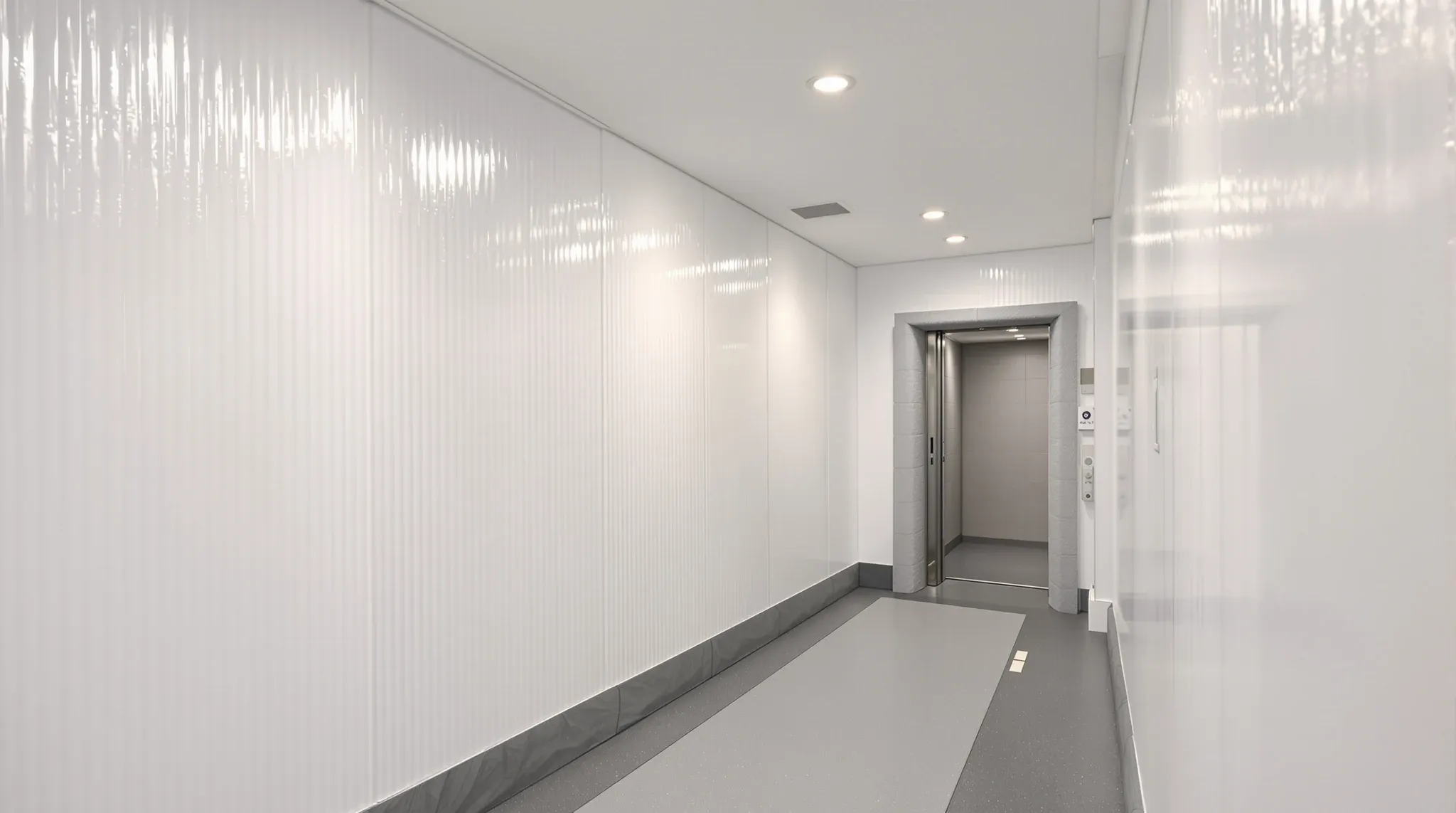
We take defit and make good engagements as a standalone scope because defit is a different trade discipline from fitout, not a smaller version of one. Tenants often approach the work assuming it is demolition with some tidying afterwards, and the quotes they receive from general builders usually reflect that assumption. The scope we run is something else. A defit has to satisfy a lease rather than a design, it has to leave a base building in a condition that someone else will inspect, and it has to be documented well enough to close the obligation out cleanly. Those three demands are what make it a specialty, and they are the reason we keep a dedicated defit practice alongside our fitout practice rather than folding the work into general project delivery.
The case for engaging a complete office fitout company on defit-only work is built on the practical consequences of that distinction. A defit carries its own documentation burden, its own interface with the building, and its own set of risks that look nothing like a fitout built in reverse. Treating it as its own scope, rather than as a cheaper version of a demolition job, changes how the work gets written, priced and delivered.
A defit is a documentation exercise disguised as demolition
The thing tenants underestimate most often is how much of a defit happens on paper. The physical work, the strip-out, the removal of fitout items, the patching of services, looks like most of the job on the first walk-through. It is typically the smaller half of the effort. The larger half is documenting what was removed, establishing what the base-building condition actually was at lease commencement, interpreting what the lease defines as make good, and producing the evidence that the tenant’s obligation has been discharged.
There is a meaningful difference between a strip-out and a make good, and most of the commercial risk on a defit sits in the second half rather than the first. A demolition operator can strip a floor back cleanly. Satisfying a make good obligation is a different standard, and getting it wrong is the most common reason a tenant ends up paying twice: once for the defit itself, and again for additional works when the landlord’s inspection finds the scope did not meet the lease.
The risk profile inverts against a fitout
On a fitout, we are protecting new work from damage, dust, and sequencing errors. Services are being installed, finishes are being laid, and the goal is to hand over a clean, functional space to a tenant about to start using it. The discipline is forward-looking.
On a defit, the goal inverts. We are protecting the base building from damage caused by the strip-out. The slab, the columns, the base-building services, the floor-by-floor fire separation, the core infrastructure the landlord retains between tenancies. None of it should typically be worse off at the end of our work than it was when we arrived. This sounds obvious, and it is where a lot of defit jobs come unstuck, because the tools and working pace that suit demolition can damage base-building elements that the lease typically expects the tenant to return in a defined condition.
The tools, the supervision, and the site discipline on a defit therefore look different from a fitout. Cutting is more restrained. Protection of base-building elements is heavier. Service isolation sequencing is stricter. And the risk-management conversation with the building manager starts before the first skip ever arrives on site.
Approvals, access, and building management behave differently
Defit work tends to come with tighter access windows than fitout work, because building management is usually more cautious about strip-out noise, dust, and waste handling than about install noise. After-hours and weekend work is common, not because the tenant prefers it but because the building often asks for it. The cost of that sits in the quote from the start.
Approval paths also shift. A fitout typically has landlord design approval as its main gate. A defit has landlord condition approval as its main gate: does the base building come back to the expected state, and is that state documented well enough to release the tenant from further obligation. These are different conversations with different people in the landlord’s team, and they tend to happen at different points in the project. What a lease calls make good is often negotiable in both directions, and the commercial outcome depends on how early that negotiation starts and how carefully the tenant’s position is documented along the way.
The handover test is the lease, not the installation
On a fitout the handover test is straightforward: everything works, the finishes are clean, the tenant can move in. On a defit the handover test is defined by the lease, and by whatever side agreements the tenant has reached with the landlord about the make good standard. This is a harder test to pass than it sounds, because lease wording is often general, site condition is always specific, and the interpretation sits with whoever is inspecting on the day. A phrase that seemed clear enough when the lease was signed years earlier can mean two different things to two different inspectors, and the tenant is the one carrying the consequence of that ambiguity.
Preparing for that inspection is where most of the project management effort goes. Photographic records of the base-building condition before work starts, schedules of retained versus removed items, evidence of service isolations, and a clean, referenced checklist that maps to the lease wording line by line. A tenant who hands this over well at the end of a defit typically has a much easier conversation with the landlord’s agent than one who relies on the contractor’s word. We run this evidence trail alongside the physical work from day one, because catching something at the end that was not documented at the start is how disputes start. A thorough defit checklist is one of the cheapest forms of commercial protection available to a tenant at lease end.
Where contractors from a fitout-only background tend to miss things
A contractor whose experience is all fitout tends to miss two things on a defit. The first is the documentation layer. Fitout contractors are used to handing over as-built drawings showing what was installed. Defit hand-over is the opposite: evidence of what was removed, and evidence that the base building has been returned to the condition the lease describes. The reflex of a fitout contractor is typically to under-document the removal side and over-document the patching side.
The second is the protection standard for base-building elements. Fitout work protects new surfaces. Defit work protects existing surfaces that nobody is about to replace. Floor finishes that stay, slab edges that stay, plenum services that stay, ceiling edges that stay. A fitout contractor is rarely set up to protect the base building to the standard the lease expects, because their muscle memory is about the new work, not the retained fabric. A defit-experienced team treats the retained base building as the product being delivered.
Why engaging a fitout company for defit alone still makes sense
None of this is an argument against a single-scope engagement. It is an argument for engaging the right single-scope partner. A complete office fitout company that also runs a dedicated defit and make good practice brings the documentation discipline, the landlord-coordination experience, and the base-building-protection habits that a general demolition operator sometimes lacks, while still pricing the scope as a standalone job rather than as part of a full fitout.
That dual structure is the practical reason we keep both models running side by side. A tenant at lease end does not want to buy a fitout. They want a defit delivered properly, documented defensibly, and closed out cleanly against a specific lease. Running the scope as a standalone engagement under a team that also does full fitouts means the rigour does not drop just because the job is narrow. If anything, defit work tends to demand more rigour per square metre than fitout work does, because the commercial consequences of getting it wrong show up later and cost more to fix.
Some tenants also want to run their defit and a new fitout concurrently in two different spaces. That is its own discipline, and we treat it as a coordinated pair rather than as one job. Running a defit and a new fitout at the same time requires deliberate sequencing across two sets of landlord relationships, and is one of the places a complete office fitout company’s structure is genuinely useful rather than an overhead.
If you are at lease end and need a defit and make good scope delivered cleanly, we can help you work through the lease wording, the site condition, and the landlord relationship before anything commits. Share the clause that covers make good and a short note on the tenancy, and we can give you a realistic view of what the scope actually looks like in your case.
📞 Call us on 1300 60 93 93