
The part of a make good that actually costs money is almost never the part tenants worry about first. The real scope is shaped by the condition of the floor, the state of the landlord’s re-letting plan, the approval history of the works that went in, and the time left on the programme to deliver it. Those four things move the cost more than any written wording on its own ever will.
Once you strip the anxiety out of it, make good usually sorts into three columns on the day we scope it. There are items that stay in because nothing else is safe or practical, items that tend to come out because the landlord has a commercial reason to let them stay, and items in the middle where approval history and site condition decide where they land. Which column an item sits in, and why, is what we build a scope from.
What really drives make good scope on site
The written hand-back position is a starting point, not the whole answer. What it means in practice depends on the state the floor is in at handover, how well the earlier works were recorded, and what the building looks like to the next tenant walking in. A floor kept in clean, approved condition through the tenancy almost always scopes lower than a floor that has accumulated informal changes no one photographed at the time.
The other driver is simply what the work costs to deliver in that building. The same item can price very differently depending on lift access, after-hours rules, waste disposal, and whether building management clears trades on arrival or makes them wait. This is also where the gap between strip out and make good as two separate delivery scopes often surprises tenants who assumed they were the same piece of work.
Items that almost always stay in scope
Some items rarely move, regardless of anything else on the floor. Fire-rated wall penetrations have to come back to a defensible state. Sprinkler zones that were re-routed for the original fitout return to the base layout. Data, power and comms alterations go back to building standard or to a safe terminated condition. Any signage, branding or reception work that is tenant-specific comes out.
The common theme is safety and re-letting readiness. If leaving an item in place would stop the next tenant from taking the floor cleanly, it stays in scope. These items are rarely the expensive part of a make good, but they have to be dealt with first because nothing else can sign off until they are done. Strip out surprises around services and fire-rated fabric are one of the main reasons make good programmes run over, not because they are technically difficult, but because they stayed unscoped until the trades were already on site.
Items that usually have room to move
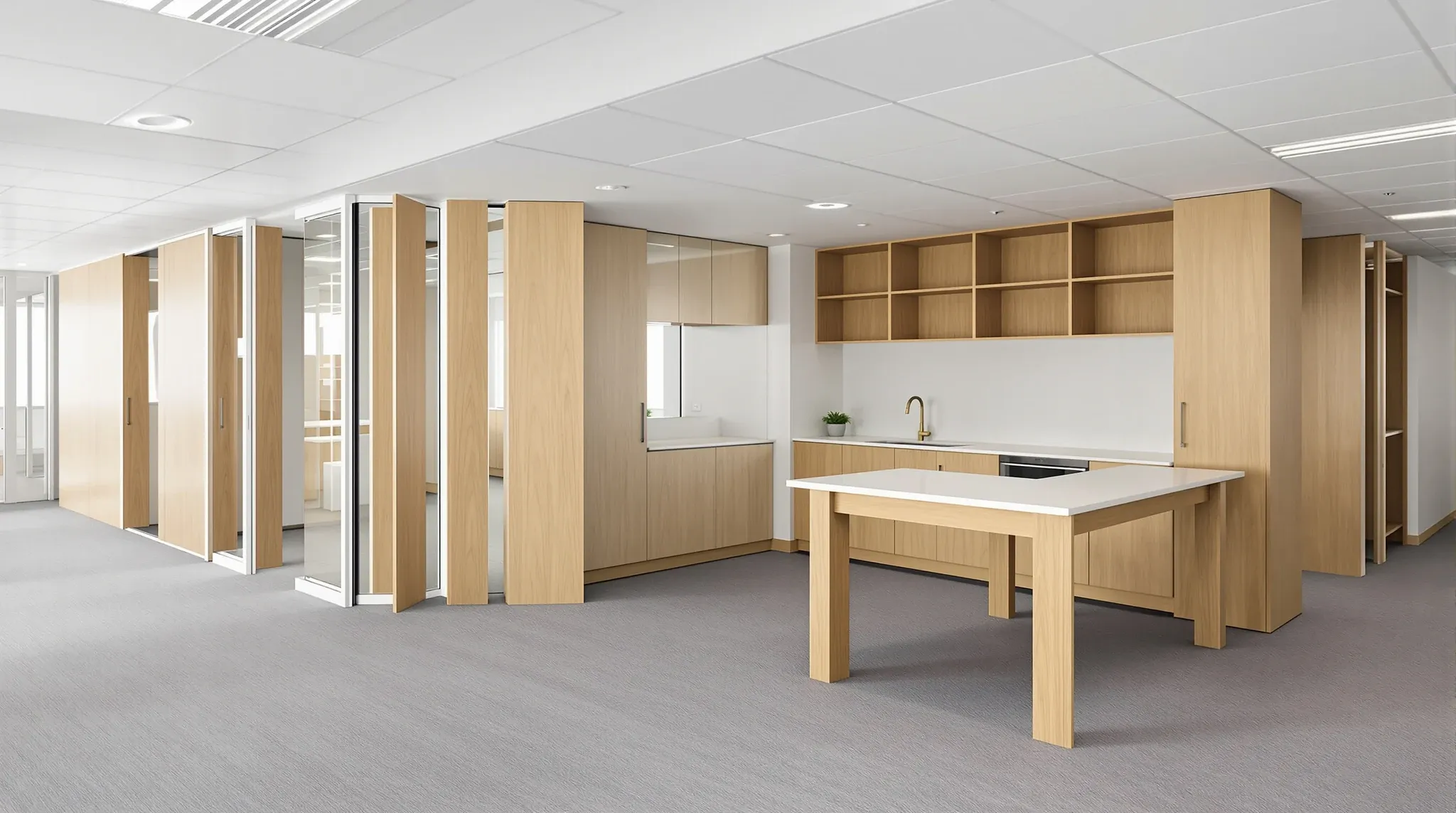
The middle column is where the real value sits. Good quality glazed partition runs, a recently refreshed kitchen, ceiling tiles and grids that still match the base building, lighting upgraded on an approved layout, meeting rooms that are clearly set up for the next tenant’s likely needs. Each of these tends to have room in the conversation. If leaving them in saves the landlord money on the next fitout, there is usually an outcome better than a full strip.
What puts an item in this column is not how the written wording reads. It is whether the work was approved and recorded at the time, whether it has been kept in condition, and whether it is the kind of thing a next tenant would probably want anyway. Tenants who made early partition choices that reduce make good exposure at lease end often find the middle column is very large by the time the floor comes up for hand-back.
How landlord re-letting plans shape the outcome
Landlords are commercial operators. If the re-let plan is already in view and the next likely tenant would probably ask for something similar to what is on the floor, there is usually a quiet conversation worth having about leaving it in place. That conversation is easier when there is time to run it and harder when the programme has already compressed to a crash finish.
Where base building condition, building management rules and tenancy restraints all sit tightly, the room narrows quickly. Building management constraints that shape what can actually change at hand-back often do more to fix the scope than anything in the tenant’s paperwork. A premium tower with an active re-letting programme will read the outcome differently from a fringe building that is already earmarked for its own refurbishment at the next turnover.
Landlords given enough time usually do three things with it. They compare the cost of accepting a narrower scope against the cost of re-fitting the floor from scratch, they look at how the current state stacks up against what the next likely tenant would ask for, and they weigh how long it would take to find that tenant in the current market. Any of those calculations can swing the outcome toward retention rather than removal, but only if the time to run them exists before the hand-back date starts dictating everything else.
Timing changes what is in play
The single biggest lever on make good cost is how early the scope is understood. A walk done six months before the end of the term sits in a completely different cost world from the same walk done three weeks out. Early, the middle column stays open and the landlord still has time to think commercially about retention. Late, everything defaults toward removal because there is no time left to run any sensible conversation and still finish the physical work before the floor has to be handed over.
Late scoping also compresses the on-site programme into tighter windows. Floors that would normally be stripped during business hours get pushed into evenings and weekends. After-hours work rules in NSW commercial buildings bring their own cost layer once the programme compresses, especially where building management enforces noise curfews, lift bookings and restricted floor access. None of that shows up in the written hand-back position, but all of it lands on the final invoice.
Where the cost usually lands in practice
Fixed items in the hand-back specification are rarely where the real money goes. Cost tends to concentrate in four places: the volume and handling of waste coming off the floor, the labour premium that comes with after-hours delivery, the fire-rated reinstatements that have to be certified properly, and the late variations added because something was missed in the original walk. None of those are about what the written position says. They are about how the job is physically delivered.
Waste is often the biggest surprise. A floor that looks simple from above produces a lot more debris than tenants expect once demountable walls, ceiling tiles, floor coverings, carpets, cabling and signage come down. Waste removal and site logistics in commercial towers can move a make good cost by a meaningful margin on their own, especially where lift access is rationed and skip locations are limited.
Late additions to scope are the other quiet cost concentrator. Items that turn up in the final walk, a penetration no one knew about, a services reversion that was not in the approval history, a piece of reinstatement the landlord now wants cleaner, land as variations priced under programme pressure, which is the most expensive way to add any scope to a fitout.
How we approach scoping make good before any trade turns up
On any defit and make good job, we walk the floor with the tenant before trades mobilise, photograph every element, check the fire-rated fabric, map the services reversions, and cross-reference what we can see against the approval history for the tenancy. The outcome is a scope that shows the fixed column, the middle column, and the honest cost exposure of each item in both.
From there, the conversation with building management and the landlord becomes a much shorter one. Most hand-back disputes come from late surprises, not from genuine disagreement about what the hand-back should look like. A structured defit checklist that works through the floor item by item is what usually gets tenants to a clean scope quickly, and it is also what protects them from agreeing to work that was never actually required in the first place.
If there is budget pressure and the scope is only getting delivered once, the early walk also gives us room to sequence the works sensibly rather than attacking everything at once. A sensible sequence reduces after-hours time, reduces waste handling, and keeps the fire-rated and services reinstatements on a clean path, which is where most of the late variations show up in the first place.
If you want a grounded read on where your hand-back scope really sits and what it is likely to cost to deliver cleanly, we can help. Our approach starts with the walk and the honest cost picture, because getting the scope right before any trade mobilises is the difference between a controlled make good and a crash programme.
📞 Call us on 1300 60 93 93