
A variation is a change to the agreed scope of a fitout, priced and documented after the original contract has been set. That is the working definition. The reason variations matter is that every one of them is a decision made under less ideal conditions than the decisions that came before the contract: with less time, less design room, and more of the project already committed. The same change costs more when it lands as a variation than it would have cost if it had been decided up front.
Variations also arrive at different stages of the project, and each stage carries its own cost profile. A variation priced before site mobilisation is a very different animal from one priced during first fix. Understanding where in the project a variation enters makes it easier to keep the count low, keep the running cost visible, and avoid the standard surprise at the end. This article walks the project stage by stage, so the prevention lever at each point is easy to see.
Variations that arrive before construction starts
The earliest variations enter after the contract is signed but before the crew mobilises. They are usually the cheapest to absorb because no work has been committed on site. Typical causes are a tenant decision that was deferred during documentation and has now been made, a landlord comment returned on the submission that needs a scope response, or a long-lead item that cannot be sourced on the original specification and needs an alternative.
The prevention lever at this stage is documentation discipline. A tenant who closes the brief before pricing, and a design team that captures every commitment in writing before construction sign-off, usually land here with zero or one pre-start variations. A tenant who treats the brief as a moving target tends to land with six or seven, each small on its own, and each nudging the contract value sideways before anyone has swung a hammer. The domino effect of small decisions quietly moving a fitout budget is usually most visible in this early-stage variation count, because each small change will typically pull two or three downstream adjustments with it.
Variations during strip-out and rough-in
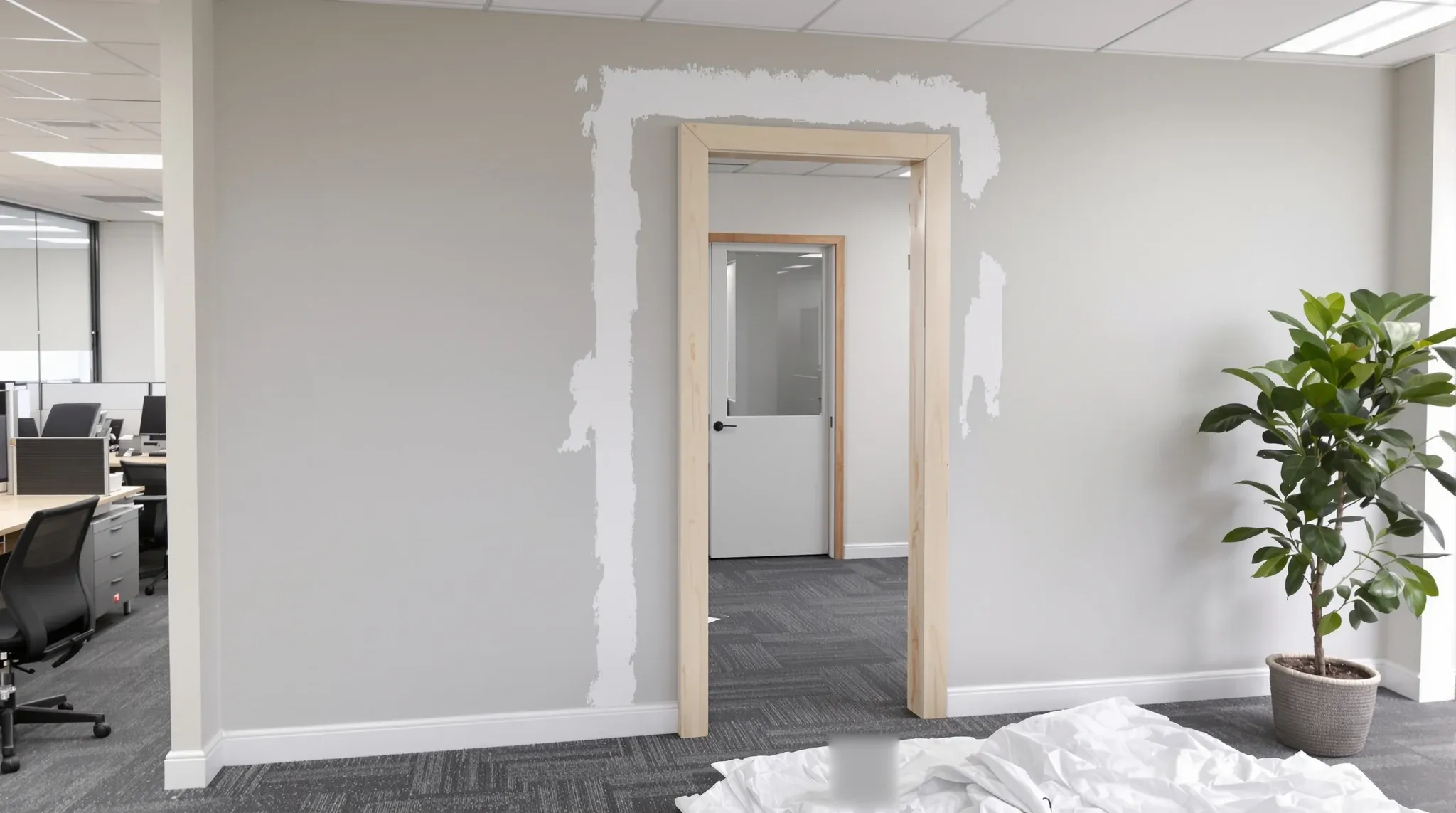
The next window is strip-out and rough-in. This is where the project hits the built fabric, and it is where a lot of variations originate from discovery rather than from decision. A partition that was drawn as freestanding turns out to be tied into a services riser. A ceiling section that was flagged as standard turns out to carry a bulkhead that was never documented. A slab that was assumed to be clean turns out to carry penetrations from a previous tenancy that need capping before the new floor layer goes down.
Discovery variations are the hardest to prevent entirely, because they depend on what was hidden behind walls and above ceilings. They are not impossible to reduce. A thorough pre-start site walk, a careful read of the building’s record drawings, and a review of the conditions that cause projects to go off track after the scope has been agreed can surface most of the high-risk discovery zones before mobilisation. The variations that remain are usually smaller, and the pricing conversation is cleaner because the risk was priced, not discovered cold.
Partitions and ceilings are the two layers where discovery variations tend to concentrate. A wall that needed to stay dry and clean turns out to share a path with a live data run. A ceiling that was expected to lift cleanly turns out to have hidden tenant services stitched into the grid. Our partition and ceiling delivery builds a short site-walk and drawing review into the front-end of every project, because that is where the largest discovery savings sit.
Variations during first fix
First fix variations are the ones that change the cost trajectory. By this stage, several trades are on site and the work has committed to a direction. A late change now touches partitions, ceilings, lighting, data, and sometimes HVAC, and every trade has to absorb the change in their own sequence. A change that would have been a redline at the brief stage becomes a multi-trade coordination exercise at first fix, and the cost reflects that.
The prevention lever at this stage is decision readiness. Any decision that belongs to the tenant and has not been made before first fix begins is a candidate for a first-fix variation. Technology layouts, meeting room signage positions, kitchen appliance specifications, AV mounting points, and reception finishes are common examples. Where these are closed out on paper before mobilisation, the first-fix phase runs without variation pressure. Where they are left open, a handful of decisions land mid-fix and they all carry the premium of the moment. The hidden cost of changing one element mid-fitout lives almost entirely in this window, because this is the phase where the most trades are active at once.
Variations during fit-off
Fit-off variations tend to be the smallest in individual value but the most disruptive to the programme. By this stage the project is closing in on handover, the site is being cleaned down, and the remaining work is about finishes, joinery trims, and final touch-ups. A late preference change on a finish colour, a joinery detail that looked different on site to the sample, or a request to reposition a light fitting at the last minute are all fit-off variations.
The cost sits less in the material and more in the rework and the programme slip. A single fit-off variation can push the move-in date by several days if the trade is no longer on site and has to return. Prevention is about expectation management during the final weeks: being clear with the tenant team that fit-off is for execution, not for new preferences, and holding walks early so any genuine concerns surface before the finishes land.
Variations during commissioning and handover
The last stage for variations is commissioning. Here the variations are usually technical: a lighting control that needs reprogramming to match how the space is being used, an HVAC zone that needs rebalancing against the actual occupancy pattern, an access control rule that needs adjusting for after-hours work. These are small items individually, and they are almost always legitimate adjustments to match the way the space is being used rather than cosmetic preferences.
The cost is usually modest, but the prevention lever is still useful. A commissioning plan that expects to tune the space to its occupants rather than hand it over untouched avoids treating these as variations in the first place. Building in a commissioning allowance at the contract stage is cheaper than handling each adjustment as a fresh variation line. This is also the stage at which a careful handover reveals anything that tends to cause timelines to slip at the same stages of the project, because the commissioning delays repeat across projects in recognisable patterns.
Variations that come from stakeholder churn
A separate category of variation comes from people, not from the built fabric or from design decisions. These are the variations that enter because a new internal stakeholder was added to the project halfway through, or because an executive review at month two introduced a fresh set of preferences, or because the team that signed off the original brief has since changed. None of these are unusual. All of them generate variations, because each new voice tends to re-examine decisions that were already closed.
The prevention lever here is decision ownership. A single internal project owner with clear authority to commit, backed by the business rather than quietly undermined by it, absorbs late stakeholder input without re-opening settled decisions. A project where every new voice is treated as a fresh starting point will generate stakeholder-driven variations throughout the programme, and each one will land at whatever cost-per-decision the current stage happens to carry. This is the category most tenants underestimate when they plan the internal side of the project, because it does not look like a delivery risk until the variations start appearing.
Keeping the variation count visible through the project
Across all of the stages above, the single biggest prevention tool is not a clever contract clause. It is visibility. A project that tracks every variation as it happens, logs the cost against the running contract value, and surfaces the cumulative count in weekly updates gives the tenant room to respond. A project that lets variations accumulate quietly into a single end-of-project number removes the ability to course-correct along the way.
Visible variation tracking also tends to reduce the raw count. Once a tenant can see the running total and the pattern of where the variations are coming from, the decisions upstream of the variations get made more deliberately. The cost of visibility is small. The cost of not having it usually shows up in the final invoice.
If you are planning a fitout and you want the variation count held low through deliberate front-end discipline and running visibility rather than contingency padding, we can help. Our full fitout delivery closes the brief before pricing, tracks variations visibly week by week, and treats mid-project changes as rare events rather than normal rhythm.
📞 Call us on 1300 60 93 93