
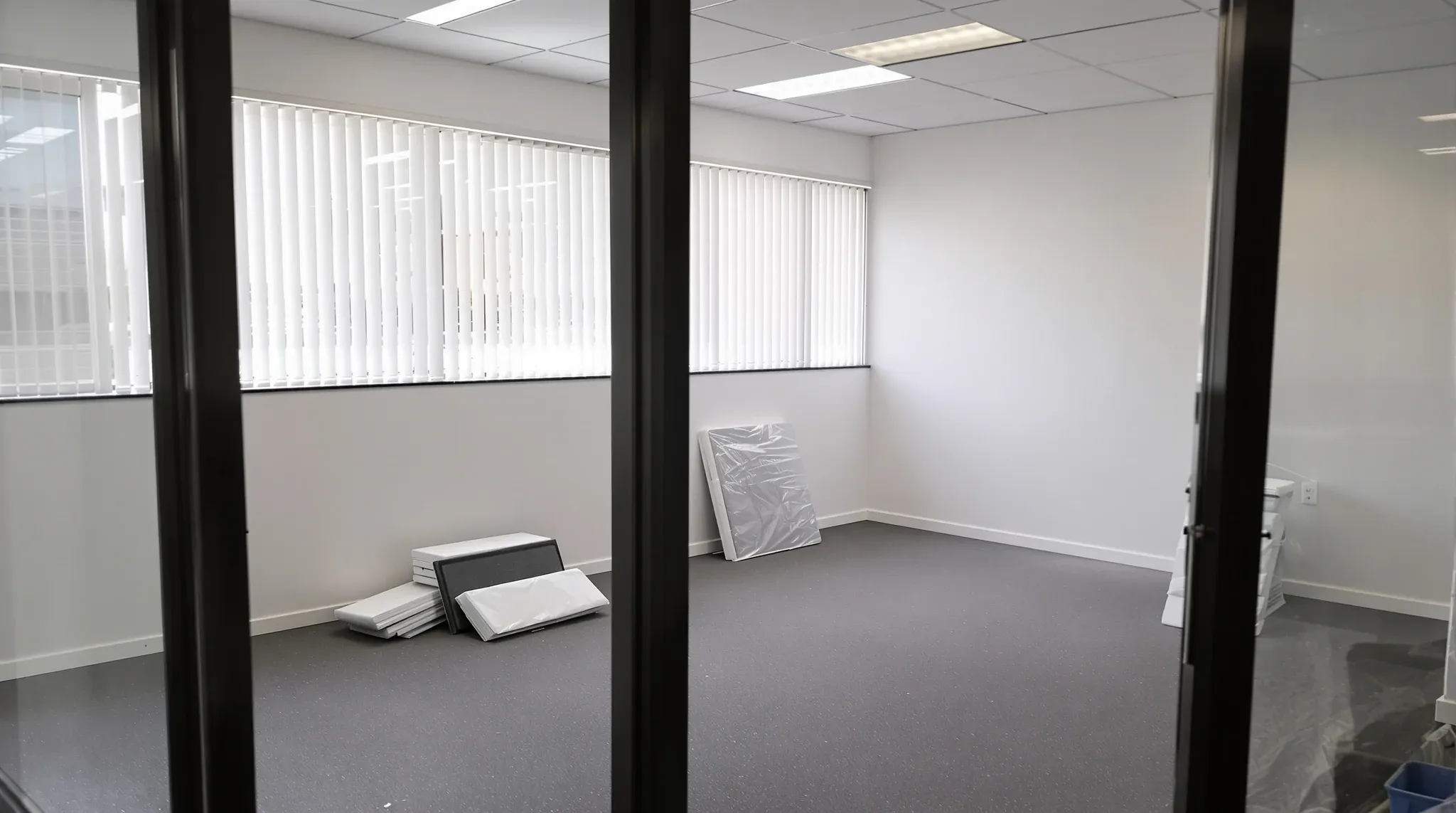
If you have never dealt with commercial property before, the term make good probably means very little. It sounds like it should be simple, and in concept it is: when your office lease ends, you are expected to put the space back to the condition it was in before you moved in. In practice, the scope of that work is broader than most people expect, the cost is higher than most people budget for, and the timeline is tighter than most people realise until it is almost too late to manage properly.
This is a practical walkthrough of what make good actually involves. No legal jargon, no property industry assumptions. Just a clear explanation of what happens, what it costs, and what you need to know if this is your first time dealing with it.
What Make Good Actually Means in Plain Terms
Make good is the process of returning a leased office to the condition it was in before you made changes to it. When you moved in, you probably added things: walls to create private offices and meeting rooms, a kitchen or breakout area, extra power points and data connections, signage, floor coverings, lighting changes, and possibly modifications to the ceiling. Make good means undoing all of that and handing back a clean, empty space that the landlord can lease to the next tenant.
The reason it exists is straightforward. You leased a space in a certain condition, you modified it to suit your business, and the lease says you need to return it to its original state when you leave. The landlord does not want to inherit your old kitchen, your partitioned offices, or your branded signage. They want a blank canvas they can offer to the next tenant, who will have their own requirements.
If you have only ever rented residential property, the closest comparison would be filling in picture hooks and repainting walls at the end of a residential lease, except at a much larger scale and with considerably more complexity. Understanding fitouts from a non-property background helps set realistic expectations about what is involved.
What Gets Removed and What Stays
The general rule is that anything you added during the lease needs to come out, and anything that was there when you arrived stays. In practice, working out which is which can be less straightforward than it sounds, particularly if the lease has been running for several years and nobody made a detailed record of what was original and what was added.
Items that almost always need to be removed include internal partitions and walls that you built, kitchen and kitchenette installations, custom joinery such as reception desks and built-in storage, any signage on walls, glass, or external areas, floor coverings you installed, and any furniture that is fixed in place. Electrical circuits, data cabling, and plumbing connections that were added for your fitout will also need to be removed or disconnected.
Items that typically stay include the base building structure (external walls, columns, core areas), the building’s standard ceiling grid, base building lighting, the main switchboard, and any services that are part of the building rather than your tenancy. If there is a grey area, such as an air conditioning modification that now benefits the building rather than just your tenancy, that becomes a conversation between you and the landlord.
The Physical Work Involved
Make good is essentially a construction project run in reverse. Instead of building an office, you are taking one apart, then repairing and cleaning everything underneath. The strip-out and make good process follows a logical sequence, and getting the order right matters for both quality and cost.
The first phase is the strip-out: physically removing all the tenant fitout elements. Partitions come down, joinery gets pulled out, floor coverings are lifted, and services are disconnected. This is the most disruptive phase and typically the noisiest, which is why building management usually restricts it to certain hours, especially if there are other tenants in the building.
The second phase is the restoration work. Once everything has been removed, the surfaces that were hidden behind your fitout need to be repaired. Walls need to be patched and painted where partitions were attached. Ceiling tiles that were cut, stained, or damaged need to be replaced. The floor surface needs to be cleaned, levelled, or prepared depending on its condition. Services that were modified need to be reinstated to their original configuration.
The final phase is the clean. This is not a regular office clean but a professional builders’ clean that covers everything from the ceiling grid down to the floor surface, including light fittings, window frames, and any base building elements that accumulated dust during the strip-out work.
How Long It Takes and What Affects the Timeline
The physical work on a small to medium office of 200 to 500 square metres typically takes three to six weeks, depending on the complexity of the fitout being removed. A simple open-plan space with minimal partitioning will be faster. A heavily partitioned office with a full kitchen, server room modifications, and extensive services work will take longer.
What most people underestimate is the lead time before the physical work can start. You need to get a scope assessment done, which involves someone inspecting the current fitout and comparing it to the lease requirements. You need to get a quote and engage a contractor. You need building management approval for the work, which includes submitting a scope of works, confirming working hours, and arranging access. All of this takes time, typically four to eight weeks before any physical work begins.
For this reason, starting the make good process six to nine months before lease end is advisable for most tenancies. That gives you time to plan, negotiate with the landlord about the scope, and schedule the work without the pressure of running up against the lease expiry date.
What It Typically Costs and Why It Varies
Make good costs in the Sydney market vary widely depending on the size of the tenancy, the complexity of the fitout, and the building’s requirements. As a rough guide, a basic make good on a lightly fitted office might cost $80 to $120 per square metre. A more complex make good on a heavily fitted space with extensive services work can run to $150 to $250 per square metre or more.
The factors that push costs up include the number of partitions to be removed, the extent of ceiling tile replacement required, the complexity of services decommissioning, the condition of the subfloor beneath floor coverings, and any hazardous material issues. Working hours restrictions in the building can also add cost, because after-hours or weekend work carries a premium.
The factors that can bring costs down include early engagement with the landlord to negotiate a reduced scope, a fitout that was designed with removal in mind from the start, and choosing a contractor who manages all of the trades rather than engaging them separately. Understanding the full scope of fitout work helps set expectations about the corresponding scope of make good.
Common Surprises That Catch Tenants Off Guard
The most common surprise is the ceiling. Tenants rarely think about what is happening above the ceiling tiles during their lease, but the ceiling grid and tiles are one of the largest make good cost items. Tiles get discoloured by age, cut to fit around partition heads, stained by condensation, and damaged by repeated access for maintenance. Replacing ceiling tiles across an entire tenancy is a significant line item that most tenants do not anticipate.
The second common surprise is the floor. Carpet tiles or vinyl that have been in place for five or more years will show the footprint of every wall, desk pedestal, and heavy piece of furniture that sat on them. The subfloor beneath often needs preparation before it is in a condition the landlord will accept.
The third surprise is the services. Industry terminology around services and fitout scope can be confusing, but the bottom line is that every electrical circuit, data cable, and plumbing connection your fitout added needs to be dealt with during the make good. These elements sit behind walls and above ceilings, so they are easy to forget about, but they are very much part of the obligation.
How to Get Started Without Overthinking It
The process does not need to be complicated, but it does need to start early enough that you have options. The first step is to find your lease and read the make good clause. You do not need a lawyer for this; you just need to understand what the clause says you are required to do. If it references a condition report, find that too.
The second step is to get someone experienced to look at your office and tell you what the make good will actually involve. This is not something you can accurately assess yourself unless you have done it before. A site inspection by an experienced fitout team will identify the full scope, flag any complications, and give you a realistic budget and timeline to work with.
The third step is to engage with your landlord or managing agent. Let them know you are planning the make good, ask whether they have any specific requirements, and explore whether there is room to negotiate the scope. This conversation goes much better when you are six months out than when you are six weeks out.
If you are leaving an office and make good feels overwhelming, we can simplify it. We will look at what your lease requires, inspect the space, and give you a clear scope and quote so you know exactly what is involved.
Call us on 1300 60 93 93