
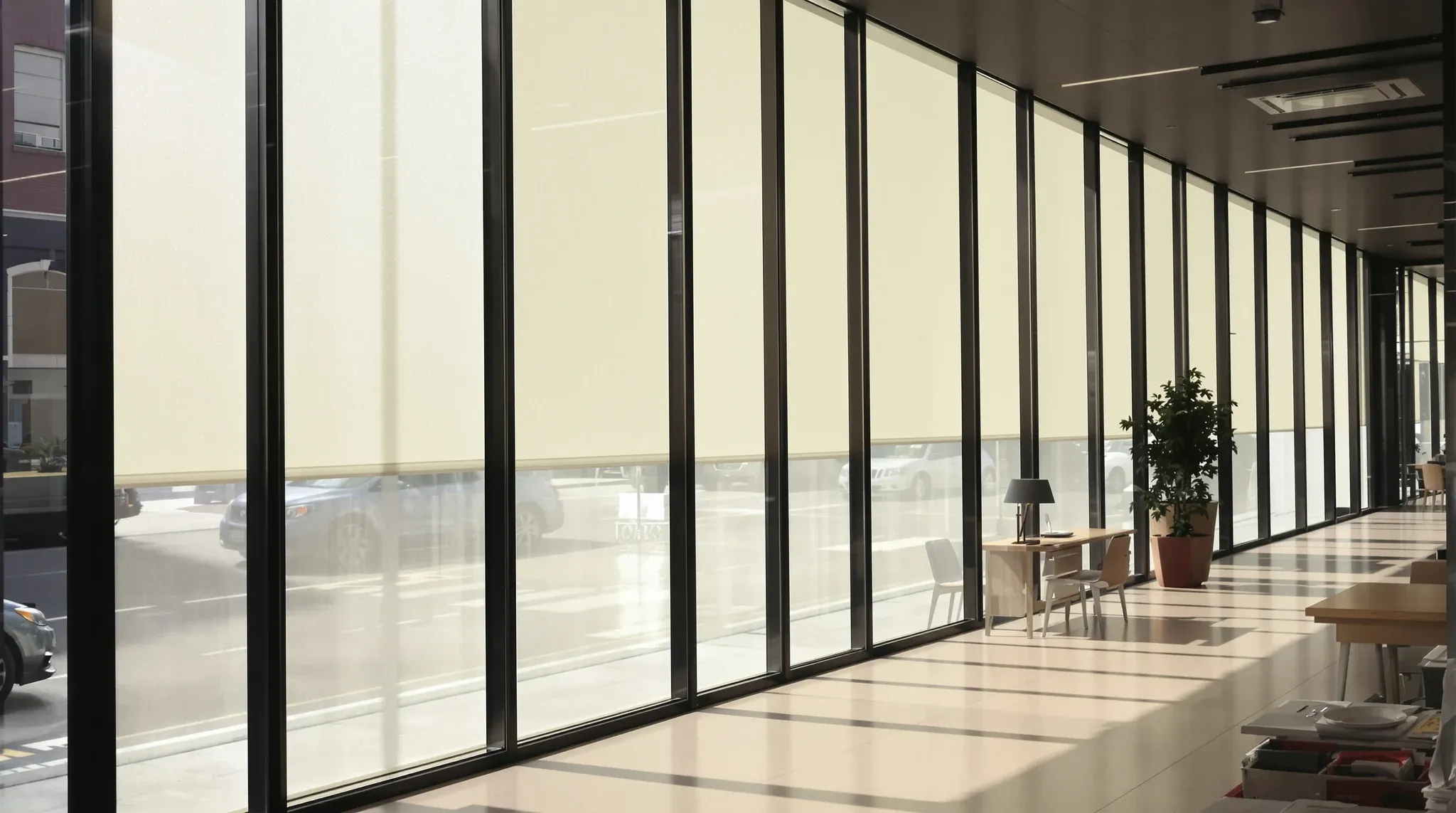
A real estate agency lives on its shopfront. The glass line onto the street is display, branding and first impression all at once, and it is the one part of the fitout that works on people who never come inside. What makes the agency shopfront different from an ordinary office glass wall is that it faces the street, carries the listings and sits in front of staff who work behind it all day. How that glass is specified decides glare on the screens, privacy at the desks, and what the landlord will allow on a ground-floor tenancy.
The mistake is to treat the street glazing as a single decision about looking good from the footpath. It is really three decisions at once: how it presents to the street, how it performs for the people working behind it, and what the lease and the building actually permit. The agencies that get a comfortable, sharp-looking shopfront are the ones that resolve all three together.
What Makes Street-Front Glass Different From An Office Glass Wall
An internal office glass partition has a controlled environment on both sides. A shopfront has the street on one side: direct sun, passing traffic, weather and public access. That changes what the glass has to do and what rules apply to it.
Public-facing glazing at ground level usually has to meet safety-glazing requirements that an internal partition does not, because it is glass the public can walk into. The safety and compliance requirements that apply to commercial glazing are stricter at a street frontage, and getting the specification right here is not optional in the way an aesthetic choice is. This is the first thing to confirm, because it can rule some options out before the look is even discussed.
The street side also brings sun and heat the internal partition never sees. West or north-facing glazing can turn the front desks into the hottest, brightest seats in the office by mid-afternoon, which is the single most common complaint from staff working behind a glamorous shopfront. The glass that looks best from the footpath is not automatically the glass that works for the people sitting behind it.
Solving Glare And Heat Without Killing The Display
The tension on every agency shopfront is between an open, bright, inviting front and a comfortable workspace behind it. Too much clear glass facing the sun and the staff bake and squint at their screens. Too much shading and the display goes dark and the agency loses the open look it wanted.
The lever that resolves most of this is the glass specification itself. A tinted or performance glass cuts heat and glare while keeping the front readable from the street, and the trade-off between tinted and clear glazing on a perimeter is exactly the decision an agency front turns on. The right tint level depends on the orientation, so a front that faces the afternoon sun needs more than one that faces a shaded street.
Layout helps too. Pulling the working desks back from the glass line, putting the listing display or a low feature in the hottest zone, and keeping the staff seats out of the direct sun path solves comfort without darkening the front. The display window can take the heat that the desks cannot.
Where the front is genuinely exposed, performance glazing and a considered desk layout together do more than either alone. The goal is a front that stays bright and open to the street while the people behind it can actually see their screens.
Privacy At The Desks Behind A Glass Front
A glass shopfront makes the agency visible, which is mostly the point. But staff behind it are on display to the street all day, screens and all, and some conversations and documents are not meant for passers-by to read over a shoulder through the window.
Most of this is solved by layout: keeping the desks that handle sensitive work back from the glass, and using the front zone for display and reception rather than detailed deskwork. The front becomes the shopfront, and the working area sits behind it.
Where a part of the front needs to switch between open and private, switchable privacy glass can turn a section opaque on demand, which suits a street-facing meeting space that needs to be inviting most of the time and private during a signing. It is a premium option, so it earns its place on the specific panels that need it rather than across the whole front.
The Listings Window Works Hardest After Hours
An agency shopfront does some of its most valuable work when the office is closed. Evening and weekend foot traffic stops to read the window, and the lit listings display is often the first contact a future vendor or buyer has with the agency. The glass front has to present that display well at night, not just in daylight.
That changes how the display zone is designed. A backlit listings panel or a well-lit window needs the glass to stay clear and reflection-free in the dark, and a heavily tinted front that looks sharp at midday can go murky and mirror-like once the street is darker than the interior. The tint and the display lighting have to be chosen together, because the front that reads beautifully at 2pm can disappear behind its own reflection at 7pm.
Positioning matters as much as the glass. The display sits in the part of the front with the clearest sightline from the footpath, lit so it draws the eye after dark, while the working desks behind it can be screened or dimmed when the office is closed. A front planned this way keeps selling listings long after the last agent has gone home.
Entry, Access And The Ground-Floor frontage
A ground-floor street entry brings requirements an upper-floor office never deals with. The door has to handle public walk-in traffic, meet accessibility expectations for a public-facing tenancy, and sit within whatever the building and the lease allow at the frontage. These are constraints to confirm, not assumptions to make.
The entry also has to feel open and easy to walk into, which is part of why agencies favour glass doors and a clear, uncluttered threshold. An entry that reads as closed or hard to find quietly costs walk-in traffic, and on a ground-floor agency that traffic is part of why the tenancy was taken in the first place.
Security at a street front is the other side of the same coin. A ground-floor glass frontage is more exposed than an upper floor, so the glazing specification and any after-hours protection are worth settling early rather than retrofitting once the front is in. Built in from the start, it stays invisible; added later, it tends to compromise the look the agency paid for.
What An Agency Shopfront Costs And What Drives It
A street-front glazing package sits above a standard internal partition rate, and it helps to know why before pricing it. Performance or safety glass costs more than standard glazing, larger panes cost more to supply and handle, and the framing and fixing at a street frontage is more involved than an internal partition.
The bigger budget question is usually the split between what the landlord provides and what the tenant fits. On many ground-floor tenancies the base shopfront glazing is part of the building, and the agency is fitting branding, internal glass and the display behind it rather than replacing the structural glass line. Confirming that split early decides whether the shopfront is a modest branding-and-internal-glass job or a full glazing replacement, and the two carry very different numbers.
Branding and signage on the glass are their own line. Window graphics, the listings display and applied branding are usually straightforward, but they interact with the glass and tint choices, so they are worth specifying alongside the glazing rather than as an afterthought once the glass is in.
Getting The Agency Shopfront Right
The reliable order is to confirm the constraints first, then solve the experience. Check what the lease and the building allow on the ground-floor frontage, and what safety glazing the street front requires, before settling on a look. Those answers set the boundaries the design has to work inside.
Then specify the glass for the orientation it actually faces, lay the desks out so the staff are comfortable behind it, and place any privacy or switchable panels only where they earn their cost. Co-ordinate the branding and display with the glass choice so the front reads as one considered shopfront rather than glazing with graphics added later.
If you are opening or rebranding an agency and want the street front specified so it looks sharp from the footpath and works for the team behind it, we can help you get the glass right for the orientation, the privacy and what the building will allow. Talk to us before the front is locked in, while the glazing and the layout can still be solved together.
📞 Call us on 1300 60 93 93