
Partial fitouts get dismissed more often than they deserve. Tenants who assume that any meaningful improvement to an office has to involve a full rebuild are usually wrong, and the cost of that assumption is either doing nothing at all or committing to a scope that is far bigger than the underlying problem. Most real improvements to real offices come from tightly targeted partial fitouts, not from comprehensive rebuilds, and the scopes that land well share a common feature: they identify one genuine weakness in the space and invest in fixing it properly rather than trying to improve everything at once.
The scenarios below describe the partial-fitout patterns that have produced the biggest practical improvements for the tenants we have delivered them for. They are grouped by the kind of weakness being addressed, not by the kind of trade being deployed. Reading across them should give you a sense of which weakness is strongest in your own space, and therefore where a partial fitout would deliver the most value if you could only commit to one.
The acoustic rework that rescues a noisy office
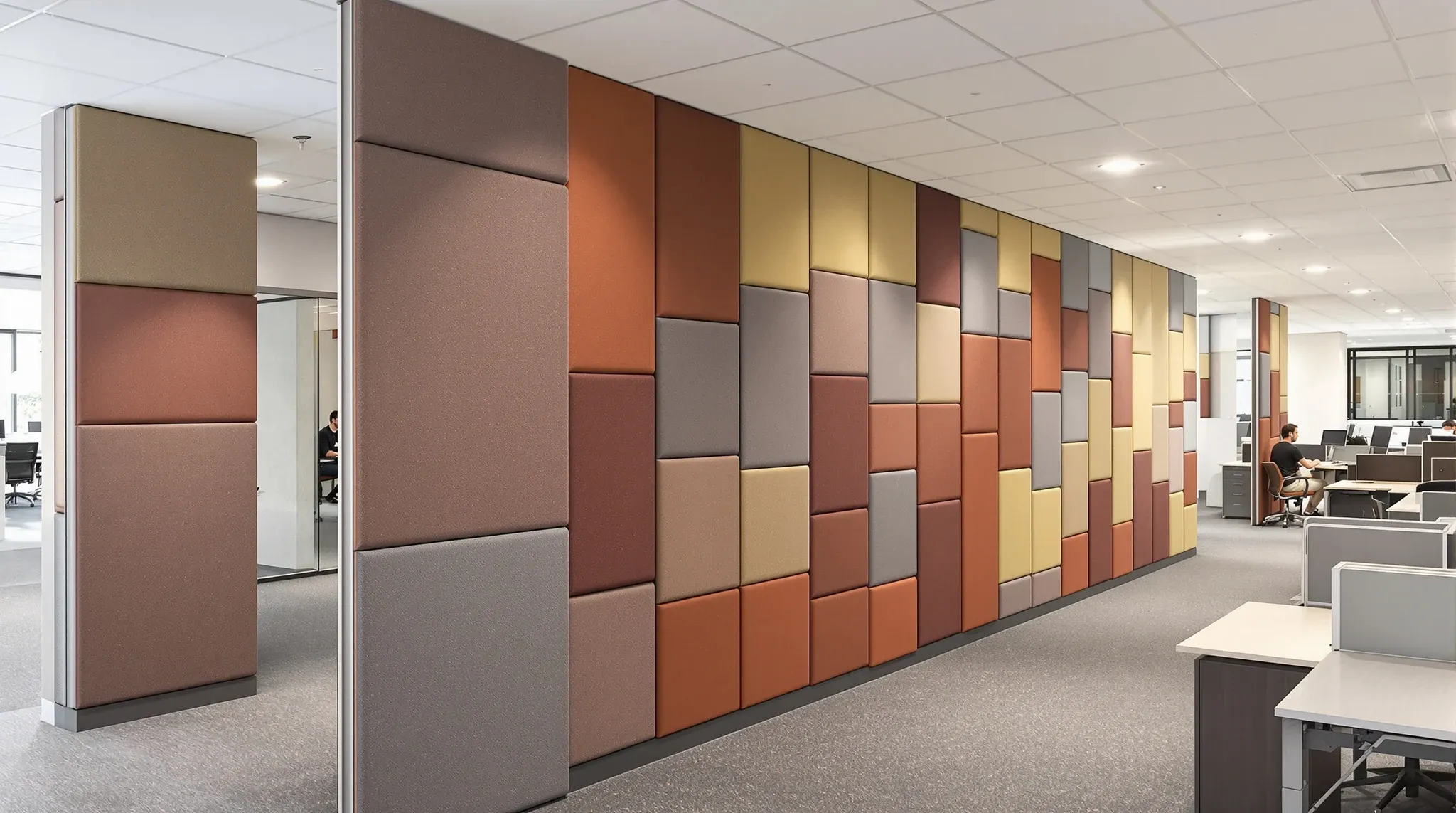
This is the most common partial fitout we deliver, and it is almost always the one with the biggest perceived improvement per dollar spent. Noise problems in offices rarely have a single cause, but they almost always have a dominant cause, and the rework that fixes the dominant cause usually shifts the experience of the whole space. A ceiling upgrade where the grid was acoustically transparent. Partition head seals where voice was travelling through the ceiling void. An acoustic refresh of a shared wall between a meeting room and an open desk area. None of these jobs is big. All of them can be transformative.
The reason acoustic partial fitouts land so well is that noise is not just a nuisance. It affects focus, fatigue, fatigue-driven errors, and how willing staff are to come in at all. A space that was hard to work in on Tuesday afternoon becomes a space people choose to come back to. Running both full fitouts and standalone scopes means we can treat acoustic reworks as their own discipline, pricing and planning them with the same rigour as a full project.
The lighting and ceiling refresh that changes how the space feels
Some offices do not have a noise problem or a layout problem. They have a mood problem. The ceiling is dated, the lighting is dim in the wrong places and glary in the others, and the overall feel of the space is ten years older than the building actually is. A partial fitout that targets just the ceiling plane and the lighting zones can reset the mood of the whole office without touching the partitions, the flooring, or the services.
These jobs work best when the existing partition layout is still serving the team well. If the walls are in the right places, refreshing the plane above them delivers a visual improvement that reads as much newer than the scope implies. When the partitions are also in the wrong places, a ceiling-and-lighting-only scope usually does not solve enough of the underlying experience of the space to justify the cost, and the conversation widens into a bigger rework. Treating ceilings and lighting as a periodic upgrade rather than a one-off rebuild tends to produce better offices over a lease term than saving it all for a final refit.
The partition reshuffle that reclaims lost area
Partial fitouts that reshuffle partitions rather than replace them can reclaim a surprising amount of usable floor area without any change to the total footprint. The walls were put in the wrong places the first time, either because the original fitout was designed around a different team or because the team has simply grown into a shape the old layout does not serve. Moving a handful of walls, opening a closed-off zone, or adding a meeting room in a location that was previously wasted corridor can produce more working area from the same tenancy without any lease change at all.
The reshuffle usually pays for itself through either the additional capacity it unlocks or the better use of the existing capacity. A tenant who was about to lease more floor area and decides to reshuffle instead saves a noticeable amount of money over the remaining lease term. A tenant whose team was working around a layout problem gets visibly better ergonomics and noticeably better collaboration. Partition changes inside a working fitout are the standard vehicle for this kind of improvement.
The flooring refresh that undoes years of wear
Flooring is the hardest-used surface in an office, and it shows its age faster than any other single element. A partial fitout that targets the flooring alone, or the flooring plus any affected trims and skirting, can visually refresh an entire tenancy without touching the ceiling, walls, or services. The cost is contained because the scope is contained, the disruption is manageable because the work is mostly surface-level, and the improvement is immediately visible to everyone who walks into the office the following Monday.
Flooring refreshes tend to work best when the walls and ceilings are already holding up, the team layout is working, and the main complaint about the space is aesthetic rather than functional. They are a weaker fit when the flooring is symptomatic of something bigger: a base-building moisture issue, a subfloor problem, or an underlying layout that no longer serves the team. In those cases a flooring-only scope papers over a deeper issue, and the cost usually ends up being wasted.
The services rework that enables future flexibility
This is the least visible partial fitout and often the most commercially useful. A services rework targets the electrical, data, or HVAC zoning so that future partition changes can happen without expensive follow-on work. It rarely looks like much when it is done. The office looks almost the same. But the next reconfiguration, or the next team growth step, runs at a fraction of the cost it would have otherwise taken because the services are now flexible enough to accommodate it.
Tenants rarely commission these scopes in isolation. They usually get bundled into a reconfiguration or a partition reshuffle as the enabling layer underneath. When they are commissioned on their own, it is typically because a tenant knows a future change is coming and wants to prepare for it. Service planning limits layout changes in ways that are invisible until the next change is attempted, at which point the shortcut taken during the original fitout shows up as a cost line in the rework quote.
Why partial fit-outs beat full rebuilds when the scope fits
A partial fitout that matches the actual weakness in a space will almost always outperform a full rebuild that tries to improve everything at once. The reason is that a full rebuild spreads the investment across elements that did not need improving, diluting the benefit of the money spent on the elements that did. A targeted partial fitout concentrates the investment where it will actually change the experience of the space, and leaves the parts that were already working alone.
The trap is picking the wrong element to target. A noise problem fixed with a flooring refresh solves nothing. A layout problem fixed with a ceiling refresh solves nothing. A mood problem fixed with a partition rework usually delivers less than the cost justified. Getting the diagnosis right is the single most important step in a partial fitout, and it is why we spend real time on walking through the whole space before we price a narrow scope, even when the tenant already knows what they want us to quote.
There is also a timing argument for partial fitouts that tenants rarely think about. A full rebuild needs a window of vacancy or near-vacancy that many businesses cannot actually afford to give up. A partial fitout that targets one element can usually run inside an occupied tenancy with phased works, weekend shifts, or a short zone-by-zone disruption pattern. The operational continuity is worth money, and for some businesses it is worth more than the work itself. A full rebuild that costs the team three weeks of disrupted productivity has a hidden cost that rarely appears in the quote. A targeted partial fitout that costs three evenings of after-hours work does not.
This is also why the partial-fitout conversation often widens into a conversation about how renovation scopes interact with existing fitouts. The existing fitout is not a fixed constraint that the partial scope has to work around. It is a working part of the office that should be protected while the weak element is fixed, and the interaction between the new work and the surviving fitout is usually where the execution challenge sits.
If there is a specific thing about your office that is not working, and you have been putting off the conversation because you thought fixing it meant a full rebuild, we can help you work out whether a targeted partial fitout will solve the problem for a fraction of the cost. Tell us what the specific weakness is, and we can give you a realistic view of whether a partial scope is the right call and what it would look like.
📞 Call us on 1300 60 93 93