
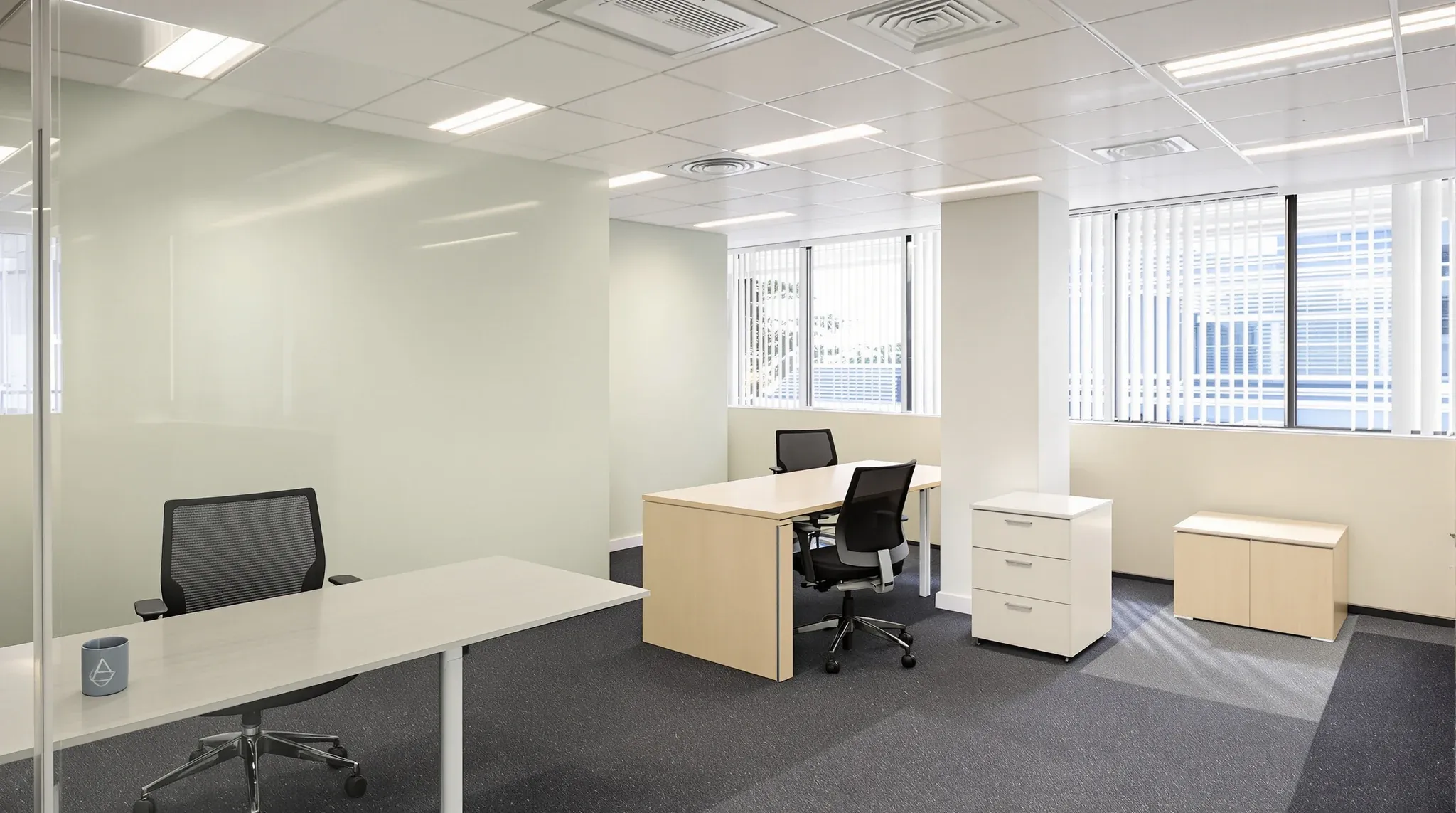
A twelve- to twenty-four-month lease extension sits in an awkward commercial space. The tenant is staying, but not long enough to commit to a full re-fitout. The landlord is keeping the rent, but for a period too short to drive much concession. The existing fitout is usually tired but not broken. The decision the tenant has to make is which parts of the space are genuinely worth refreshing for the extension, and which are better left alone so the eventual make good scope stays manageable.
The short answer is that short-extension refurbishment pays back when it targets the high-visibility, high-use, and high-morale zones (reception, meeting rooms, key client-facing areas, lighting, and the main kitchen) and leaves the structural fitout alone. Anything that involves moving walls, rebuilding ceilings, or reshaping services almost never earns its cost inside a twelve-to-twenty-four-month window. The rule of thumb is cosmetic yes, structural no.
Challenges Of Refurbishing For Short Tenure
A standard commercial lease runs three to five years in Sydney, and a fitout is budgeted against that tenure. When a business extends by a further twelve to twenty-four months at the end of the original term, the fitout it occupies is usually at the later end of its design life. Carpet is worn in the high-traffic paths. The meeting rooms look dated against current industry expectations. Paint is scuffed around doors and wall edges. Lighting has started to fail in patches.
The full-refitout case does not stack up for a short extension. The capital recovery on a genuine refitout runs three to five years at the minimum, and shorter leases make the numbers hard to justify. At the same time, leaving the space untouched for another eighteen months is often commercially painful: staff retention, client perception, and productivity all start to feel the weight of a tired environment.
The practical middle path is selective refresh. Spend in the places where the return is real, avoid spend in the places where the cost cannot amortise, and plan the scope so nothing created during the refresh becomes a make good problem at the final exit.
High ROI Cosmetic Refresh Strategies
Four categories of work typically justify the spend in a short extension. Each one has a visible, daily impact on how the space is used and perceived, and none of them involves moving structural elements.
Paint and wall touch-up: a full internal repaint, or a targeted repaint of the high-traffic and high-visibility walls, transforms how a tired fitout reads for a cost that is small relative to any other option. Meeting rooms and client-facing zones benefit most. Back-of-house and staff-only areas can often be left untouched.
Flooring refresh: carpet tiles in the worn traffic paths can be replaced individually if the original specification is still available, or spot-replaced with a deliberately contrasting tile where matching is not possible. Full carpet replacement inside a twelve-month horizon rarely pays back, but strategic tile replacement is cheap and effective.
Lighting upgrade: replacing failing fittings and refreshing lamps improves the space more than almost any other single intervention, particularly in older fitouts running on dated fluorescents. Full lighting replacement is a larger call but sometimes earns its keep when paired with a partial refresh elsewhere.
Meeting rooms and reception: new furniture, refreshed wall finishes, and an updated AV setup in meeting rooms and reception lifts the perceived quality of the whole floor. These are also the zones where clients and new starters form their impressions, so the return is disproportionate to the spend.
Low Value Upgrades To Avoid In Short Extensions
Three categories of work that feel worthwhile but usually do not justify themselves inside a twelve-to-twenty-four-month horizon are worth naming explicitly, because they are the ones tenants most often get talked into.
Full partition reconfiguration, including adding or removing walls to reshape the layout, is rarely worth it. The cost of reworking partitions, services, lighting, and finishes around a new layout runs well into the spend range of a proper refitout. The extension window almost never returns that spend, and it creates make good exposure that the original fitout did not carry.
Ceiling replacement or rework is similar. An ageing ceiling grid looks tired, but the cost of replacement is high, the disruption during a live tenancy is significant, and the improvement is marginal relative to the spend for a short tenure. Ceiling tile refresh (replacing damaged or discoloured tiles selectively) is a different and much cheaper intervention that usually does the visual work.
New HVAC, data, or power infrastructure almost never makes commercial sense for a short extension. These systems are designed to last the full life of a fitout, they rarely fail inside a short window, and the cost is dominated by ceiling and wall rework rather than the services themselves.
Impact Of Make Good Obligations On Scope
The overlooked factor in short-extension refurbishment is that the works affect the make good scope at the end of the extended lease. Anything new the tenant installs typically has to come out at make good, unless the lease explicitly treats it as landlord-retained. That changes the arithmetic on certain scopes.
New partitions added during a refurbishment land the tenant with the reinstatement cost at the eventual exit. If the original layout did not have those walls, the baseline for make good is the original condition, and the additional walls become an extra removal item. For a short extension this compounds: the tenant pays to install, pays to maintain, and pays again to remove inside a window too short to extract the value.
New ceilings and bulkheads have the same problem in a different form. They become part of the installed fitout the tenant is responsible for, and adding them late in the lease rarely gives enough use to justify the eventual removal cost.
Cosmetic refurbishment is cleaner. Repainting existing walls, replacing carpet tiles in the existing grid, refreshing lighting within the existing layout, and updating furniture do not generally add to the make good scope, because they maintain or replace what was already there. The replacement carpet is the tenant’s responsibility to remove or reinstate anyway. The repainted walls usually return to landlord standard as part of the normal make good process.
A useful way to frame this: if the refurbishment item would create a new make good obligation, the spend has to justify both its operational benefit and the eventual removal cost. If the item only refreshes something that was already there, only the operational benefit has to stack up.
Phasing Works Within An Active Tenancy
Short-extension refurbishment almost always happens in a live office, because vacating for works does not make sense inside a twelve-to-twenty-four-month window. That forces the programme to be built around the operating business rather than the other way around.
The standard approach is to run the works in short evening and weekend windows, or in concentrated stages of three to five days where a zone is vacated temporarily while an adjacent zone absorbs the displaced staff. Paint and flooring work almost always happens out of hours. Meeting room refurbishment can run in staggered single-room stages. Lighting can often run at night.
The cost of live-office works is higher per item than an empty-floor refurbishment, because the trades are working to interrupted schedules and around protective barriers. That premium is real, and it is part of why small refurbishment scopes on short extensions have to be chosen carefully. Adding a scope item because “while we’re here” logic feels compelling can push the overall programme into territory where the extension arithmetic stops working.
Defining A Realistic Short Extension Scope
For most Sydney commercial offices at the end of a first or second term, extending by twelve to twenty-four months, the scope that tends to earn its cost is narrow and deliberate.
A full internal repaint, with the colour retained or refreshed to something lighter and cleaner. Targeted carpet tile replacement in the traffic paths, reception, and any visibly worn meeting rooms. Lighting audit and replacement of failed or ageing fittings, with lamp replacement across the rest. Meeting room refurbishment in the main client-facing rooms, including furniture, AV refresh, and wall treatments where they are genuinely dated. Reception furniture and signage refresh. Kitchen surface and cabinetry tidy-up rather than replacement, unless the existing kitchen has reached the end of its functional life.
That scope usually lands at a fraction of a full refitout cost, delivers most of the visual and operational benefit, and does not create new make good obligations. For a business extending its tenure, it is the commercially defensible answer.
Evaluating Full Refit Vs Minor Refurbishment
Occasionally the extension conversation exposes that the fitout is genuinely at end of life rather than just tired. Major ceiling damage, failing partitions, water-damaged areas that were never properly repaired, HVAC that is no longer fit for occupancy levels, or electrical infrastructure that cannot support the business as it currently runs all push the decision beyond cosmetic refresh.
When that is the case, the conversation moves from “refresh for the extension” to “negotiate a longer term and do it properly”. A landlord facing a tenant who will otherwise leave at the end of the extension will often agree to a further three- or five-year term in exchange for a re-fitout commitment, and the arithmetic over five years looks very different from the arithmetic over eighteen months.
The honest test is whether the fitout is failing or just worn. Failing fitouts need real work. Worn fitouts earn from cosmetic refresh. Confusing the two usually produces either a paint-and-carpet job that does not fix what is genuinely broken, or a structural project that cannot pay back inside the extension.
Optimizing The Brief For Limited Tenure
The decision frame that tends to work is to list what is genuinely failing, what is genuinely dated, and what is simply old. Failing items must be fixed because they affect operations or safety. Dated items earn refresh spend if they are high-visibility or high-use. Items that are simply old but still functional can usually be left for the final exit.
Then the scope needs to be tested against the make good question. Each proposed item gets asked whether it creates a new reinstatement obligation at the eventual end of the extended lease, or whether it refreshes something already on the tenant’s make good list. The two answers produce different arithmetic, and keeping them separate tends to filter out the scope items that feel justifiable but do not actually pay back.
We plan and deliver commercial office refurbishment across Sydney, and when the decision is how much to do for a twelve- to twenty-four-month extension we can help you work out which scope items will pay back over the period you have, and which are better left for the eventual refitout or final exit. If the extension conversation is exposing deeper problems, we can walk you through the option of a longer commitment with a proper refitout built into the deal.
📞 Call us on 1300 60 93 93