
In most commercial buildings in Sydney, fitout work in an occupied tenancy cannot happen during standard business hours. The noise from demolition, drilling, and power tools, the dust from cutting and sanding, and the disruption from trades moving materials through common areas all make daytime construction incompatible with an office environment where other businesses are trying to work. The result is that a significant proportion of fitout activity in occupied buildings happens after hours, typically between 6pm and 6am, on weekends, or during building-designated quiet periods.
After-hours work is not simply the same work done at a different time. It carries different costs, different logistics, different safety requirements, and different coordination demands. Tenants who plan for this from the start manage it effectively. Tenants who discover the restrictions mid-project end up with a programme that does not work and costs that exceed their budget.
Why After-Hours Work Is Standard in Occupied Buildings
Commercial buildings are managed environments where the comfort and productivity of all tenants take priority over any individual tenant’s construction programme. Building managers enforce working hour restrictions to protect the building’s occupants from noise, dust, fumes, and the general disruption that construction creates. These restrictions are not optional. They are conditions of the building’s management rules, and they apply to every tenant regardless of the scope of their fitout.
The restrictions vary by building but follow a common pattern. Noisy work, including demolition, drilling, cutting, and grinding, is typically restricted to after hours or weekends. Quiet work, including painting, carpet laying, furniture installation, and light electrical work, may be permitted during business hours with building management approval. The distinction between noisy and quiet is defined by the building manager, not by the tenant, and the classification can sometimes be stricter than the tenant expects.
Working in an office during a fitout is manageable for some types of work, but for anything that generates significant noise or dust, after-hours scheduling is the only practical option in a multi-tenanted building.
What Building Management Requires for After-Hours Access
After-hours access to a commercial building is not automatic. Building management controls who enters the building outside standard hours, what work they do, and how long they stay. The requirements typically include advance notification of the work schedule, a list of personnel who will be on site, evidence of contractor insurance and relevant licences, a safe work method statement for the specific activities being performed, and confirmation of how waste will be managed and removed.
Some buildings require a security officer to be present whenever after-hours work is being conducted, and the cost of that officer is charged to the tenant. Others require the tenant’s contractor to sign in and out at security and to conduct the work within a designated zone. In buildings with central HVAC systems, the tenant may need to request supplementary air conditioning for the floors where work is being performed, which incurs an additional charge.
These requirements are not bureaucratic obstacles. They exist because after-hours work in a commercial building creates risks that daytime work does not: the building is largely unoccupied, fire systems may need to be isolated for hot work, and the building’s security perimeter needs to be maintained while allowing contractor access. Planning a fitout backwards from the completion date means factoring in these access requirements from the start, not discovering them when the programme is already committed.
How After-Hours Work Affects Project Costs
After-hours work costs more than daytime work. Labour rates for evening and weekend shifts carry a premium that typically adds 30 to 50 per cent to the base hourly rate, depending on the trade and the day of the week. Saturday rates are higher than weekday evening rates, and Sunday rates are higher again. Public holidays attract the highest premiums and are generally avoided unless the programme is critically behind.
Beyond the direct labour premium, after-hours work incurs additional costs that are not always visible in the initial quote. Building management charges for security, supplementary air conditioning, goods lift operation, and loading dock access can add several hundred dollars per after-hours session. If the building requires a fire warden to be present during hot work, that is an additional charge. If the work generates dust that requires supplementary cleaning of common areas, the cleaning cost is recovered from the tenant.
These costs accumulate across a programme that runs over several weeks. A fitout that requires three weeks of after-hours demolition, framing, and services work can incur $10,000 to $30,000 in after-hours premiums and building charges that would not apply if the same work were done in a vacant building during business hours. Tenants who understand this cost structure budget for it from the start rather than treating it as a surprise when the invoices arrive.
Noise, Dust, and Disruption: Managing Impact on Other Tenants
Even during after-hours work, the impact on the building needs to be managed. Noise travels through structures, and a demolition crew working on one floor can be heard two or three floors above and below, particularly through the building’s riser shafts and concrete structure. Building managers may require noise monitoring during certain types of work, and they retain the right to stop work that exceeds acceptable levels.
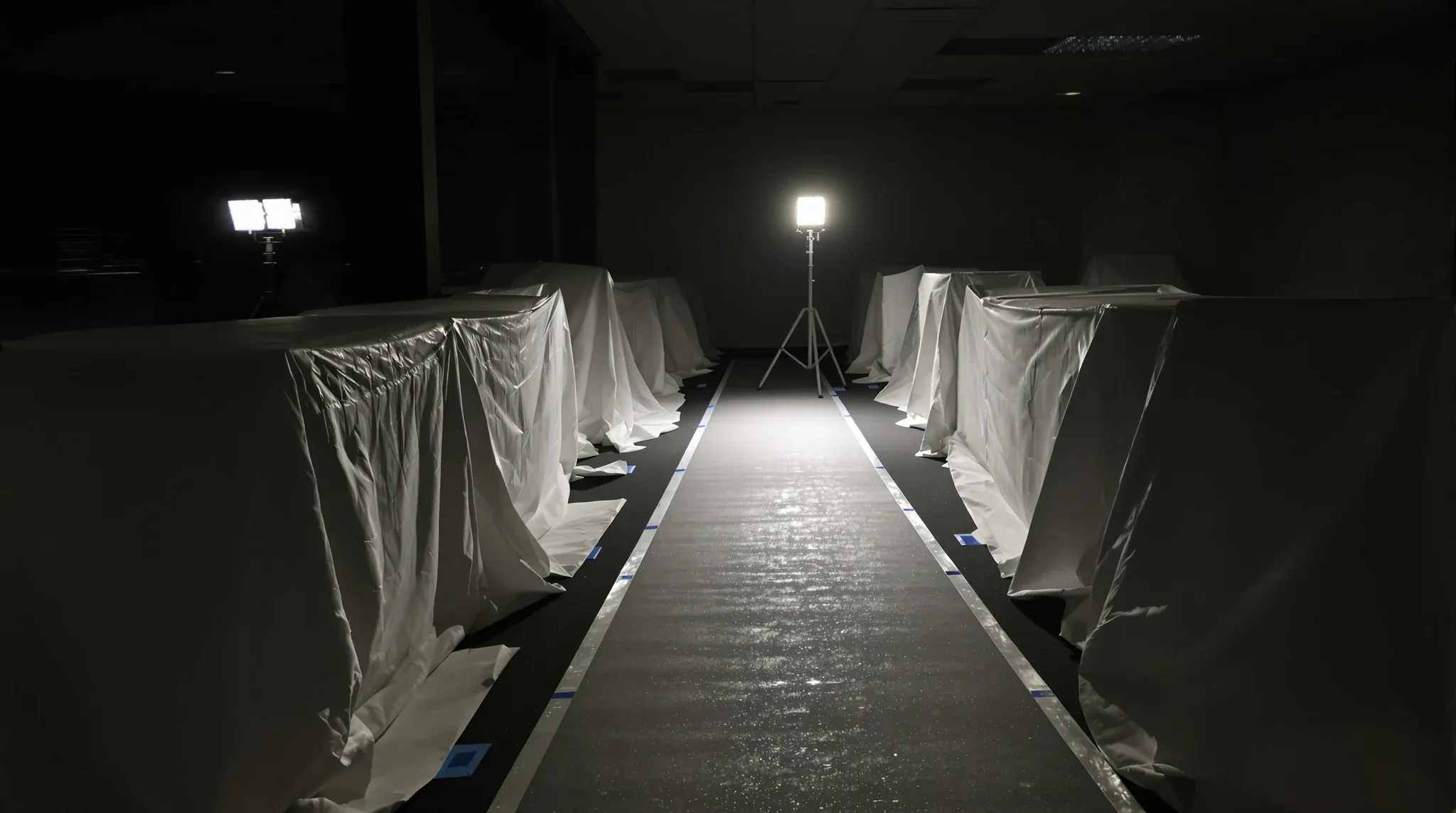
Dust management is critical in buildings with shared HVAC systems. Demolition and cutting work generates fine particles that can migrate through the ceiling void and into the return air path, potentially affecting air quality on other floors. Dust containment measures including plastic sheeting, negative air pressure, and HEPA filtration are often required for after-hours demolition work, and the cost of these measures needs to be included in the project budget.
Fitouts go off track when assumptions do not match reality, and one of the most common mismatches is the assumption that after-hours work can proceed without constraints. The constraints exist, they are enforced, and failing to account for them creates delays that compress the rest of the programme.
Security and Safety Considerations After Hours
After-hours work creates specific safety considerations that do not apply during business hours. The building is largely unoccupied, which means there are fewer people available to respond in an emergency. Fire systems that are isolated for hot work need to be managed through a formal impairment procedure, and the fire alarm monitoring company needs to be notified. First aid coverage needs to be arranged independently because the building’s daytime first aid provisions may not be available.
Working at height, working in confined spaces, and working with hazardous materials all carry elevated risk in an after-hours environment because response times for emergency services may be longer and the building’s security team may not have the training or equipment to assist with a construction-related incident. Safe work method statements for after-hours activities need to address these risks specifically, not just apply the same methods used during the day.
Contractor fatigue is another safety consideration that is easily overlooked. Trades who work a full day on another site and then start an evening shift on the fitout are at higher risk of errors and accidents. Responsible contractors manage this by rostering dedicated after-hours teams rather than expecting their daytime crews to work through the evening as well.
Scheduling Trades Around Restricted Working Hours
The most significant programme impact of after-hours restrictions is that the available working time per day is compressed. A standard construction day provides eight to ten productive hours. An after-hours shift typically provides four to six hours, depending on the building’s access window and the setup and pack-down time at each end. This means that work which would take one week in an unrestricted environment takes two weeks or more when confined to after-hours sessions.
Coordinating work across multiple constraints requires careful programme management. The noisy work happens after hours. The quiet work happens during the day. The trades need to be sequenced so that the after-hours team leaves the space ready for the daytime team, and the daytime team does not create conditions that prevent the evening team from starting on time.
This split-shift approach works well when it is planned from the start. The programme identifies which activities are noisy and which are quiet, allocates each to the appropriate shift, and ensures that the handover between shifts is clean and efficient. When it is not planned, the result is trades standing idle because the previous shift did not finish their portion, or noisy work being attempted during the day and immediately shut down by building management.
When After-Hours Work Cannot Be Avoided
Some types of work are inherently noisy and cannot be scheduled during business hours in an occupied building under any circumstances. Demolition of plasterboard, concrete cutting for floor penetrations, core drilling for services, and heavy mechanical work such as installing HVAC ductwork all fall into this category. These activities define the after-hours component of the programme, and the rest of the schedule needs to work around them.
There are also building-specific restrictions that force certain work after hours. Some buildings restrict goods lift access to before 8am and after 6pm, which means all material deliveries and waste removal happen outside business hours. Others restrict wet work, welding, or the use of solvents to after hours due to odour and air quality concerns. These restrictions are typically documented in the building’s fitout guide, and the contractor should review them before preparing the programme.
The most effective approach is to accept after-hours work as a standard feature of commercial fitouts in occupied buildings and plan for it accordingly. Treating it as an exception or hoping to avoid it leads to programme assumptions that do not survive contact with the building’s management rules.
If you are planning a fitout in an occupied building and need the after-hours logistics managed as part of a complete fitout programme, we can coordinate the scheduling, building approvals, and trades sequencing to keep the project on track.
Call us on 1300 60 93 93