
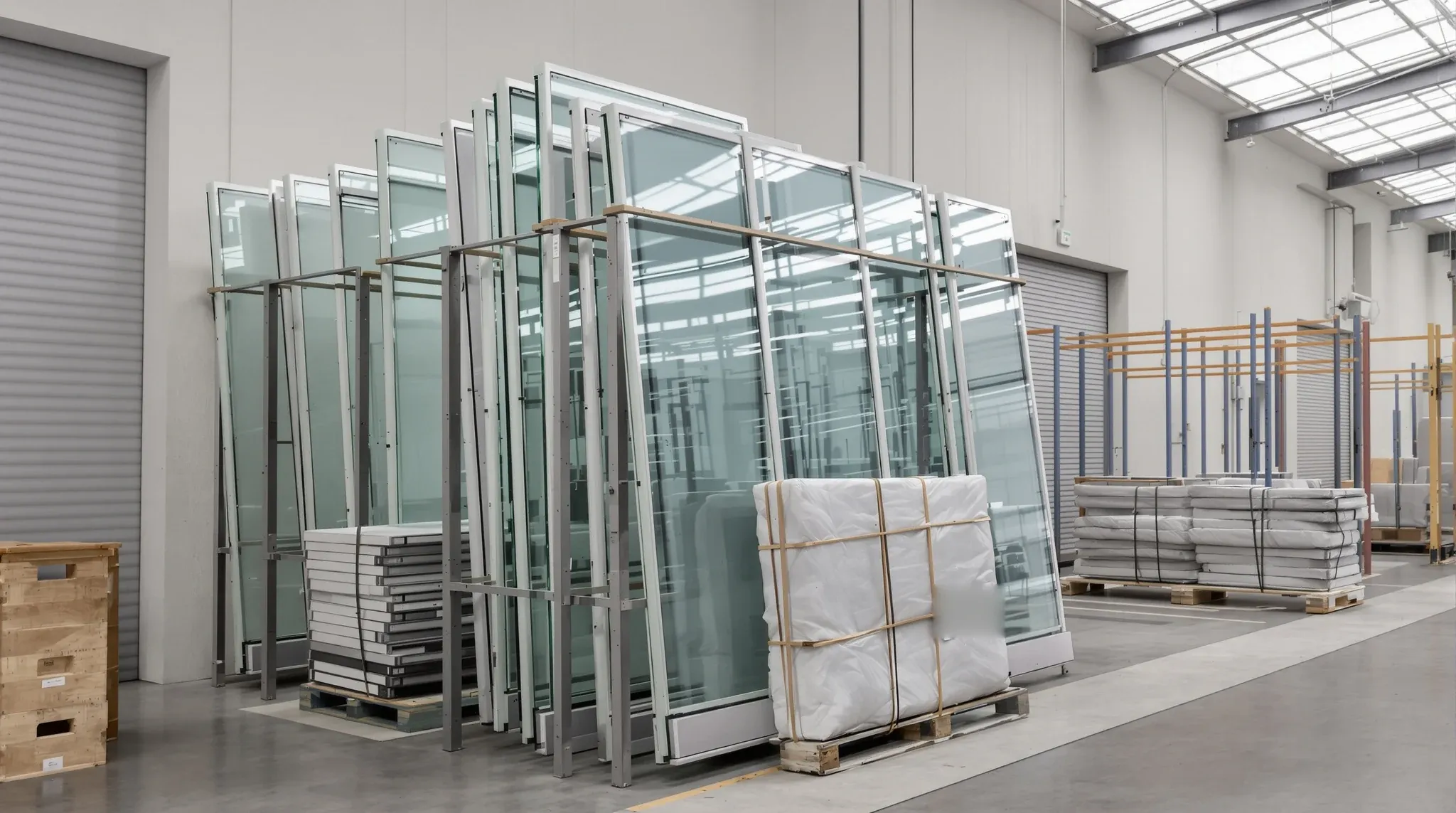
The idea of reusing glass partitions from one office in another is appealing. Glass is expensive to buy, the environmental argument for reuse is straightforward, and a tenant moving to new premises might assume that the glass system they paid for five years ago can simply be taken down, transported, and reinstalled. In practice, the viability of reuse depends on a set of conditions that are harder to satisfy than most people expect, and in many cases the economics do not work out the way the tenant hopes.
That does not mean reuse is never viable. It means the decision needs to be based on a realistic assessment of the system, the new space, and the costs involved, rather than on the assumption that reuse is automatically cheaper than buying new.
Why Reuse Sounds Better Than It Usually Works
The appeal of reuse is obvious. A glass partition system that cost $60,000 to purchase and install five years ago still has material value. If it can be moved to a new premises for less than the cost of a new system, the saving is significant. The environmental case is equally clear: glass is energy-intensive to manufacture, and keeping it in use extends its lifecycle.
Where the logic breaks down is in the gap between material value and practical reuse value. A glass partition system is not a piece of furniture that can be picked up and placed in a new location. It is an engineered assembly of glass panels, aluminium or steel framing, floor channels, ceiling tracks, door hardware, seals, and fixings, all dimensioned and configured for a specific space. Transferring that assembly to a different space with different dimensions, different ceiling heights, and different floor conditions is not a simple relocation. It is a re-engineering exercise.
The costs of that re-engineering, combined with careful removal, transport, storage, and reinstallation, often close the gap between reuse and replacement to the point where the saving no longer justifies the risk and effort involved.
What Determines Whether Glass Can Be Salvaged
The first question is whether the glass panels themselves are in a condition that allows reuse. Toughened glass that has been in place for several years may have surface scratches from cleaning, edge chips from contact with furniture or equipment, or seal failures around patch fittings. Any of these can reduce the visual quality below what would be acceptable in a new installation.
The second question is whether the hardware is still functional and available. Door pivots, floor springs, hydraulic closers, and locking mechanisms all have service lives, and components that have been in daily use for five or more years may be approaching the end of theirs. If the hardware manufacturer has discontinued the product line, replacement parts may not be available, which means the hardware needs to be replaced entirely even if the glass is salvageable.
Commercial-grade glass systems from established manufacturers tend to have better reuse prospects than budget systems, partly because the glass quality is higher and partly because replacement components are more likely to be available. Systems from manufacturers who have exited the Australian market or changed their product range are harder to support in a reuse scenario.
System Age, Condition, and Compatibility
The age of the system is a useful but imperfect indicator of reuse viability. A five-year-old system from a quality manufacturer, well maintained and free of damage, has reasonable reuse potential. A ten-year-old system, even from a good manufacturer, is more likely to have accumulated wear that makes it impractical to reuse at the standard expected in a new fitout.
Compatibility with the new space is the more critical variable. Glass panels are cut to specific dimensions, and those dimensions are determined by the original space. If the new office has different ceiling heights, different module widths, or different structural conditions, the existing panels may not fit. Toughened glass cannot be cut or trimmed after manufacture. If a panel does not fit the new opening, it cannot be used, and a replacement panel needs to be ordered.
This dimensional constraint is the single biggest reason reuse projects fail to deliver the expected savings. A system that was designed for a space with 2,700mm ceiling heights cannot be used in a space with 2,900mm ceilings without replacing every panel that extends to the ceiling. In many cases, the number of panels that can actually be reused is significantly smaller than the total number removed, and the cost of manufacturing new panels to fill the gaps erodes the financial benefit.
The Economics of Reuse Versus Replacement
A realistic cost comparison between reuse and replacement needs to account for all of the steps involved. Reuse requires careful removal from the existing premises, which is slower and more expensive than standard demolition removal because panels need to be extracted intact rather than simply taken out. It requires transport and potentially storage if the new premises are not ready at the time of removal. It requires inspection and assessment to determine which components are reusable. And it requires reinstallation in the new space, which may involve new framing, new channels, and modifications to accommodate the different layout.
When all of these costs are added together, reuse typically costs 50 to 70 per cent of the cost of a new system of equivalent quality. That is a saving, but it is a smaller saving than most tenants expect, and it comes with risks that a new system does not carry. A new system comes with a warranty, is dimensioned exactly for the space, and uses current components that are readily available for future maintenance. A reused system may have compromised seals, worn hardware, and panels that do not quite fit the new layout.
Lead times for custom glass can also affect the decision. If a new system has an eight-week manufacturing lead time and the tenant needs to be operational sooner, reusing an existing system might be the only way to meet the programme. In that scenario, the decision is driven by timing rather than cost, and the economics become secondary to the schedule constraint.
When Reuse Works and When It Does Not
Reuse is most viable when the new space has similar or identical dimensions to the original, the system is relatively new and from a manufacturer who still supports it, the hardware is in good working order, and the tenant has the time and logistics to manage careful removal and reinstallation. These conditions align most often when a tenant is relocating within the same building or to a very similar building in the same precinct.
Reuse is least viable when the new space is a significantly different size or layout, the system is older than seven or eight years, the hardware is proprietary or discontinued, or the glass has visible damage that would be unacceptable in a new fitout. In these situations, the cost of making the old system work in the new space approaches or exceeds the cost of starting fresh.
There is a middle ground where partial reuse makes sense. If the glass panels are in good condition but the framing and hardware need to be replaced, reusing the glass and buying new framing may still deliver a saving compared to a fully new system. Similarly, if some panels fit the new layout and others do not, a hybrid approach that combines reused panels with new ones can work, provided the manufacturer can match the glass specification for the new panels.
Logistics of Moving Glass Between Sites
The logistics of glass reuse are more complex than most tenants anticipate. Glass panels are heavy, fragile, and awkward to transport. They need to be removed with suction lifters and placed on padded A-frame racks for transport. Each panel needs to be labelled, measured, and catalogued so that it can be identified and allocated during reinstallation.
Transport between sites needs to use vehicles with air-ride suspension and proper restraint systems. Glass that is transported in a standard truck without adequate padding and restraint is likely to arrive with edge chips or cracks that make it unusable. Installation timelines for glass also apply to reinstallation, and the programme needs to account for the additional inspection and assessment steps that reused glass requires.
If the removal and installation do not happen simultaneously, storage is required. Glass needs to be stored vertically on racks in a dry, temperature-controlled environment. Storing glass panels flat or stacking them without separators risks breakage and surface damage. Storage costs and the risk of handling damage during multiple moves are additional factors that reduce the net saving from reuse.
How to Assess Reuse Potential Before Committing
The decision to reuse should be based on a professional assessment, not on an assumption. That assessment should cover the condition of the glass panels, the availability of replacement hardware, the dimensional compatibility with the new space, and a realistic cost comparison between reuse and replacement that includes all removal, transport, storage, and reinstallation costs.
Getting glass offices right the first time applies equally to reuse projects. The assessment should be done early enough that the tenant can change course if reuse proves unviable, without losing time on the overall fitout programme. Discovering that the glass cannot be reused after it has been carefully removed and transported to the new site is the worst outcome, because the tenant has incurred the reuse costs without achieving the reuse benefit.
A good rule of thumb is to commission the assessment at the same time as the make good scope for the existing premises. If reuse is viable, the removal methodology changes from standard defit to careful extraction, and the make good programme needs to accommodate the additional time that careful removal requires. If reuse is not viable, the defit proceeds normally and the tenant plans for a new glass partition system in the new space.
If you are relocating and want to know whether your existing glass is worth reusing, we can inspect the system, compare it against the new space, and give you an honest assessment of whether reuse makes commercial sense.
Call us on 1300 60 93 93