
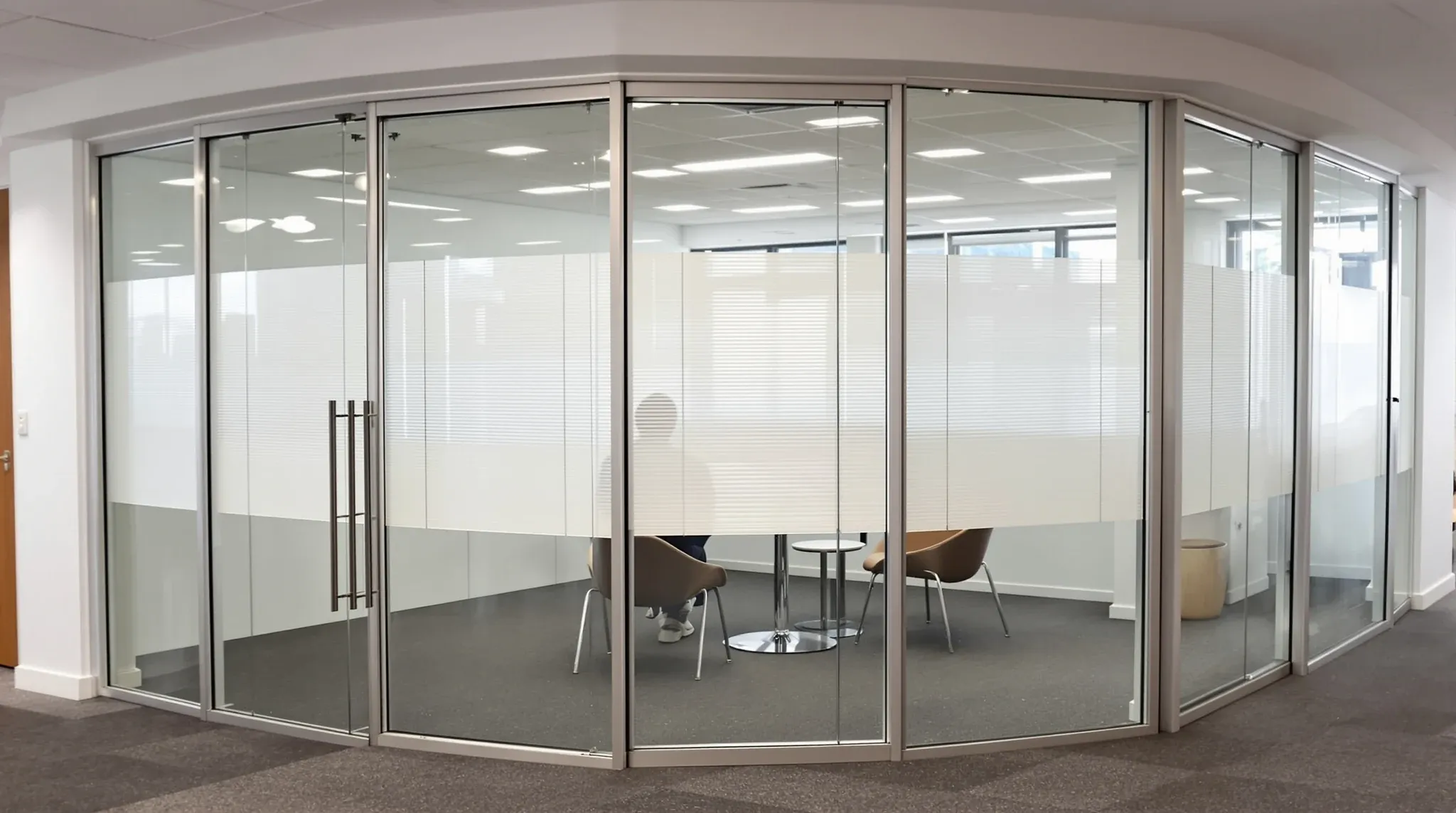
Double glazed glass partitions typically cost 40 to 60 per cent more than their single glazed equivalents, and in many fitouts that premium lands somewhere between $150 and $300 per linear metre of additional spend. Whether that extra outlay delivers proportional value depends on the specific conditions inside the office, the type of work happening behind the glass, and how long the tenancy is likely to last.
For some businesses, double glazing solves a genuine problem that would otherwise require a completely different partition strategy. For others, it amounts to an expensive specification that delivers marginal improvement over a well-installed single glazed system. The difference between those two outcomes usually comes down to how clearly the cost is weighed against what the space actually needs.
What Double Glazing Adds to a Glass Partition Budget
The cost increase from single to double glazed partitions is not just about the glass itself. Double glazed units are heavier, which often means upgraded channels and framing to support the additional load. Installation takes longer because the panels require more careful handling and alignment, and the tolerances are tighter. Transport costs can also rise because double glazed units are bulkier and more fragile during delivery.
On a typical office fitout with 30 to 40 linear metres of glass partitions, upgrading from single to double glazed panels can add $5,000 to $12,000 to the partition package alone. That figure does not include any additional structural work that may be needed if the floor or ceiling grid cannot handle the extra weight without modification.
The premium is not uniform across all partition types. Frameless systems carry a higher cost uplift for double glazing than framed systems, because the edge retention and sealing details become more complex when there is no visible frame to conceal them. In framed systems, the additional glass panel sits within an existing channel structure, which absorbs some of the engineering complexity.
Where the Cost Premium Actually Comes From
Most people assume double glazed partitions cost more purely because of the second pane of glass. In practice, the glass itself accounts for only part of the premium. The air cavity between the two panes needs to be consistently sealed, and the spacing hardware that maintains the gap adds both material cost and assembly time.
Lead times also affect the budget indirectly. Double glazed partition panels are often manufactured to order rather than cut from stock, which can add two to four weeks to the procurement timeline. On a fitout with a tight programme, that delay may force other trades to reschedule, and the knock-on costs of disrupted sequencing are rarely captured in the partition quote itself.
Installation labour is another factor that is easy to underestimate. Double glazed panels are significantly heavier than single panes of the same dimensions, which means two-person lifts become mandatory in situations where a single installer might handle standard glass. On multi-storey buildings without goods lifts, the logistics of moving heavy double glazed panels to upper floors can add meaningful cost that only becomes apparent once the installer visits site.
The Scenarios Where Double Glazing Pays for Itself
The clearest case for double glazed partitions is an office where glass partitions are being used to enclose spaces that genuinely need acoustic separation, but where the visual transparency of glass is also a firm requirement. Boardrooms, executive offices, and consultation rooms in professional services firms often fall into this category. In those settings, the alternative to double glazing is usually plasterboard, which solves the noise problem but eliminates the visual connection the business wanted in the first place.
Another scenario where the premium earns its keep is in offices located on busy roads or near mechanical plant. External noise that penetrates the base building envelope gets amplified across open plan areas, and glass-enclosed rooms that rely on single glazing may struggle to provide enough separation from that ambient noise floor. Double glazing in those rooms can bring the internal environment closer to what occupants expect without resorting to solid wall construction.
Offices that run high volumes of confidential conversations throughout the day also tend to benefit. Legal practices, financial advisory firms, and recruitment agencies often have multiple rooms in simultaneous use for sensitive discussions. In those environments, the acoustic improvement from double glazing across several rooms compounds into a noticeably quieter and more professional workspace, and the cost of that upgrade is typically small relative to the overall fitout spend.
When Single Glazing Is the Smarter Spend
Not every glass partition needs double glazing, and specifying it without a clear reason is one of the more common ways fitout budgets drift upward unnecessarily. In open plan offices where glass is used primarily to create visual separation between zones rather than full acoustic enclosure, single glazed partitions typically deliver what the space needs at a significantly lower cost.
Breakout areas, informal meeting zones, and phone pods with limited dwell time are other situations where double glazing is difficult to justify commercially. If occupants are spending ten to fifteen minutes in a space rather than conducting hour-long meetings, the marginal acoustic improvement from double glazing rarely changes the experience enough to warrant the spend.
There is also a practical consideration around building age and ceiling condition. In older buildings with suspended ceilings that have poor seals above the grid line, sound will flank over the top of any glass partition regardless of whether it is single or double glazed. Spending more on the glass without addressing the ceiling is like fitting a premium lock on a door that does not reach the frame. In those situations, the budget is better directed at the overall partition system performance rather than a single specification upgrade.
Comparing Double Glazed Costs Across Different Office Layouts
The value equation for double glazing shifts depending on how much glass the fitout uses and where it sits in the floor plan. An office with two enclosed meeting rooms and an executive suite might have 15 to 20 linear metres of glass that could be upgraded. In that case, the premium for double glazing might fall between $3,000 and $6,000, which is a modest addition to a fitout that probably costs $80,000 or more.
By contrast, an office that uses glass extensively throughout the floor plate, with eight or ten enclosed rooms and long corridor runs of glazing, could face a double glazing premium of $20,000 to $35,000. At that scale, the question becomes whether every metre of glass genuinely needs the upgrade, or whether a selective approach would deliver a better return.
In most cases, concentrating double glazing on the rooms where acoustic performance matters most and using single glazing elsewhere produces a result that is close to full double glazing in practical terms but at 40 to 50 per cent of the cost. This selective approach also reflects how experienced fitout teams typically approach pricing. Rather than quoting double glazing as a blanket upgrade, the specification is matched to the acoustic demands of each space, and savings from the rooms that do not need it get redirected to other parts of the fitout that affect daily performance.
How Lease Length Affects the Calculation
The commercial case for double glazed partitions strengthens as the lease term extends. On a three-year lease, the premium for double glazing is amortised over a relatively short period, and if the partitions are removed at lease end during make good works, the investment offers limited time to deliver value. On a seven or ten-year lease, the same premium is spread over a much longer occupancy, and the daily benefit of improved acoustic comfort accumulates significantly.
Lease length also affects the calculation through reuse potential. Double glazed partition systems are heavier and more complex to disassemble and relocate than single glazed equivalents. If the business is likely to move at lease end, the residual value of double glazed panels is typically low because they are difficult to repurpose in a differently configured space. Short lease fitouts benefit from simpler, lighter systems that are easier to adjust or remove without excessive cost.
There is a further consideration for tenants in multi-tenancy buildings. If the lease permits subletting or if the business anticipates downsizing part of the floor, double glazed partitions in rooms that might be reconfigured represent a higher sunk cost. Single glazed partitions in those zones give the tenant more flexibility to adapt the layout without writing off an expensive specification.
Getting the Specification Right Without Over-Spending
The most common mistake with double glazed partitions is treating the decision as binary, either upgrade everything or upgrade nothing. In practice, most offices benefit from a targeted approach that matches the glazing specification to the acoustic requirements of each room.
Start by identifying which enclosed spaces genuinely need enhanced acoustic performance. These are typically the rooms where confidential conversations happen regularly, where video calls require a quiet background, or where occupants spend extended periods and would notice ambient noise more acutely. Boardrooms and senior offices in corporate environments often justify the upgrade, while shared hot-desking zones and casual meeting areas rarely do.
Consider the surrounding construction as part of the decision. Double glazed glass partitions perform best when the adjacent walls, ceiling, and floor also provide reasonable acoustic separation. If a room has a plasterboard wall on one side with a single layer of board and no insulation, upgrading the glass wall opposite to double glazed will not produce the acoustic improvement the specification suggests on paper. The weakest element in the room’s acoustic envelope sets the ceiling for overall performance, regardless of how much is spent on any single element.
It is also worth discussing the specification with the fitout team before locking in a decision. In some cases, upgrading the glass thickness within a single glazed system, or adding acoustic seals to the partition framing, delivers a meaningful improvement at a fraction of the cost of full double glazing. These alternatives do not match double glazing in outright acoustic terms, but for many office environments they close enough of the gap to make the premium unnecessary.
Asking the Right Questions Before Committing
Before approving a double glazed specification, it helps to work through a short set of practical questions. What is the primary source of noise that the glass partition needs to manage – is it speech from the adjacent open plan, mechanical noise from building services, or external traffic? Each source has different characteristics, and double glazing does not address all of them equally.
How long will the tenancy last, and is the fitout designed to be modified during that period? If there is a reasonable chance the enclosed rooms will be reconfigured within the first three to four years, the investment in double glazing may not deliver enough return before the partitions are moved or replaced.
What is the ceiling condition above the partition line? If the suspended ceiling has gaps, missing tiles, or poor seals where it meets the partition head, sound will travel over the glass regardless of whether it is single or double glazed. Addressing the ceiling first and then reassessing whether double glazing is still needed often changes the answer.
And what would the same budget deliver if redirected elsewhere in the fitout? If $10,000 spent on double glazing could instead fund improved ceiling treatment, acoustic management in the open plan, or upgraded door seals on every meeting room, the overall acoustic outcome for the office might be better served by spreading the investment rather than concentrating it on the partition system alone.
If you are weighing up whether double glazed glass partitions are the right specification for your office, or whether that budget would deliver more value elsewhere in the fitout, we can walk through the options with you and help you get the balance right.
Call us on 1300 60 93 93