
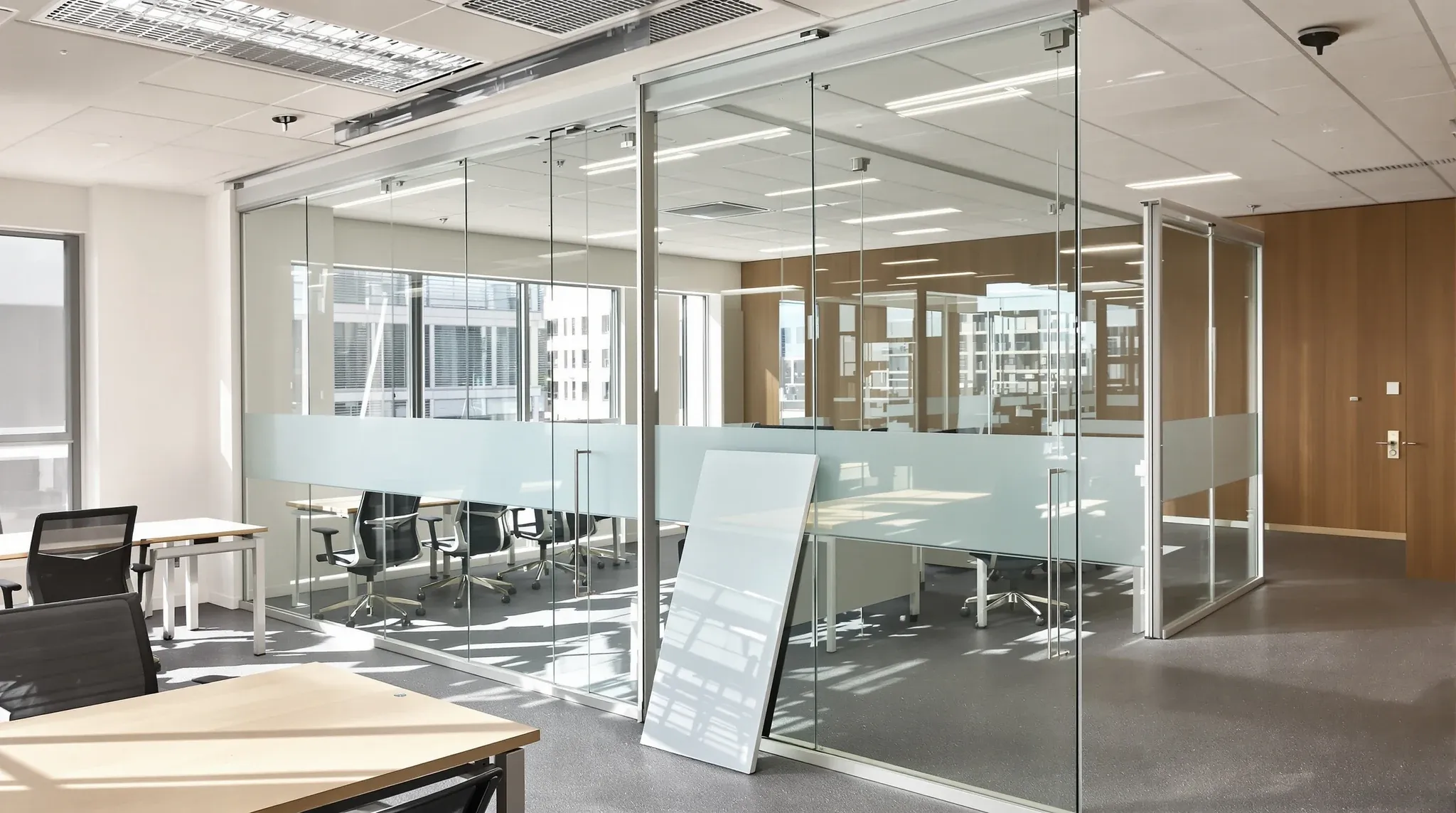
Custom glass partitions are one of the most common long-lead items in office fitouts, and they are also one of the most common causes of programme delays when the lead time is not accounted for properly. Unlike standard building materials that can be sourced from stock within days, custom glass partitions are fabricated to order. Each panel is measured, cut, polished, and in many cases tempered or laminated to the specific dimensions and specification of the project. This manufacturing process takes time, and the time varies depending on the specification, the manufacturer’s capacity, and the current demand in the market.
This article provides practical guidance on lead time expectations for custom glass partitions in Australia, the factors that affect delivery times, and how tenants and fitout companies can plan around them to keep the programme on track.
Typical Lead Times for Custom Glass Partitions
For standard tempered glass panels in common thicknesses, the typical lead time from confirmed order to delivery is two to four weeks. This assumes the specification is straightforward, the dimensions are confirmed, and the manufacturer has capacity. For more complex specifications, including double-glazed units, laminated safety glass, or glass with integrated blinds, the lead time extends to four to six weeks or longer.
Frameless glass partition systems, which require precision-cut panels with polished edges and specific hardware provisions, tend to sit at the longer end of the range because the manufacturing tolerances are tighter and the handling requirements more demanding. Framed systems, where the glass sits within an aluminium or steel framework, can sometimes be sourced more quickly because the framework provides some dimensional tolerance.
It is worth noting that these timelines represent manufacturing and delivery only. They do not include the time required for shop drawing preparation, approval, measurement confirmation, and any design changes that occur between order and delivery. When these steps are factored in, the total elapsed time from design decision to glass on site can extend to six to eight weeks for straightforward specifications and ten weeks or more for complex ones.
These lead times are for the glass panels and hardware only. The total time from design confirmation to installed partition includes the site measurement, the shop drawing preparation and approval, the manufacturing period, delivery, and installation. The full cycle from confirmed design to completed installation typically takes four to eight weeks for a standard project, depending on the quantity and complexity.
It is worth noting that these timelines represent manufacturing and delivery only. They do not include the time required for shop drawing preparation, approval, measurement confirmation, and any design changes that occur between order and delivery. When these steps are factored in, the total elapsed time from design decision to glass on site can extend to six to eight weeks for straightforward specifications and ten weeks or more for complex ones.
What Affects the Lead Time
Several factors can push the lead time beyond the typical range. The glass specification is the primary variable. Standard clear tempered glass in common thicknesses is the fastest to produce. Tinted glass, frosted glass, low-iron glass, and glass with specific performance characteristics such as acoustic interlayers or solar control coatings require additional processing steps that add time.
The panel dimensions also matter. Standard-sized panels that fall within the manufacturer’s common production runs are faster to produce than oversized panels that require special handling. Floor-to-ceiling panels in spaces with high ceiling heights may exceed standard production sizes and require custom manufacturing runs.
Manufacturer capacity fluctuates with market demand. During busy periods, particularly when commercial construction activity in Sydney is strong, lead times can extend as manufacturers work through their order books. The gap between a quiet period and a busy period can be two to three weeks of additional lead time, which is significant for a fitout programme with limited float.
How Lead Times Interact With the Construction Programme
Glass partitions are typically installed after the ceiling, painting, and flooring are substantially complete, because the installation requires clean, finished surfaces to achieve proper alignment and a clean junction. This means the glass installation sits towards the end of the construction programme, and any delay in the glass delivery directly delays the final stages of the fitout.
In a well-managed programme, the glass is ordered as early as possible after the design and site measurements are confirmed. The manufacturing period runs in parallel with the construction work, so the glass arrives on site shortly before the installation window opens. If the order is placed late, or the lead time is longer than expected, the glass may not be ready when the programme requires it, creating dead time on site while the finishing trades wait.
The practical lesson is that glass partition lead times need to be identified during the design phase and factored into the programme from the outset. Waiting until mid-construction to place the glass order is one of the most common causes of programme delay in fitout projects that include custom glass partition systems.
Reducing the Risk of Glass-Related Delays
The most effective way to reduce the risk of glass-related delays is to finalise the glass specification and dimensions as early as possible in the design process and place the order promptly. This requires the partition layout to be locked in before the detailed design of other elements is complete, which is a reasonable approach given that the partition layout is typically one of the first design decisions made.
Early ordering does carry a risk if the design changes after the glass is ordered, because custom glass cannot easily be modified once it is in production. Cancelled or changed orders typically result in the tenant bearing the cost of the glass that has been manufactured, plus a restocking or disposal charge. The risk of a design change needs to be weighed against the risk of a programme delay, and in most cases the programme risk is the greater concern.
Another practical measure is to confirm the manufacturer’s current lead time before building the programme around an assumed delivery date. Lead times published on manufacturer websites or quoted by suppliers in previous projects may not reflect current conditions, and a quick confirmation at the time of ordering avoids the surprise of a longer-than-expected delivery.
The physical logistics of glass delivery also affect lead time in ways that tenants rarely consider. Large glass panels cannot be carried through standard doorways or up in passenger lifts. They typically need to be brought in through loading docks and goods lifts, and in some buildings the goods lift dimensions limit the maximum panel size that can be transported to the floor. Coordinating delivery access with the building management team adds another planning layer that needs to happen well before the glass arrives on site.
Domestic vs Imported Glass
The source of the glass affects the lead time. Glass manufactured domestically in Australia typically has shorter lead times because the logistics chain is simpler and the turnaround from order to delivery is faster. Imported glass, whether from Asia, Europe, or elsewhere, carries additional lead time for shipping, customs clearance, and domestic transport. For standard specifications, domestic glass is usually the faster and more practical option.
Imported glass may be necessary for certain specialist specifications that are not manufactured domestically, such as specific acoustic laminates, switchable glass, or certain decorative finishes. In these cases, the lead time can extend to eight to twelve weeks or longer, and the order needs to be placed at the earliest possible stage of the project to avoid delaying the construction programme.
The Role of Shop Drawings and Approval
Before the glass is manufactured, the supplier typically produces shop drawings that show the exact dimensions, edge treatments, hole positions for hardware, and any other fabrication details. These shop drawings need to be reviewed and approved by the fitout company and sometimes by the tenant before manufacturing begins. The approval cycle adds time to the overall lead time, and delays in reviewing shop drawings directly delay the start of manufacturing.
Tenants and fitout companies can minimise this delay by prioritising shop drawing reviews and turning approvals around within a few days rather than letting them sit in an inbox. The shop drawing stage is one of the few points in the glass procurement process where the tenant’s actions directly affect the timeline, and responding promptly can save a week or more on the overall delivery schedule.
Planning Glass Procurement as Part of the Fitout Programme
The glass procurement timeline should be mapped alongside the construction programme from the beginning of the project, not treated as a procurement task that happens during construction. The key milestones are design confirmation (which enables site measurement), site measurement (which enables shop drawing production), shop drawing approval (which enables manufacturing), manufacturing completion (which enables delivery), and delivery (which enables installation).
Each of these milestones has a duration, and the cumulative duration determines when the glass order needs to be placed to align with the installation window in the construction programme. Mapping this timeline explicitly, rather than relying on a general assumption about when things will arrive, is the most reliable way to prevent glass lead times from becoming a programme issue.
If you are planning a fitout that includes custom glass partitions and want to understand the lead times and procurement process, we can help specify the system, coordinate the manufacturing timeline, and ensure the glass arrives when the programme needs it.
Experienced fitout teams treat glass procurement as a critical-path item from the first week of the project. The specification is locked early, shop drawings are issued for approval immediately after design sign-off, and the order is placed as soon as those drawings are approved. This front-loading of the procurement process creates a buffer that absorbs minor delays without pushing the overall programme out, and it avoids the last-minute pressure that results from treating glass as just another material to be ordered during construction.
Call us on 1300 60 93 93