
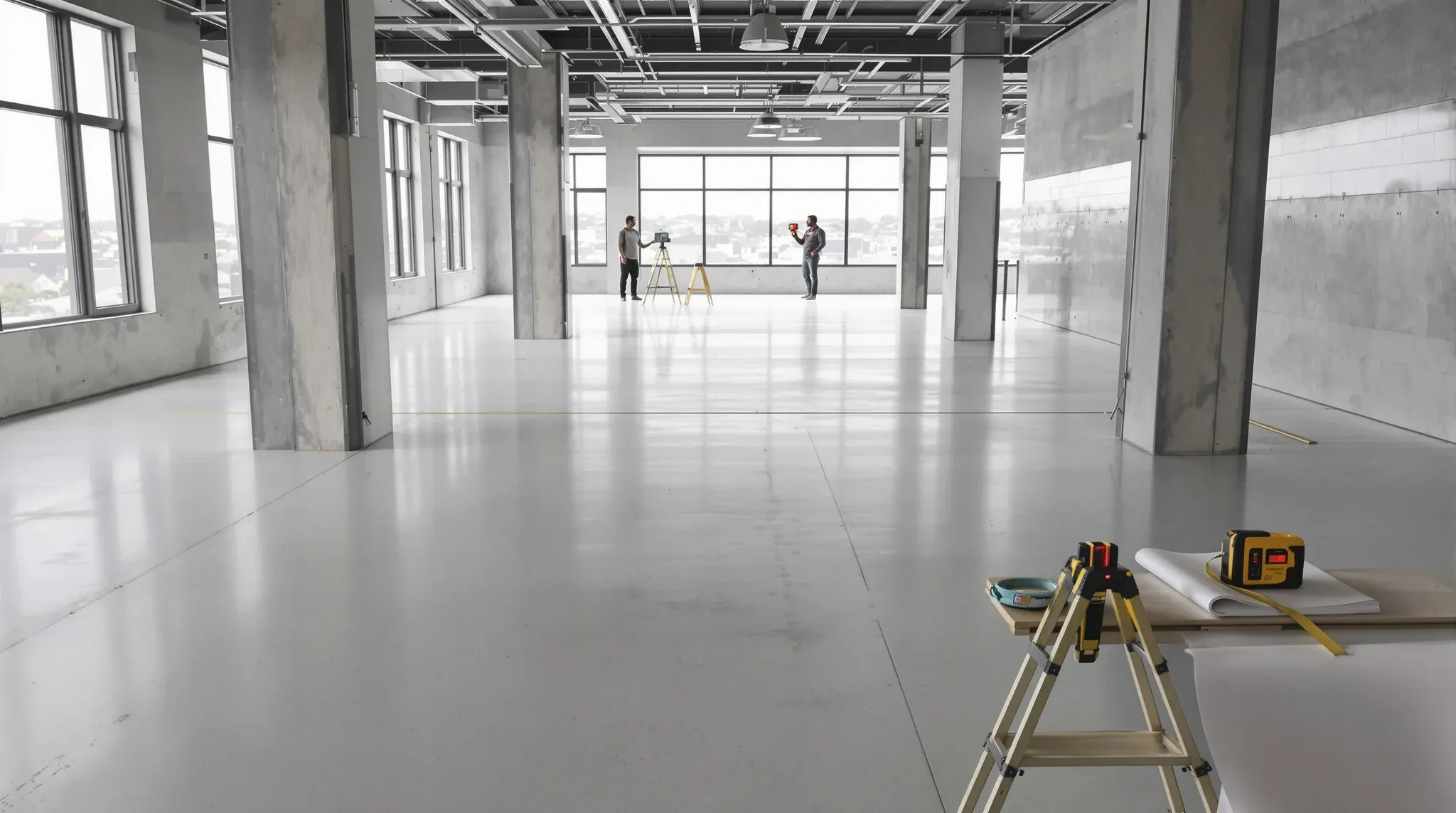
Tenants who start planning their office fitout too late rarely recover the lost time. Instead, they end up compressing phases that need proper attention, making decisions under pressure, and accepting compromises on design, cost, or quality that could have been avoided. In Sydney, where building management approvals, consultant lead times, and trade availability all add layers of scheduling complexity, starting early is not just good practice but a genuine commercial advantage.
The question most tenants ask is how many weeks or months they need before the move-in date. The honest answer is that it depends on the size and complexity of the project, the condition of the building, and how many decisions need to be made along the way. But there are reliable benchmarks that help tenants understand what they are working with and plan accordingly.
Why Most Tenants Start Too Late
The most common pattern is a tenant who signs a lease, assumes the fitout will take a few weeks, and then discovers that the actual timeline from first conversation to move-in is measured in months. The disconnect often comes from underestimating how much needs to happen before construction even begins. Design, documentation, approvals, procurement, and lead times for materials and fittings all sit between the initial decision and the first day on site.
Another factor is that lease negotiations often consume more time and attention than expected, leaving the fitout planning squeezed into whatever time remains before the lease commencement date. Tenants who start the fitout planning in parallel with the lease negotiation, even at a preliminary level, tend to be in a much stronger position than those who wait until the lease is executed.
The cost of starting late is not just a delayed move-in. It is also a more expensive project. Compressed programmes mean trades working overtime, consultants fast-tracking documentation, and decisions being made without proper evaluation. All of this adds cost and risk that a well-timed start would have avoided.
What Drives a Fitout Timeline
Several factors determine how long a fitout takes, and understanding them helps tenants set realistic expectations from the outset. The primary drivers are the scope of work, the base building condition, the approval requirements, and the availability of materials and trades.
A straightforward fitout of a small office that involves mainly partitioning, painting, flooring, and basic electrical work might move from brief to occupation in eight to twelve weeks. A larger project involving mechanical redesign, extensive partitioning, custom joinery, AV integration, and fire services upgrades could take four to six months or longer. The range is wide because the variables are real, and tenants who have not been through the process before often anchor to the shorter end without understanding what determines the timeline.
Base building conditions in Sydney vary significantly. Older buildings may require remedial work, services upgrades, or structural assessment before the fitout can proceed. Newer buildings typically offer a cleaner starting point, but may have more demanding approval processes. The condition of the space at handover, whether it is a warm shell, a cold shell, or a previously fitted-out tenancy that needs stripping back, directly affects how much work is involved before the new fitout can begin.
How Long the Planning Phase Actually Takes
The planning phase is the period between the initial decision to do a fitout and the start of formal design. For many tenants, this is the least structured part of the process, and it is where time is most easily lost. Assembling internal requirements, appointing consultants, conducting site assessments, and developing the brief typically takes two to four weeks for a straightforward project and longer for larger or more complex scopes.
Tenants who have a clear idea of their requirements and can make decisions quickly move through this phase faster. Those who need to consult multiple stakeholders, boards, or committees should allow additional time and factor in the reality that internal approvals often take longer than expected. The planning phase is also the point where the fitout company or designer conducts a site inspection and assesses the base building conditions, which can reveal constraints that affect the timeline for everything that follows.
Design and Documentation Timelines
Once the brief is established, the design phase typically runs through concept design, developed design, and construction documentation. For a standard complete office fitout of moderate complexity, this process takes three to six weeks. More complex projects with bespoke joinery, specialist services, or unusual spatial requirements can take longer.
The speed of the design phase depends heavily on how quickly the tenant can review and approve each stage. Design teams can usually produce concept options within a week, but if the review and feedback cycle takes another two weeks because the decision-makers are unavailable or cannot agree, the programme extends accordingly. Tenants who nominate a single point of contact with decision-making authority for the design phase typically move through it faster than those who rely on committee-based approvals.
Construction documentation is the most technical stage and usually takes two to three weeks for a standard fitout. This is where all the detail that contractors need to price and build the work is produced, including services coordination, specification schedules, and compliance documentation. Rushing this stage to save time almost always creates problems during construction, because incomplete or ambiguous documentation leads to queries, delays, and variations on site.
The Approval Phase Most Tenants Underestimate
Landlord approval is required for virtually every commercial fitout in Sydney, and it is one of the phases that tenants most consistently underestimate. The submission requirements vary between buildings, but most building management teams expect a comprehensive package including design drawings, a scope of works, a construction methodology, contractor details, and evidence of appropriate cover. Turnaround times vary from one to four weeks depending on the building and the quality of the submission.
Tenants who submit incomplete documentation or fail to address the building’s specific requirements often face requests for additional information that add weeks to the programme. Understanding why fitout approvals get rejected before preparing the submission helps avoid the most common delays.
Where a construction certificate or development approval is required, the timeline extends further. A building certifier may need two to three weeks to review the documentation, and if amendments are required the process can take longer. In well-managed projects, the construction certificate application runs in parallel with the landlord approval, but this requires the documentation to be complete and coordinated at the same time.
Construction Duration and What Affects It
The construction phase for a standard office fitout in Sydney typically runs three to eight weeks, depending on the scope. A small partitioning and painting job might be finished in two to three weeks. A full fitout with mechanical, electrical, fire, data, partitioning, ceilings, flooring, joinery, and painting will typically need five to eight weeks, and larger or more complex projects may require longer.
The factors that affect construction duration include the physical size of the space, the complexity of the services work, the number of trades involved, and the building’s access restrictions. Many Sydney CBD buildings restrict construction hours to specific windows, limit materials delivery times, and require the use of specific loading docks and goods lifts. These restrictions are non-negotiable and add time that tenants working in suburban locations may not encounter.
Sequencing also matters. The stages where fitout timelines slip are often the handover points between trades. When the partition framing is not complete before the electrician arrives, or the ceiling grid is delayed waiting for fire services sign-off, the programme stalls and the delays cascade through to the finishing trades. Experienced project management mitigates this by maintaining buffer time at critical handover points and coordinating trade schedules proactively.
Lead Times That Catch Tenants Off Guard
Certain items in a fitout have lead times that can surprise tenants who have not allowed for them in the programme. Custom joinery typically needs two to four weeks for manufacture after drawings are approved. Specialist flooring, particularly imported products, can carry four to six week lead times. Custom glass partitions often require three to five weeks for fabrication, depending on the specification and the manufacturer’s capacity.
Furniture is another common bottleneck. Off-the-shelf workstation systems are usually available within two to three weeks, but custom or imported furniture can take six to twelve weeks depending on the supplier and the specification. Tenants who select furniture late in the design process often find themselves occupying a finished fitout with temporary furniture because the permanent selection has not arrived.
The practical lesson is that long-lead items need to be identified early in the design phase and ordered as soon as specifications are confirmed. Waiting until construction is underway to place these orders almost always results in programme delays that could have been avoided.
How Lease Negotiation Timelines Interact With Fitout Planning
The lease and the fitout are often treated as separate workstreams, but in practice they interact in ways that affect both timelines. The fitout cannot formally commence until the lease is executed and the premises are made available, but a significant amount of planning, design, and even procurement can happen in parallel with lease negotiations if the tenant is confident the deal will complete.
Many experienced tenants begin fitout planning at heads of agreement stage, accepting the risk that some preliminary design work may be wasted if the lease does not proceed. The alternative is waiting until the lease is signed and then starting from scratch, which typically adds four to eight weeks to the overall timeline between decision and occupation.
The fitout incentive or contribution offered by the landlord also interacts with timing. Where a landlord is providing a fitout contribution, the terms of that contribution may affect what work can be done, by whom, and to what standard. Understanding these terms during lease negotiation rather than after execution avoids surprises that can delay the fitout start. When the fitout needs to be staged around an operating business, the lead time required is even greater because the programme needs to accommodate ongoing operations alongside construction.
If you need to understand how long your fitout will realistically take and want to plan the timeline properly from the start, we can assess the scope and give you a clear programme based on the actual variables involved.
Call us on 1300 60 93 93