
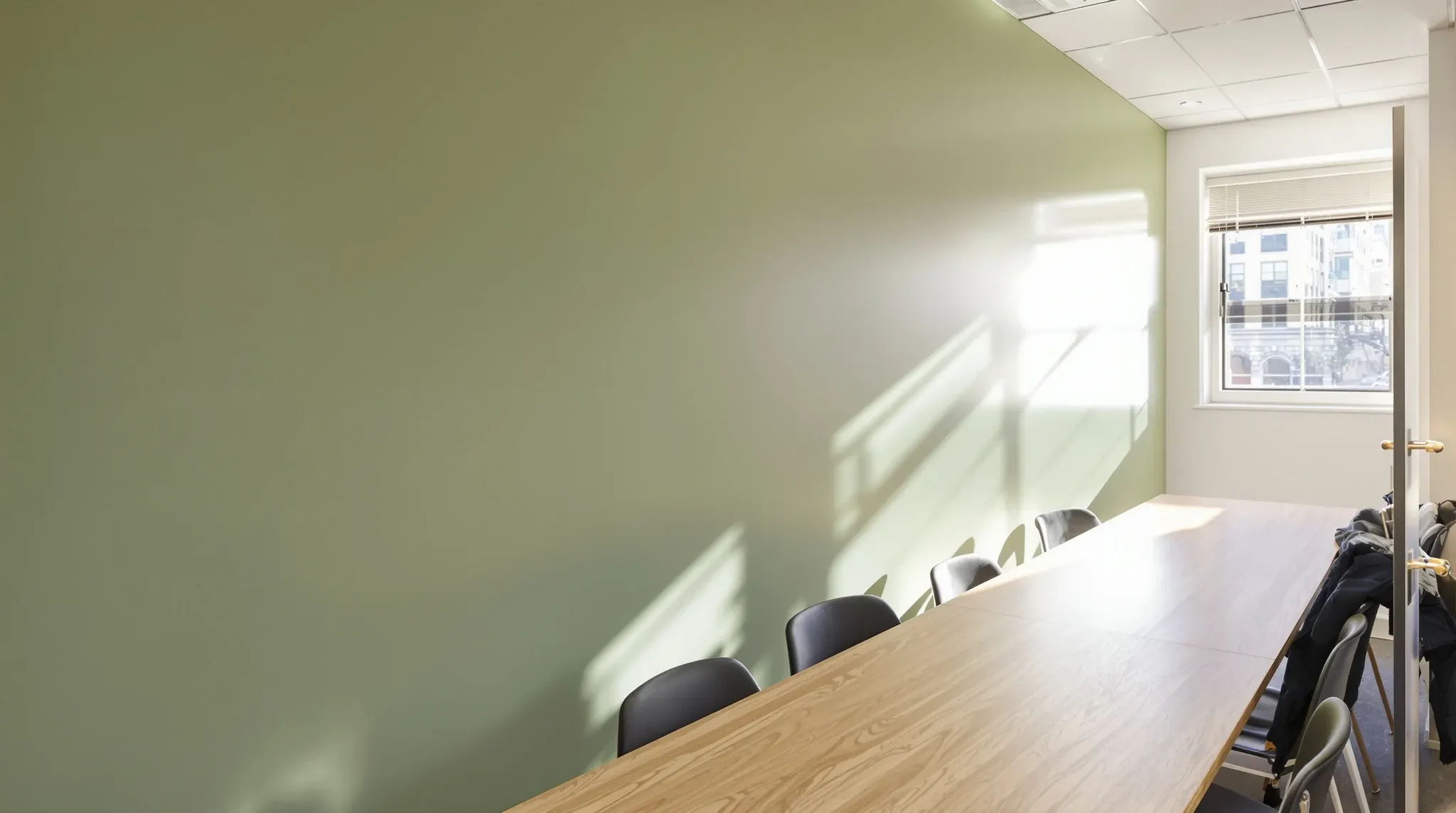
Wall linings and plastering are the substrate work that sits behind every painted surface in an office. They are the layer between the structural framing and the finished wall the occupants see, and their quality determines whether the painted surface looks smooth, flat, and professional or rough, uneven, and visibly flawed. In Sydney’s commercial fitout market, where tenancies range from recently built premium towers to heritage office stock with plaster walls from decades past, the lining and plastering scope varies enormously depending on what condition the walls are in and what the fitout needs to achieve.
Most tenants do not think about wall linings as a separate scope from the painting. They see the finished painted wall and assume the quality is down to the painter. In reality, the painter applies colour to whatever surface the plasterer provides, and no amount of paint will disguise a wall that is not flat, not smooth, or not properly prepared. The lining and plastering scope is where the wall’s quality is built, and getting it right is the foundation for every visible finish that goes on top.
What Wall Linings Are and Why They Matter
Wall linings are the board or sheet materials fixed to the internal face of a framed wall to create the finished surface. In commercial offices, the lining is almost always plasterboard, fixed to steel studs with screws, then jointed, set, and finished to a smooth surface ready for painting. The lining provides the visual surface, contributes to the acoustic and fire performance of the wall, and gives the wall its rigidity and impact resistance.
The quality of the lining affects every subsequent finish. If the lining is not flat, the joinery that butts against it will not sit flush. If the lining is not straight, the skirting will show gaps at the base. If the joints between sheets are not set properly, they will show through the paint as ridges or depressions that become more visible as the light angle changes throughout the day. Each of these defects is a lining quality issue, not a painting quality issue, and each needs to be addressed at the lining stage rather than covered up with additional paint.
In office refurbishments, the lining scope can be more complex than in new fitouts because the existing walls may have been previously lined, patched, painted over multiple times, or damaged by previous tenants’ fixings and modifications. Assessing the condition of the existing linings before deciding whether to overline, strip and reline, or patch and prepare is an important early step that affects the programme, the budget, and the finish quality of the completed works.
Plasterboard Linings as the Standard Office Wall Substrate
Plasterboard is the standard lining material in commercial offices because it is cost-effective, widely available, and can be finished to a range of quality levels to suit different applications. Standard 13mm plasterboard is used for most general office walls. Thicker boards or double layers are used where fire rating, acoustic performance, or impact resistance requires a more substantial wall system. Moisture-resistant board is used in wet areas such as kitchens and bathrooms, and fire-rated board is used in locations where the wall must achieve a specified fire resistance level.
The selection of the right board type for each wall in the fitout is a specification decision that should be made during the design phase based on the performance requirements of each room. Using standard board where fire-rated board is required creates a compliance issue. Using standard board where acoustic board is needed creates a performance shortfall that will be discovered after occupation. The board type is invisible once the wall is finished, which means the specification needs to be correct from the start because there is no practical way to check it once the wall is painted.
Plasterboard partition linings are fixed to steel studs at standardised centres, typically 600mm, which aligns with the board width and ensures every sheet edge falls on a stud for proper fixing. The fixing pattern, the screw depth, and the treatment of sheet edges all affect the flatness and durability of the finished surface. Boards that are not fixed securely to the studs will flex under pressure, creating visible movement and potentially cracking the set joints over time.
Wet Plaster and Skim Coat Finishes in Commercial Spaces
While plasterboard with set joints is the standard approach in most commercial fitouts, some situations call for a wet plaster or skim coat finish. Wet plaster is a traditional technique that applies a layer of gypsum plaster over the wall surface, creating a monolithic finish without visible joints. It is used in heritage buildings where the existing plaster finish needs to be repaired or matched, in high-specification corporate spaces where the flattest possible surface is required, and on masonry or concrete walls that cannot accommodate a plasterboard lining.
Skim coating is a lighter application of plaster over an existing surface, typically used to smooth out an uneven plasterboard finish or to refresh an existing plastered wall that has surface damage but is otherwise sound. A skim coat of 2 to 3mm over the entire wall surface fills minor imperfections, covers old fixing holes, and creates a uniform base for painting. It is a practical alternative to overlining with new plasterboard in situations where the existing lining is structurally sound but visually imperfect.
Both wet plaster and skim coat finishes require skilled tradespeople and adequate drying time. The plaster needs to cure fully before painting, which can take several days depending on the thickness and the environmental conditions. In Sydney’s humid summers, the drying time can extend beyond what the programme allows, and forcing the paint application before the plaster is cured leads to adhesion problems and visible defects. The programme needs to accommodate the curing time as a fixed constraint, not as an optional buffer.
How Finish Level Affects What You See Under the Paint
The Australian Standard AS 2589 defines finish levels for plasterboard surfaces, ranging from Level 1 (basic taping for concealed areas) to Level 5 (a full skim coat for the most demanding lighting conditions). The finish level determines how much setting work is applied to the plasterboard surface, how wide the feathered joints are, and how smooth the final surface will be before painting.
Most commercial offices require a Level 4 finish, which involves three coats of compound at each joint and internal corner, sanded smooth between coats, with the final surface free from tool marks and ridges. Level 4 is suitable for walls that will be painted with flat or low-sheen paint and lit by diffused ambient lighting. For walls that will be painted with semi-gloss paint or lit by raking downlights, Level 5 is recommended because the higher sheen and the directional lighting reveal every imperfection that a Level 4 finish might conceal.
The cost difference between Level 4 and Level 5 is primarily labour, because Level 5 requires an additional skim coat over the entire wall surface, not just the joints. This additional coat adds time to the programme and cost to the budget, but for walls in boardrooms, reception areas, and other high-visibility spaces where the lighting will be directional, the investment in Level 5 produces a noticeably superior result. The key is to specify the finish level based on the lighting conditions and the paint sheen, not as a blanket standard across the entire fitout.
Common Lining Problems in Sydney’s Older Office Stock
Sydney’s commercial office market includes a significant proportion of older buildings where the wall linings have been through multiple tenancies and multiple rounds of patching, painting, and modification. These walls present specific challenges for incoming tenants because the underlying condition is often worse than it appears from the surface. Paint may be peeling in concealed areas, patches may be cracking as the building moves, and the plasterboard behind may have been damaged by water, impact, or the removal of previous fixtures.
Older Sydney offices may also have walls that are not plasterboard at all. Some older buildings have solid plaster on masonry, fibrous cement sheet, or compressed sheet linings that behave differently from plasterboard and require different preparation, fixing, and finishing techniques. Identifying the existing wall construction before specifying the lining treatment avoids the situation where the fitout team discovers an unexpected substrate after demolition, which can change the scope, the programme, and the budget.
The decision to overline, strip, or patch existing walls depends on the condition of the underlying substrate, the finish quality required, and the budget. Overlining with new plasterboard over the existing lining provides a fresh, flat surface but reduces the room dimensions slightly and adds weight. Stripping the existing lining back to the framing and relining provides the best result but is the most disruptive and expensive option. Patching and preparing the existing surface is the most economical approach but depends on the existing surface being sound enough to accept a new paint finish without further deterioration.
The Relationship Between Linings, Acoustics, and Fire
Wall linings contribute to both the acoustic and fire performance of the wall system, and the lining specification needs to be considered in the context of these performance requirements, not just the visual finish. For acoustic walls, the lining mass, the number of layers, and the mounting method all affect how much sound the wall blocks. Heavier linings block more sound, double layers perform better than single layers, and resilient mounting, where the lining is connected to the studs through flexible channels, decouples the lining from the frame and reduces sound transmission through the structure.
For fire-rated walls, the lining must be the specific board type and thickness specified in the tested system, fixed at the correct centres with the correct screws, and jointed with fire-rated compound where required. The lining is the primary fire-resistant element in the wall, and its integrity under fire conditions is what provides the rated performance. Any damage to the lining, such as cutouts for services, holes for fixtures, or cracks at joints, can compromise the fire rating and must be repaired with the appropriate materials.
For tenants, the practical implication is that the lining specification is driven by performance requirements as well as visual quality, and the two do not always align. A fire-rated wall with the correct board specification may have a rougher surface finish than a standard wall with premium setting, because the fire-rated board is denser and harder to set to the same level of smoothness. Specifying the performance and the finish level together ensures that the wall meets both requirements without compromise.
Getting Wall Lining Quality Right for the Long Term
The quality of wall linings and plastering is one of the factors that determines how the office looks and performs over the full lease term. A well-lined, well-set wall maintains its flat, smooth appearance through normal wear, temperature changes, and building movement. A poorly lined wall develops cracks, shows tape lines, and needs repainting more frequently, which adds maintenance cost and disrupts the occupants.
The long-term quality depends on three things: the right specification for each wall type, skilled installation by experienced tradespeople, and adequate quality checking before the painter starts. What nobody tells tenants about occupying a new fitout is that minor lining defects may only become apparent after weeks or months of occupancy, as the building settles and the environmental conditions cycle. Having a clear defects process in place allows these issues to be addressed within the defects liability period rather than becoming a permanent feature of the office.
For complete office fitouts, the wall lining and plastering scope is managed as an integrated part of the construction programme, coordinated with the framing, services, and painting trades to produce a result where every painted surface in the office reflects the quality that the rest of the fitout deserves.
If you are fitting out or refurbishing an office in Sydney and want wall surfaces that perform as well as they look, we can manage the lining, plastering, and finishing scope to ensure a result that holds up over the life of your tenancy.
Call us on 1300 60 93 93