
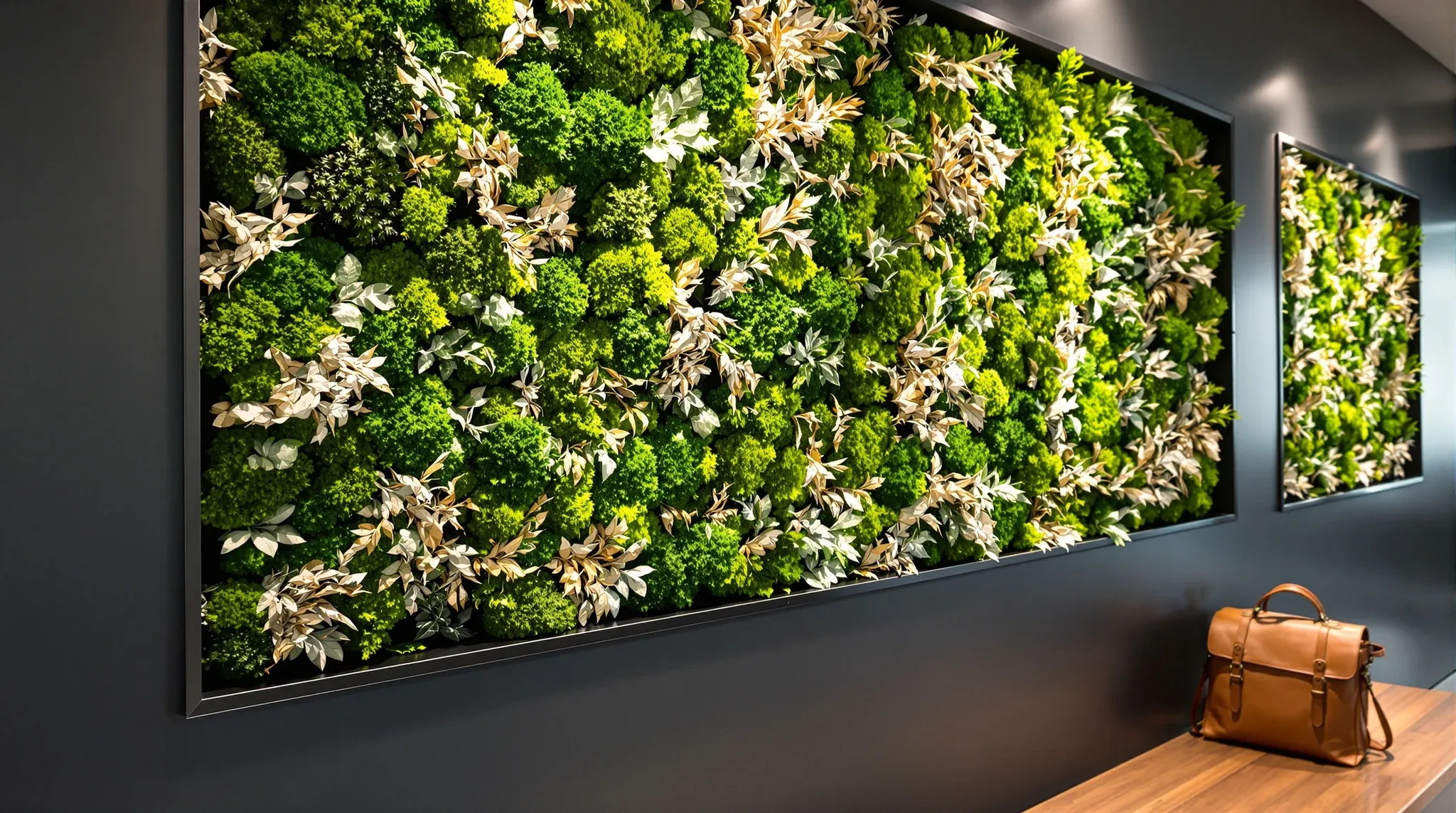
Vertical gardens and moss walls have become prominent design features in commercial offices, driven by a growing interest in biophilic design and the visual impact these installations create. A living green wall in a reception area or a preserved moss panel behind a boardroom table can transform a plain surface into a statement feature that immediately communicates something about the business’s values and design sensibility. But the decision to include vertical greenery in an office fitout should be grounded in practical understanding of what these installations involve, what they cost to maintain, and where they deliver genuine value versus where they create ongoing problems.
The category covers two fundamentally different products: living vertical gardens, which contain real plants that grow and require ongoing care, and preserved moss walls, which use treated natural moss that requires no watering, light, or ongoing maintenance. Understanding the difference is essential, because the practical implications of each are dramatically different.
Living Vertical Gardens: What They Involve
A living vertical garden is a wall-mounted system that supports real plants growing vertically in a soilless medium, typically a felt pocket system, a modular tray system, or a hydroponic panel. The plants receive water and nutrients through an automated irrigation system that circulates a nutrient solution through the growing medium on a timed cycle. The system requires a water supply connection, a drainage point, and in most installations a dedicated lighting system to supplement natural light.
The infrastructure requirements are significant. The wall behind the garden needs to be waterproofed to prevent moisture damage. The irrigation system needs plumbing connections and an electrical supply for the pump. The drainage system needs to connect to a floor drain or collection tank. And the lighting system needs power and positioning that provides adequate light intensity across the full height and width of the installation. These requirements mean that a living green wall is not simply hung on a wall like a picture; it is a services-intensive installation that needs to be planned during the fitout design phase.
The plant selection depends on the light conditions, temperature, humidity, and air circulation of the location. Indoor conditions in most commercial offices are characterised by moderate light, stable temperature, and low humidity, which limits the plant palette to species that tolerate these conditions. The most commonly used species include pothos, philodendron, ferns, and various tropical foliage plants that thrive in the consistent warmth and filtered light of an office environment.
Preserved Moss Walls: A Different Product Entirely
Preserved moss walls are often grouped with living green walls, but they are a fundamentally different product. Preserved moss is natural moss that has been treated with a glycerine-based preservation process that replaces the plant’s moisture with the preservative, halting biological activity while maintaining the moss’s natural colour, texture, and appearance. The result is a product that looks like living moss but requires no water, no light, no soil, and no ongoing maintenance beyond occasional dusting.
The installation of a preserved moss wall is straightforward compared to a living green wall. The moss is mounted on panels that are fixed to the wall with standard fixings. There is no irrigation system, no drainage, no waterproofing, and no lighting requirement beyond the ambient lighting in the space. The panels can be installed on virtually any wall surface without structural modification or services connections.
Preserved moss comes in several forms, including flat moss, which creates a smooth, carpet-like surface; bun moss, which has a rounded, three-dimensional texture; and reindeer moss, which has a branching, coral-like appearance that is available in a wide range of colours including natural green, grey, and various dyed options. Different moss types can be combined in a single installation to create patterns, logos, and textured compositions that serve as both a biophilic element and a decorative feature.
Maintenance Reality
The maintenance requirements of living vertical gardens are the primary practical consideration, and they are frequently underestimated. A living green wall needs regular attention from a specialist maintenance provider who monitors plant health, adjusts the irrigation system, replaces failed plants, manages pest and disease issues, and ensures the system’s mechanical components are functioning correctly.
Typical maintenance visits happen fortnightly or monthly, depending on the size and complexity of the installation. The annual maintenance cost for a living green wall is significant and should be budgeted as an ongoing operational expense, not a one-off fitout cost. Plants that die need replacement, which adds to the maintenance bill and can leave visible gaps in the wall if replacements are not timely.
Preserved moss walls, by contrast, require virtually no maintenance. The preservation process means the moss does not grow, does not need water, and does not attract pests. Occasional dusting with compressed air or a soft brush keeps the surface clean. The moss retains its colour and texture for years, though it may fade gradually if exposed to direct sunlight or harsh artificial lighting over extended periods. Understanding the ongoing maintenance commitment of different fitout elements helps tenants budget realistically and avoid installations that create obligations they are not prepared to sustain.
Air Quality and Wellbeing Claims
Living vertical gardens are frequently marketed with claims about air purification, humidity regulation, and improved indoor air quality. While plants do absorb carbon dioxide and release oxygen, and some species can absorb certain volatile organic compounds, the practical impact of a single green wall on indoor air quality in a mechanically ventilated commercial office is modest. The volume of air circulated by the building’s air handling system vastly exceeds the air processing capacity of a wall-mounted garden.
The wellbeing benefits of vertical greenery are more convincingly supported by the psychological literature on biophilic design than by the air quality research. Studies consistently show that the presence of visible greenery in a workspace reduces perceived stress, improves mood, and increases reported satisfaction with the work environment. These benefits apply to both living and preserved installations, because the visual and psychological response to natural materials does not depend on whether the plants are biologically active.
For tenants who want the wellbeing benefits of biophilic design without the maintenance commitment of a living system, preserved moss walls deliver the visual and psychological impact at a fraction of the ongoing cost. The honest conclusion is that both products offer genuine biophilic value, but the additional air quality benefits of a living system are unlikely to justify the substantially higher installation and maintenance cost in most commercial office environments.
Where Vertical Gardens and Moss Walls Add the Most Value
The impact of vertical greenery is greatest in locations where the installation is highly visible and where it contributes to the brand impression or spatial experience of the area. Reception areas, feature walls behind boardroom tables, main circulation corridors, and breakout spaces are the locations where vertical gardens and moss walls deliver the most value for the investment.
A reception feature wall creates an immediate first impression that communicates the business’s relationship with nature, sustainability, and design quality. A boardroom backdrop adds visual richness to a room that might otherwise feel corporate and sterile. A corridor installation transforms a transitional space from a blank passage to a biophilic experience that changes how people feel as they move through the office.
Conversely, vertical gardens in locations that few people see, such as utility corridors, back-of-house areas, or enclosed individual offices, deliver limited value relative to their cost. The investment is most effective when the installation is in a high-visibility, high-traffic location where the maximum number of people experience it daily. Reception fitout design is one of the areas where a moss wall or living green wall can have the most significant impact on the visitor experience.
Cost Considerations and Budget Planning
The installed cost of a preserved moss wall is typically lower than a living vertical garden of equivalent size, and the ongoing cost difference is dramatic. A preserved moss wall has no ongoing maintenance cost beyond occasional cleaning, while a living green wall requires a maintenance contract that represents a significant annual expense for the life of the installation.
The total cost of ownership over a five or ten-year lease strongly favours preserved moss for tenants who want the visual impact of vertical greenery without a perpetual maintenance commitment. The living green wall makes financial sense primarily for tenants who are genuinely committed to the dynamic, living character of the installation and who are prepared to budget for the ongoing care it requires.
At lease end, both products may need to be removed as part of the make good obligation, though this depends on the lease terms and the landlord’s preferences. Preserved moss panels can be removed cleanly with minimal wall damage. Living green walls require removal of the irrigation system, waterproofing, and mounting structure, which typically involves more wall repair. Planning the fitout with make good in mind ensures that the installation method supports clean removal at lease end.
Making the Right Choice for Your Office
The choice between a living vertical garden and a preserved moss wall depends on the tenant’s priorities, budget, and willingness to commit to ongoing maintenance. Tenants who value the dynamic quality of living plants, are prepared for the maintenance commitment, and have the infrastructure capacity for irrigation and drainage may find a living green wall genuinely rewarding. Tenants who want the visual and biophilic impact without the ongoing responsibility will find preserved moss a more practical and cost-effective solution.
In many fitouts, the two products can be used in combination. A living green wall in the reception area, where the maintenance can be justified by the brand impact, paired with preserved moss features in meeting rooms and corridors, where the visual contribution does not require a living system, provides a balanced approach that maximises biophilic impact while managing ongoing costs.
If you are considering vertical gardens or moss walls for your office fitout and want advice on which product suits your space, budget, and maintenance commitment, we can help design an installation that delivers real value.
Call us on 1300 60 93 93