
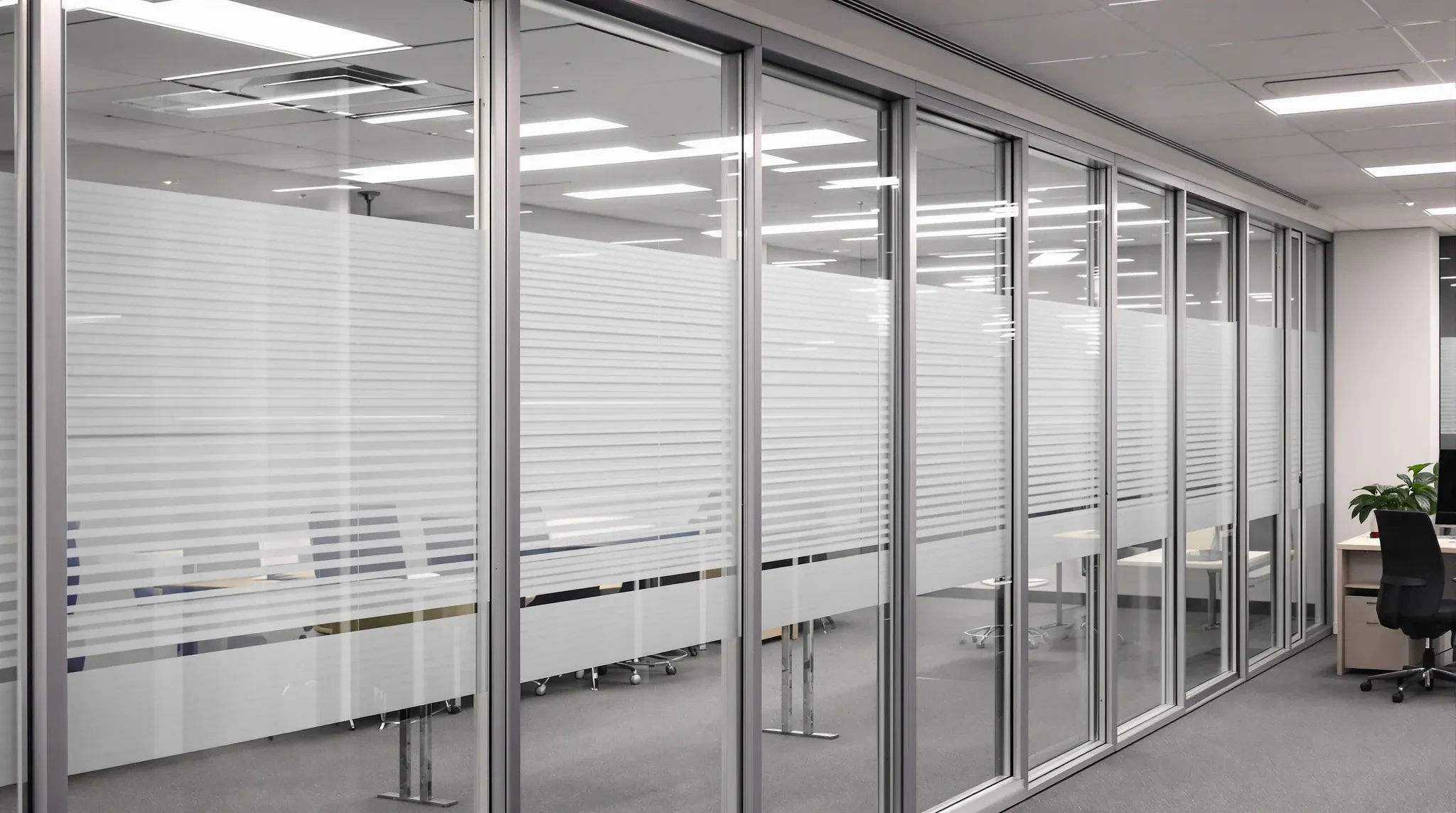
Single-glazed office fronts look clean but leak conversation, and once staff notice that meetings can be overheard, the fix usually means going to double glazing. Swapping the glass is not just a like-for-like panel change, because the frames, doors and seals all carry the acoustic gain and the existing aluminium may not take a second pane. The retrofit is as much about what is already on the floor as about the new glass.
The reason single glazing disappoints on privacy is that a single sheet of glass, however thick, is a fairly direct path for speech. Double glazing puts an air gap and a second, often different, pane in the way, and that combination is what turns a glass office from a fishbowl into a room where a conversation stays inside.
Re-glaze Or Replace: What The Frames Decide
Going from single to double glazing is a retrofit, and the first question is whether the existing system can take it. Some glass partition framing is designed only for a single pane and physically cannot hold a double-glazed unit, while other systems have frames deep enough to be re-glazed or adapted. Which one you have decides whether the job is a re-glaze or a replacement.
Where the frames can take it, the single panes are removed and double-glazed units are fitted into the existing framing, with new seals and beads to suit the thicker glass. Where they cannot, the framing comes out too and a new double-glazed system goes in, which is a larger job closer to a fresh glass partition installation than a glass swap. Knowing which path applies is the difference between a quick upgrade and a full replacement.
Telling which system you have is the first site task, and it is not always obvious from the office side. The glazing pocket in the frame has to be deep enough to hold a double-glazed unit and the beads that retain it, and the head detail has to allow the extra weight. Some slim single-glazed systems were chosen precisely because they look minimal, and that same slimness is what rules out a second pane. A quick check of the framing depth and the way the existing glass is held usually settles whether a re-glaze is even on the table.
Whether the upgrade is the right spend at all is a separate question, and the case for whether double glazing is worth the cost is worth reading before committing. This is about how the retrofit is done once that decision is made, not about relitigating the value.
The Acoustic Gain, And Where It Comes From
The reason to upgrade is speech privacy, and double glazing delivers it through the air gap and the two panes working together. A wider gap and panes of differing thickness perform better than two identical panes close together, because they stop the assembly resonating at the same frequencies and passing sound straight through.
The gain is real but it is not absolute, and the glass is only one part of the path. Sound finds the weakest link, so a double-glazed front with a poorly sealed door, a gap at the head, or a junction that lets sound around the glass will not perform much better than the single glazing it replaced. The privacy comes from the whole assembly, not the panes alone.
This is why a retrofit that only swaps glass sometimes underwhelms. If the real leak was the door or the junctions, new glass changes little. In some cases an acoustic upgrade to the existing system, along the lines of retrofitting acoustic upgrades to glass partitions, addresses the leak more directly than going to double glazing at all. Diagnosing where the sound actually escapes comes before deciding to replace the panes.
Where the Retrofit Works, and The Doors That Go With It
The upgrade suits floors where the glass fronts are sound and reasonably recent, the framing is deep enough to re-glaze, and the privacy problem is genuinely the glass rather than the door or the gaps. In that situation the existing system does most of the heavy lifting and the new units finish the job.
The doors are the part that decides whether it works. A glass office door is often the weakest acoustic point, and a double-glazed front with a single-glazed, loosely sealed door will keep leaking through the door. Upgrading usually means addressing the door glass, the seals around it, and the hardware that pulls it closed, so the door performs in step with the new fronts. The door hardware on glass partitions is what holds the seal, and it is easy to overlook when the focus is on the panes.
There is also a glass specification to settle, because double glazing is not a single product. The two panes can differ in thickness, one can be laminated with an acoustic interlayer, and the air gap can be widened, each of which lifts the acoustic result and the cost. For a floor where the goal is genuine confidentiality, an asymmetric or laminated build performs better than two plain panes, so the spec is matched to how much privacy the rooms actually need rather than defaulting to standard double glazing.
Where the framing cannot take double glazing and the doors are tired, the honest answer is often a replacement rather than a retrofit, because forcing a second pane into a system not made for it rarely performs and rarely looks right. Matching the ambition to what the existing system can carry keeps the result clean.
What The Upgrade Costs
The cost splits sharply on that first question of whether the frames can be re-glazed. A re-glaze into existing framing is the lower-cost path, since the structure stays and only the glass, seals and beads change. A full replacement, where the framing comes out too, is a different order of cost because it is effectively a new partition.
The other drivers are the number and size of the fronts, the door upgrades required, and access, since glass is heavy and double-glazed units more so, and getting them in and out of an occupied floor takes care. The privacy target matters too, because a higher acoustic result may call for thicker or laminated panes that cost more than standard double glazing.
Because the upgrade usually happens in an occupied office, disruption is part of the real cost even when it does not appear on the quote. Removing and refitting glass fronts is noisy, needs clear access to each room, and briefly opens up spaces that were private, so the work is often staged after hours or room by room to keep the floor running. That staging is slower than a continuous job, and pricing the upgrade as occupied work rather than empty-floor work keeps the program and the budget realistic.
The cheapest mistake to avoid is upgrading the glass while leaving the doors and seals as they were, because that spends most of the budget without solving the leak. Pricing the doors and seals into the job from the start gives a number that actually buys the privacy, rather than one that buys new glass and disappointment.
What You Get, And What You Do Not
Done properly, the upgrade gives noticeably better speech privacy: meetings that were audible across the floor become muffled or inaudible, and rooms that felt exposed become usable for sensitive conversations. For most offices that is the whole point, and double glazing delivers it where single glazing could not.
There is a useful side benefit. Double glazing also improves thermal comfort at the glass line, since the air gap slows heat transfer, so rooms behind double-glazed fronts tend to sit closer to the rest of the floor in temperature, in the same way that glass partitions affect airflow and thermal comfort. It is a secondary gain, not the reason to upgrade, but it is worth knowing.
What it does not do is make a glass office soundproof. Double glazing reduces speech transfer; it does not eliminate it, and a room that needs true confidentiality may still want a solid wall rather than any glass. Setting that expectation up front avoids an upgrade that improves privacy being judged against a standard glass was never going to meet.
Deciding How Far To Take The Upgrade
The most useful step is to find out two things before committing: whether the existing framing can take double glazing, and where the sound is actually leaking. Those two answers decide whether the job is a re-glaze, a full replacement, or really a door-and-seal fix that does not need new panes at all.
From there, an upgrade that treats the glass, the doors and the seals as one assembly gives the speech privacy the floor was after, while one that swaps only the panes often spends the money without closing the leak. Matched to what the existing system can carry, double glazing turns exposed glass offices into rooms that hold a conversation, which is exactly what the upgrade is for.
📞 Call us on 1300 60 93 93