
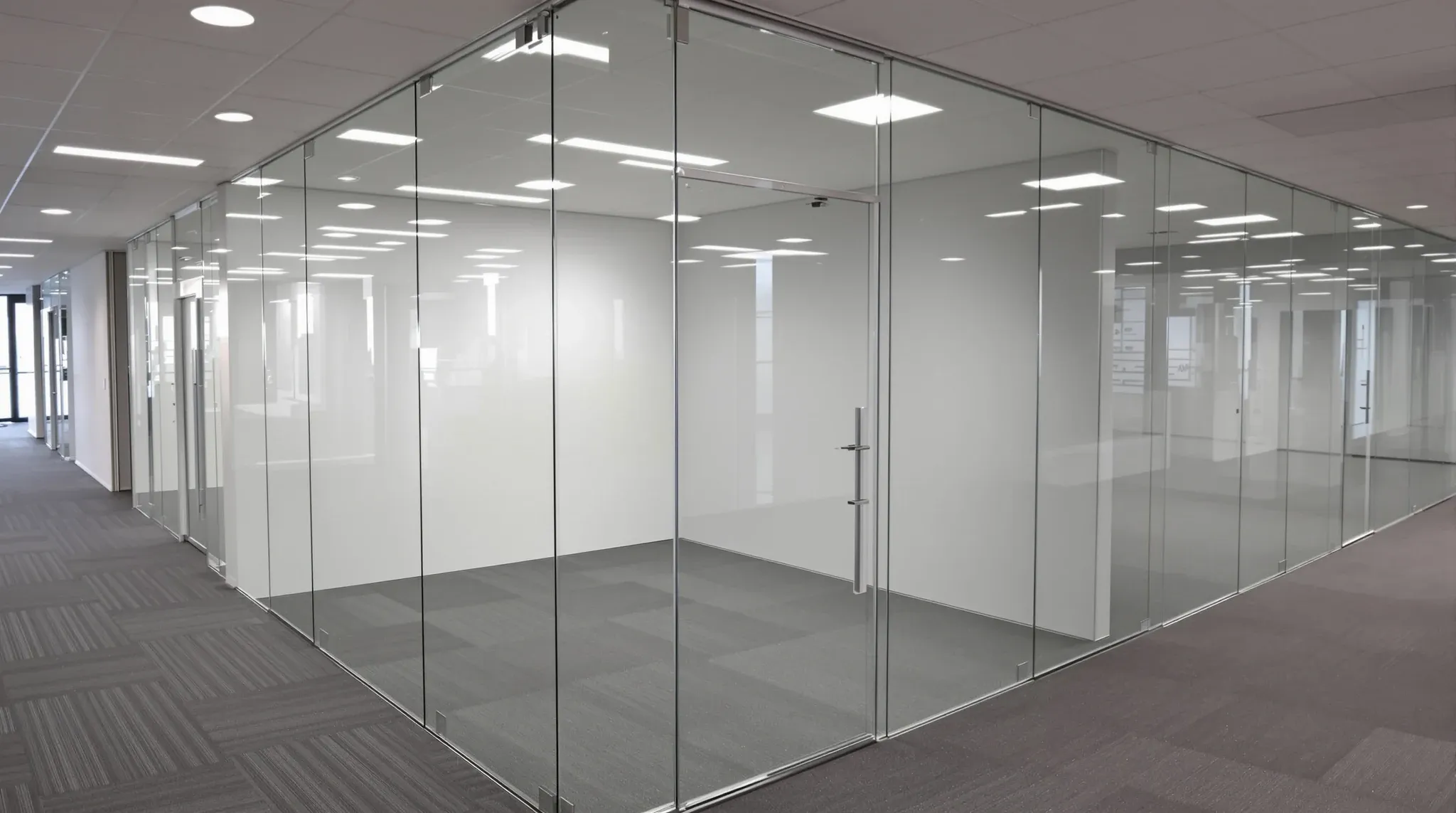
Glass partitions tend to be the part of a fitout the tenant most enjoys having and the part the make-good schedule treats most aggressively at lease end. Where the original glass has been modified, damaged, or replaced through the life of the tenancy, the question at lease end is what gets reinstated, to what standard, and whether the original system can be put back at all.
The reinstatement is not always a like-for-like exercise. It often cannot be, because the original system may no longer be in current supply, the damage may have removed components that are not separately available, or the modifications made during occupation may have changed what the original even was. Sorting that out before the make-good works start is the difference between a clean handover and a contested one.
What Counts As “Reinstatement”
Reinstatement at lease end is the work of returning the tenancy to the condition it was in at the start of the lease, as recorded in the condition document. For glass partitions specifically, that usually means returning the panels, frames, doors, hardware, and finishes to the standard they were at when the lease commenced.
It is not necessarily the same as putting back the panels that are physically there now. A panel that has been replaced through the tenancy with a different product is technically a modification, and reinstatement might require the original specification rather than the current one. A door that has been added during occupation is an alteration, and reinstatement might require its removal entirely. The condition baseline is the document that decides which.
Damage Vs Modification Vs Wear
Three different categories of change show up in glass partition lease-end scope, and they get treated differently in the make-good obligation.
Damage: chipped edges, cracked panels, scratched film, broken hardware. These are the tenant’s obligation to remedy and they sit unambiguously inside the make-good scope.
Modification: a door cut into a panel that was solid at commencement, manifestation film added, switchable film retrofitted, an opening enlarged. These are tenant alterations that usually need either reinstatement to the original or formal acceptance by the landlord that the alteration stays.
Wear: general aging of seals, perimeter trim discolouration, slight settlement at the head track. These are typically considered fair wear and tear in NSW commercial leases and do not require reinstatement, although where the lease is explicit on the point, the position can vary.
The line between modification and wear sometimes blurs, particularly around aged manifestation film or seal degradation, and the dilapidation schedule is where the landlord asserts which is which. Glass partitions and end-of-lease make good obligations sets out where the typical NSW commercial lease draws those lines.
Putting Modified Glass Back: The System Question
Where the make-good obligation requires reinstatement of glass that has been modified through the tenancy, the practical question is whether the original system is still available and whether the new installation will match the rest of the run.
Frameless glass systems are largely interchangeable at the panel level, because the panel itself is toughened glass at a standard thickness and the system is in the head track, base channel, and hardware. Replacing a single panel in a frameless run is usually feasible. Frameless versus framed glass partitions describes the system differences that drive whether reinstatement is straightforward or expensive.
Framed systems are more demanding. The frame profile, joint detail, hardware, and finish all have to match the original. Where the original framed system is no longer in current supply, the choice is between sourcing a near-equivalent that the landlord will accept, replacing more than the damaged or modified section so the run reads consistently, or negotiating a settlement instead of a like-for-like reinstatement.
Broken Or Cracked Panels And The Lead Time Problem
A cracked or broken panel discovered close to lease end is one of the most common reasons make-good programmes run late. Toughened glass at office sizes is generally a stock item, but custom dimensions, low-iron, or specified finishes can carry lead times of three to six weeks from order.
Where the damage is discovered at the joint walk-through with the landlord around thirty to sixty days before exit, the lead time on a custom panel can run past the exit date. Trades and tenants caught short here usually have three options: order the matching panel and extend the lease for the trades-only period needed, accept a near-match panel that the landlord agrees to in writing, or pay for accelerated production at a premium.
The cheapest path is to walk the glass scope earlier, at the dilapidation schedule response stage rather than the walk-through, so any lead time is identified while the programme still has the room to absorb it.
Manifestation Film, Frosting, And Digital Print
Manifestation, frosting film, and digitally printed film are the most-modified part of any commercial office glass system. The film added through the tenancy is almost always different from what was there at commencement, and the make-good question is whether the original film state needs to be restored or whether the panels need to come back clean.
Where the lease and condition document specify clear glass at commencement, all film added through the tenancy is a modification and the reinstatement requires film removal and panel cleaning. Where the lease specified a particular manifestation pattern, the original pattern has to come back, even where the existing film is more elaborate.
Film removal from glass is straightforward where the film is recent and well-applied. It is more involved where the film has been on the glass for years, has degraded, or has bonded into the surface unevenly. Heat application and slow peel, residual adhesive removal, and panel inspection take longer than tenants expect. Frosting, film, and digital print options set out the durability differences that affect how easily each comes off again.
Hardware, Door Closers, And Ironmongery
Glass doors and panel hardware wear through normal use, and parts that have been replaced through the tenancy may not match the originals. Door closers, patch fittings, pivot hinges, handles, and locks all have specifiable finishes and styles, and where replacement parts have been used during occupation, the make-good list may call for the original style to be restored.
This is one area where pragmatic agreement at the walk-through usually wins. Where the replacement hardware is in good condition and functionally equivalent, landlords frequently accept it. Where the replacements are visibly mismatched or of lower quality, the schedule typically asks for the original style. The cost difference between accepting and restoring is meaningful, and the conversation is worth having explicitly rather than letting it drift.
Removal Versus Reinstatement: The Alternative Path
Where the glass partitioning is a tenant alteration that the landlord requires removed entirely, the work is removal rather than reinstatement. The panels come down, the head track and base channel are taken off, the floor and ceiling at the original line are made good, and the room returns to the open configuration it was in before the partition went up.
This usually sits at lower cost than reinstating a modified or damaged glass system, because the work is straightforward demolition rather than sourcing and matching. How to remove glass partitions during make good works sets out what the removal scope typically includes and how the floor and ceiling reinstatement after removal is handled.
Where the original lease commencement had open space and the partition was a tenant addition, removal is usually the path the landlord prefers. Where the lease started with the glass partitioning in place, the partition is base condition and reinstatement is required.
The Cost Range And What Moves It
Glass partition reinstatement at lease end in a Sydney commercial office sits across a wide range depending on what is being put back, how much of the original system is still available, and whether modifications need to be reversed in addition to damage repaired. A single damaged frameless panel reinstated cleanly sits at the low end. A run of framed partitioning where the original system is out of supply and a near-match has to be commissioned sits at the higher end.
The factors that move the cost most are the volume of glass affected, whether the system is still in current supply, the lead time on any custom panels, the amount of film removal required, and whether hardware is being matched or replaced. A scope that knows these inputs at the front end usually lands within budget. A scope that finds them out as the works run usually does not.
If we can help work through the glass scope on a lease-end make-good schedule, source replacement panels or matching system parts under tight programme, or sequence the glass partition reinstatement around the rest of the make-good works so the handover runs on time, this is the kind of late-tenancy glazing work we walk tenants through regularly.
📞 Call us on 1300 60 93 93