
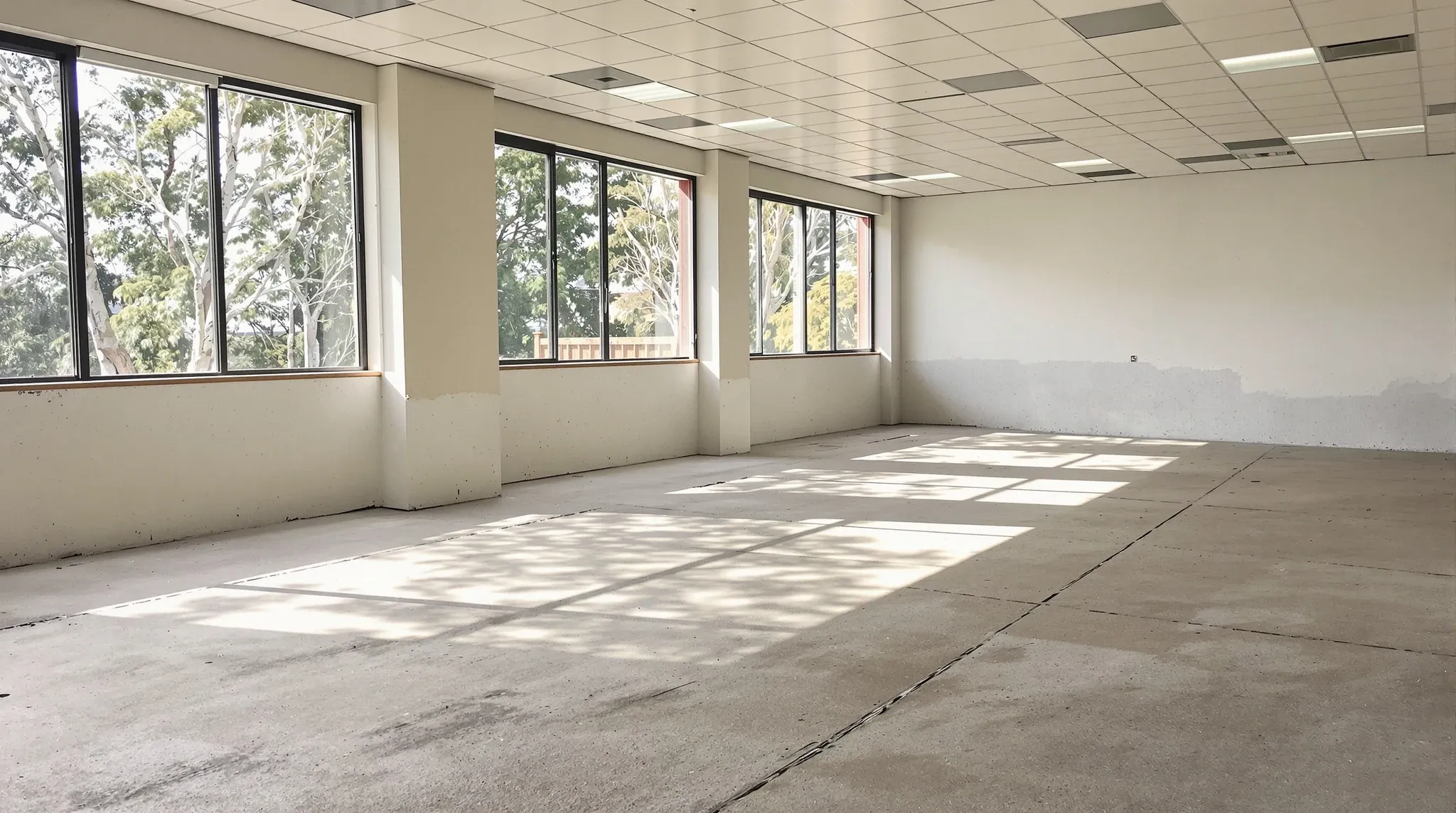
Leaving a tenancy before the lease runs out raises a timing question: strip the floor out now while you still hold it, or leave the defit until the handback date. The answer turns on access, what the lease says about condition, and whether the empty floor is costing you more held than handed back.
It is a real decision, not a formality, because the two paths cost different amounts and carry different risks. Running the defit early means doing the work while you still control the space and can let trades in on your own terms. Leaving it to the end means the floor sits empty until the last weeks, then everything happens at once against a hard handback date. Which is cheaper and safer depends on your specific lease and your specific floor.
Running the strip-out early versus leaving it to the end
The early option means you bring forward the defit and make good while you are still paying rent but no longer using the space. You hold the keys, you control access, and you can run the works at a measured pace. The trade is that you are paying rent on a floor you are actively stripping, and you are committing to the make good scope before you have to.
The late option means the floor stays as it is until close to the lease end, then the strip-out and make good run in the final weeks before handback. You stop spending on the works until you have to, but you compress everything into a tight window with no room for surprises. If anything runs over, you are into holdover or penalty territory. The difference between the two is really a difference between paying for time versus paying for compression, and it sits on top of the more basic question of what the works even are, which is covered in the difference between strip-out and make good.
Before either path makes sense, it is worth being clear that a defit and make good is a defined scope of works, not an open-ended clean-up. Knowing what the lease actually requires is what lets you decide when to do it.
The constraints that decide which path is open to you
The first constraint is what the lease says about condition and timing. Some leases require the floor to be handed back in a defined state by a defined date, and some allow the works to happen during a handover window after the lease formally ends. The wording decides how much flexibility you have, and it is the first thing to read before choosing a path. The obligations themselves are set out in make good obligations explained.
The second is access. If you are leaving early, can you actually get trades in, or is the building tied up with other tenancies, restricted loading dock times, or after-hours-only rules for noisy work? A floor you control on paper but cannot easily access is harder to strip early than it looks.
The third is whether the strip-out is yours to define or whether the landlord holds a dilapidation schedule that fixes the scope. If a schedule already exists, the works are largely set and the timing question is purely about when to run them. If it does not, there may be room to negotiate the scope, and that negotiation is easier with time in hand than against a deadline. The role of the schedule is explained in dilapidation schedules in commercial office leases.
How the timing plays out against the calendar
A defit and make good has a programme that does not compress past a certain point. The strip-out itself runs to a typical timeline by floor size, and the make good that follows, the patching, painting and reinstatement, adds more on top. The realistic duration is set out in how long a commercial office defit actually takes, and it is longer than most people assume when they leave it to the last minute.
Running early gives you slack. If the strip-out reveals something unexpected behind a wall or above the ceiling, you have time to deal with it without missing the handback. Running late removes that slack entirely. The works have to finish before the lease ends, so any delay eats into the buffer, and if there is no buffer, it eats into holdover. The closer the works run to the handback date, the more a small problem turns into an expensive one.
There is also a coordination point if you are moving into a new space at the same time. Doing the defit early can free your attention and your trades for the new fitout, rather than stacking both against the same deadline. Managing the two together is its own discipline, covered in how to manage a defit and new fitout at the same time.
What each path costs you
The cost of the works themselves is broadly the same either way. What changes is everything around them. Running early means you carry rent on the floor while it is being stripped, so the holding cost is the price of the flexibility. If the rent is high and the floor is large, that holding cost is significant and pushes toward leaving the works later.
Running late removes the holding cost but adds risk cost. A compressed programme has no room for error, and the price of a delay is holdover rent, penalty clauses, or a rushed job that the landlord rejects at sign-off. A make good that fails inspection has to be redone, and redoing work against an expired lease is the most expensive way to do it. The drivers that move the make good cost in either direction are set out in commercial office make good cost drivers in Sydney.
The honest comparison is holding cost against risk cost. If your rent is modest and your programme is tight, paying to hold the floor and running early buys you certainty cheaply. If your rent is steep and your floor is simple, leaving the works to a well-planned late window saves real money as long as the programme holds.
There is also a market factor in the timing if you are moving to a new space. Trades and materials are not always available on demand, and pricing moves with how busy the sector is, so committing the defit early can lock in a contractor and a price while leaving it late exposes you to whatever the market looks like in your final weeks. A defit squeezed into a busy period against a hard deadline can cost more simply because you have no leverage to negotiate and no time to shop the price. Running early, when you can choose your window, often buys a better price as well as a calmer programme.
The trade-off in plain terms
The core trade-off is certainty versus carrying cost. Early gives you control, slack and a calmer programme, paid for in rent on an empty floor. Late gives you a shorter spend window, paid for in compressed risk and a hard deadline. Neither is universally right, and the wrong choice is usually made by defaulting to one without weighing the other.
A simple floor with a clear, modest make good scope and high rent leans toward late, because the works are predictable and the holding cost is the thing to minimise. A complex floor, an uncertain scope, or a tight handback date with penalties leans toward early, because the value of slack outweighs the rent. The mistake to avoid is leaving a complex defit to the final weeks on the assumption it will run smoothly, because that is exactly when it does not, a point made in why defit strategy should start before your new fitout does.
Choosing the timing for your floor
The way to decide is to read the lease first, then weigh your floor against the two costs. Confirm what condition the handback requires and by when. Check whether you can actually access the floor to run works early. Establish whether the scope is fixed by a schedule or open to negotiation. Then compare the rent you would carry by running early against the risk you would carry by running late.
For most tenants leaving early, the answer is to run the defit on a planned schedule well before the handback rather than against it, unless the holding cost is genuinely large and the scope is genuinely simple. Certainty is usually worth more than the rent saved by waiting, because a make good that fails at the last minute costs far more than a few weeks of rent. The decision is yours, but it should be made by weighing the two costs against your actual lease, not by defaulting to whichever feels easier now.
If you are leaving a Sydney office early and weighing up when to run the defit, we can price the strip-out and time it around your handback.
📞 Call us on 1300 60 93 93