
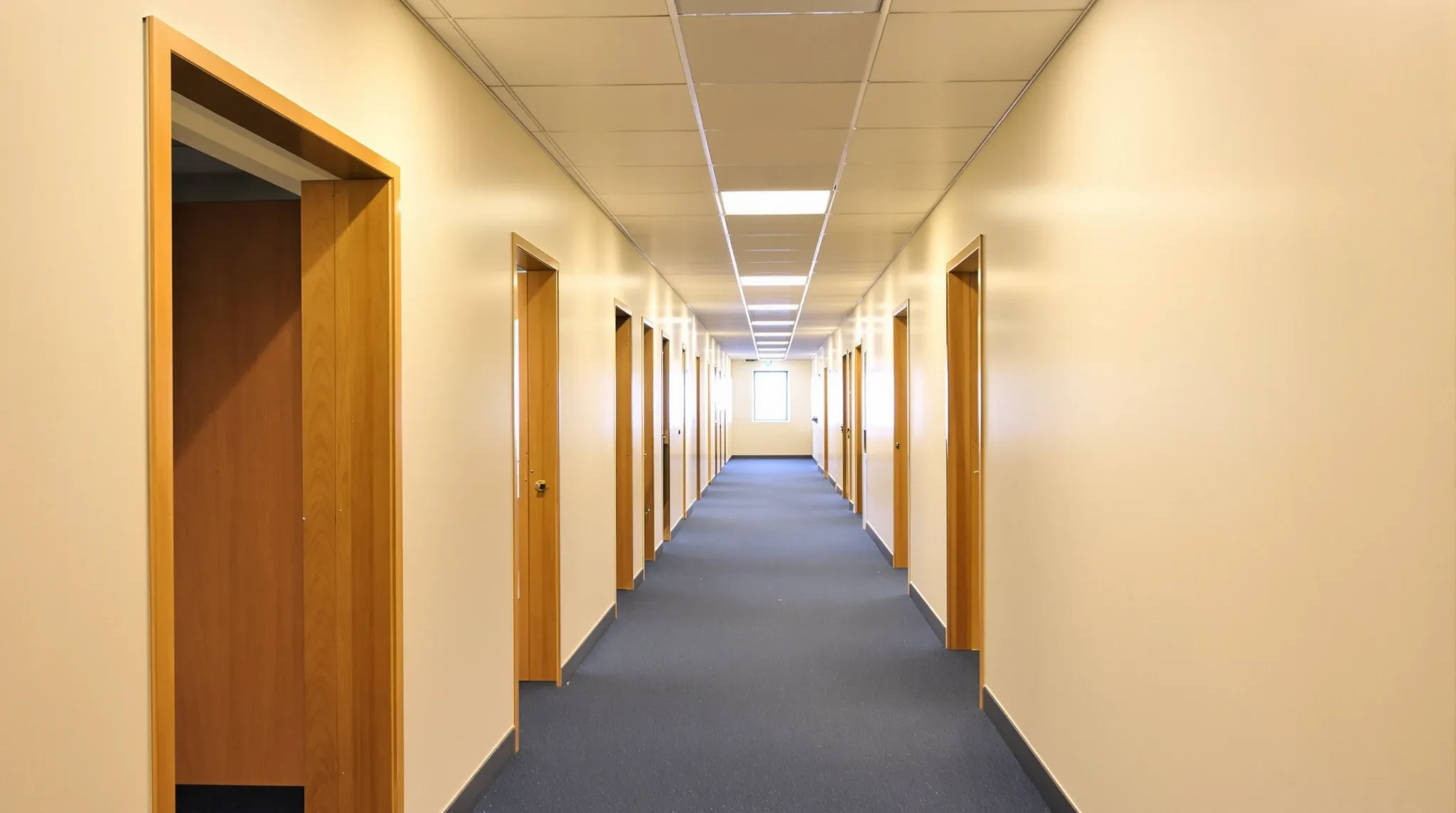
A typical commercial office make good in Sydney lands somewhere between $80 and $250 per square metre, with most projects clustering around $120 to $180. The range is wider than tenants expect because make good is not one trade; it is a bundle of six or seven line items, each of which is driven by the specific fitout being reinstated and the specific building standard it is being reinstated to. Two identically-sized tenancies with identical-looking lease clauses can land at opposite ends of that range because the fitout that has to come out is different and the condition the landlord requires is different.
Working through where the money actually goes, line item by line item, is the most practical way to interrogate a make-good quote. Tenants who know which cost drivers are in play can ask better questions, spot missing items before signing, and negotiate with some basis rather than a headline feeling. What follows is an anatomy of the quote, rather than a repeat of the contractual scope.
Partition Removal And The Single Biggest Cost Driver
Partitions almost always dominate a make-good quote, usually contributing 30 to 45 per cent of the total. The cost is driven by how the partitions were built rather than how many linear metres exist. A demountable or modular partition that was engineered to come down cleanly can be removed in a fraction of the labour time of a fixed-install plasterboard wall that was bonded to the slab, built up to the structural soffit, and tied into the ceiling grid and services.
Within partition removal, three specific drivers move the cost significantly. The first is slab-to-slab construction: a partition that was built through the ceiling line and up to the underside of the slab requires the ceiling to come apart around it, which doubles the labour compared with a partition that stopped at the ceiling. The second is acoustic build-up: walls with double-layer boarding, double-stud framing and perimeter acoustic sealant take longer to break down because there is simply more material to demolish and remove. The third is penetration repairs: every data outlet, power point and HVAC transfer grille in a partition leaves a hole when the partition comes out, and those holes usually translate into ceiling repairs or wall patches above the original partition line.
The practical consequence is that partition choices made five years earlier largely decide the make-good partition line today. This is one of the clearer examples of partition decisions that shape the future removal cost, and it is worth understanding the implication at fitout stage even though the cost only arrives at lease end.
Ceiling Reinstatement And The Tile-Matching Problem
Ceiling reinstatement is typically the second-largest line item, usually contributing 15 to 25 per cent. The cost is concentrated around two factors: how many tiles and grid sections were disturbed by the fitout, and whether the replacement tiles can be matched to the landlord’s base-building specification.
Disturbance includes every cut tile, every grid modification, every penetration through the ceiling for services, and every bulkhead or ceiling feature that was built during fitout. A clean fitout that worked with the grid module and penetrated the ceiling minimally produces a ceiling reinstatement that is simple patching. A fitout with extensive bulkheads, set ceilings over meeting rooms, multiple recessed light fittings that cut new grid, and complex mechanical drop-outs produces a reinstatement that starts to look like a ceiling replacement in all but name.
Tile matching is the other driver. Base-building ceiling tiles in older buildings are often discontinued products or specific colour batches that are no longer available. Where a tile match is impossible, the make-good scope can escalate from local tile replacement to a full ceiling replacement across the tenancy, because mixing new tiles with old produces a visible result that the landlord will usually reject. Tenants signing leases in older buildings should confirm the ceiling tile specification at lease start and, where possible, keep a small inventory of matching tiles for the lease term.
Flooring Reinstatement And The Carpet Decision
Carpet and flooring reinstatement typically contributes 10 to 20 per cent of the total, depending on whether the make-good requires full carpet replacement, patch repair, or leave-as-is. Most commercial leases require the floor to be returned in “clean and serviceable” condition, which is a phrase that the landlord interprets in light of the market rather than any fixed standard.
Three scenarios produce very different numbers. Where the carpet is original to the lease and still in acceptable condition, the make-good scope is usually limited to professional cleaning plus repair of any damaged tiles or sections, which is the low-cost outcome. Where the carpet has been partially replaced during the lease and the replacement does not match the original, the scope usually requires the whole floor to be brought to a consistent condition, which pushes the cost upward. Where the carpet has to be fully replaced because it is worn, stained or beyond repair, the scope becomes a flooring replacement project, which is the high-cost outcome.
Floor penetration reinstatement is a separate but related line item. Floor boxes, cable cut-outs and penetrations through the slab for services all have to be made good to the original slab condition, which usually means filling the penetration, matching the floor topping, and reinstating the carpet or finished floor over it. This can be surprisingly labour-intensive on a floor that had extensive floor-box installation during the fitout.
Services Reinstatement, Removal And Disposal
Services reinstatement covers the removal of tenant-installed services and the restoration of base-building services to their original operating condition. Typical line items include data and low-voltage cabling removal, AV cabling removal, power sub-circuit removal, HVAC diffuser and grille reinstatement, lighting reinstatement to base-building standard, and security system removal.
The cost driver here is usually the extent of tenant-added services rather than the removal complexity. A fitout that added minimal services beyond base-building tolerates a light-touch reinstatement, often 8 to 12 per cent of the total. A fitout that substantially upgraded power distribution, added dedicated server-room services, or installed extensive AV and security infrastructure produces a reinstatement line closer to 15 to 20 per cent, because there is more to remove and more interface work with the retained base-building systems.
Two specific items often get underestimated in quotes. First, the disposal of removed cables, fittings and partitions requires a skip bin program that runs across the whole make-good duration, and the disposal cost in Sydney has increased substantially over the last five years. Second, any services that were modified during the fitout and need to be reinstated to base-building specification, rather than just removed, introduce an additional trade element because the reinstated service has to be tested and certified.
Landlord Standard And The Condition Gap That Sets The Range
The biggest single factor that moves a make-good quote within the wide range is the gap between the tenancy’s current condition and the landlord’s definition of acceptable return condition. A premium-grade A-class tower landlord typically expects the space to come back in a condition that allows immediate re-leasing, which means every element has to be close to new, every finish has to be consistent, and every service has to be tested and handed over with documentation. A mid-grade landlord in an older building often accepts “broom clean” condition with the fitout stripped out, where the next tenant will re-fit anyway.
The difference between those two standards can easily double the make-good cost for an otherwise identical tenancy. Premium-grade make good includes specific items that mid-grade does not, such as detailed pre- and post-inspection walk-throughs, documentation of reinstated services, and corrective work on items that the landlord flags during inspection.
Tenants signing leases should understand the landlord’s expected standard early, because it drives the make-good cost more than any other single factor. The landlord’s make-good requirement is sometimes explicit in the lease but is often defined more by market expectation and landlord track record than by contract wording. Talking to other tenants in the same building, or asking the landlord specifically what has been required of recent exits, gives a more realistic baseline than relying on the lease clause alone.
Programme Length And After-Hours Premiums
Make good is usually delivered between lease expiry and handover, often with a tight window of two to four weeks. Where the landlord allows longer, the cost can be reduced because the programme fits into standard working hours. Where the window is compressed, the cost rises because work has to be done after hours or across weekends to meet the deadline.
Typical after-hours and weekend premiums in Sydney commercial fitouts run at 25 to 50 per cent above day-rate trade costs, which can add 5 to 10 per cent to the total make-good quote. The premium is often hidden inside trade-by-trade line items rather than called out separately, which makes it easy to miss when comparing quotes. A quote that is significantly cheaper than another may be assuming a longer programme, so the programme assumption should be compared alongside the cost.
Tenants with flexibility on the lease exit date can often negotiate a longer make-good window with the landlord in exchange for an earlier exit or a smaller surrender fee, which can produce a lower make-good quote by allowing the work to run at standard rates. The negotiation is worth having because the savings are meaningful.
Inspection Rounds, Defects Correction And Contingency
Make good ends with an inspection, and the inspection usually produces a defects list that the outgoing tenant is required to correct before the bank guarantee or security deposit is released. A well-run make good anticipates this by building contingency into the quote for a reasonable level of post-inspection work.
Typical defects that appear on inspection include paint touch-ups where the initial rework was slightly imperfect, ceiling tiles that were missed on the first pass, carpet patches that are slightly visible, and services that were disconnected but not fully reinstated. Most quotes include an implicit contingency of 5 to 10 per cent for this work, although whether it is labelled as contingency or absorbed into the trade line items varies by quoting style.
Where the inspection produces an unusually long defects list, either because the landlord’s standard is stricter than expected or because the make-good work was genuinely incomplete, the outgoing tenant can face a second round of remedial work at short notice. This is the less-predictable part of make good and the reason tenants sometimes find the final cost exceeds the original quote. The practical defence is to build a realistic contingency into the budget rather than assuming the first quote is final.
How A Make-Good Quote Actually Compares Against Another
A useful way to compare two make-good quotes is to ask the quoter to break the number down across the line items above, with a note on the assumptions for each. Quotes that only show a lump sum per square metre conceal which drivers were in scope and which were excluded, and the cheapest-looking quote often becomes the most expensive once omissions become variations.
The comparison that matters is not the total figure, but how each quote is treating the partition removal complexity, the ceiling matching risk, the flooring condition assumption, the services scope, and the contingency. Two quotes that differ by 20 per cent on the headline may be delivering substantially different work, and the difference often matters more than the price.
Tenants planning a make-good exit who want a quote broken down by line item rather than summarised as a lump rate, along with clear assumptions on each driver, can work with us on the full defit and make good scope so the cost shape is visible from the start rather than discovered during the programme.
📞 Call us on 1300 60 93 93