
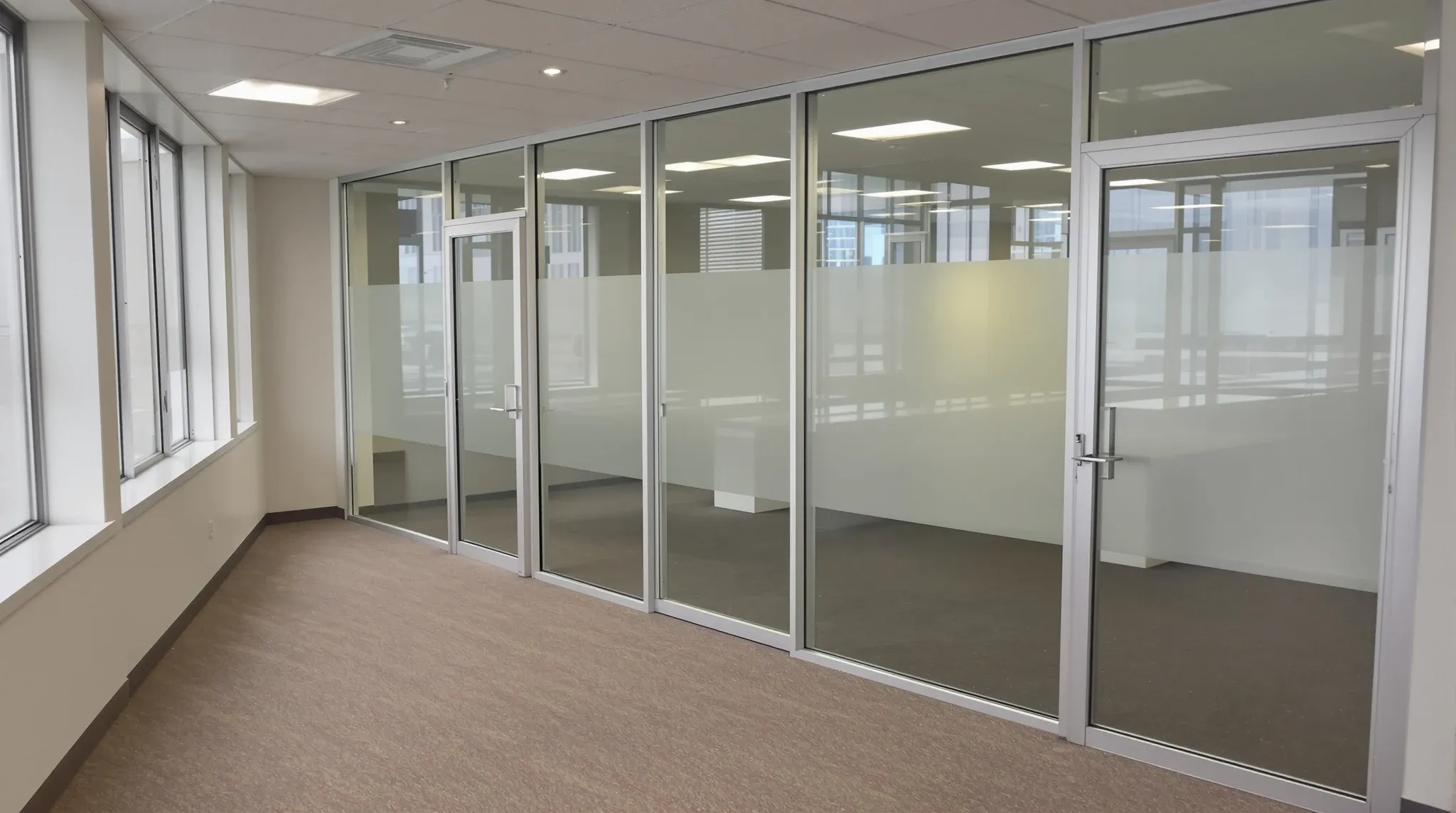
Whether glass partitions are classified as base building or tenant fitout is not just a labelling exercise. The classification determines who owns them, who maintains them, who removes them at lease end, and who bears the cost of any of these activities. For tenants with glass-heavy offices, the answer can mean the difference between a straightforward lease exit and a make good bill that runs into tens of thousands of dollars. For landlords, it affects how the space is valued, how it is presented to incoming tenants, and how the building’s fitout guide manages glass installations across multiple tenancies.
The complication is that glass partitions can sit on either side of the line depending on the circumstances, and in some cases, they sit right on it.
When Glass Partitions Are Base Building
Glass partitions are considered base building when they were installed by the landlord or developer as part of the building’s original construction or a subsequent base building upgrade. In this scenario, the glass is part of the building’s standard offering to tenants, much like the ceiling grid, the base building lighting, and the HVAC distribution. The landlord owns the glass, maintains it, and takes responsibility for it at the end of each tenancy.
This classification is most common in premium and A-grade buildings where the landlord has invested in glass partitions as a feature that adds to the building’s market appeal. A newly constructed building might include glass meeting rooms and glass-enclosed offices as part of the base building specification, allowing tenants to occupy a partially fitted space without the cost of installing their own glass.
When glass is base building, the tenant’s make good obligation typically requires them to return the glass to the condition it was in at the start of the lease, including removing any films, graphics, or modifications they applied. But they do not need to remove the glass itself, which represents a significant saving. What experienced teams assess before designing glass layouts includes confirming whether existing glass is base building or tenant fitout, because the answer changes the scope of the project and the eventual exit strategy.
When Glass Partitions Are Tenant Fitout
Glass partitions are tenant fitout when the tenant installed them during their lease term as part of their own fitout works. This is the more common scenario in buildings where the base building specification does not include glass, and the tenant has chosen to add glass offices, meeting rooms, or feature walls as part of their workspace design.
When glass is tenant fitout, the default make good position is that the tenant removes the glass at lease end, restores the floor where the channels were fixed, reinstates the ceiling where the partition heads connected, and returns the space to the open-plan base building condition that existed before the glass was installed. The full cost of this removal and restoration falls on the tenant unless the landlord agrees in writing to retain the glass.
The classification is usually clear when the tenant commissioned and paid for the glass as part of a documented fitout project. It becomes less clear in situations where the glass was installed by a previous tenant and remained in place through a lease assignment or a new lease negotiation without the ownership being explicitly addressed.
The Grey Area: Inherited Glass and Undocumented Installations
The classification question becomes complicated when glass partitions were installed by a previous tenant and left in place for the current tenant to use. This happens frequently in commercial buildings where the outgoing tenant negotiated to leave the glass as part of a reduced make good scope, or where the landlord decided to retain the glass because it suited the incoming tenant’s needs.
In these situations, the ownership and responsibility for the glass depends on the documentation. If the landlord formally accepted the glass into the base building specification and the current tenant’s condition report reflects its presence, the glass may be treated as base building for the purpose of the current lease. If the glass was simply left behind with no formal documentation, the current tenant may find themselves responsible for it at lease end even though they did not install it.
Glass partition systems that hold up over time are more likely to transition from tenant fitout to retained or base-building status, because their ongoing quality makes them an asset to the building rather than a liability. Budget systems that deteriorate quickly are more likely to become a make good obligation regardless of who installed them.
How the Classification Affects Make Good
The make good implications of the classification are substantial. If glass is base building, the tenant’s make good obligation for the glass is limited to returning it to the condition recorded in the condition report. This might include professional cleaning, removing manifestation films or graphics, replacing damaged panels, and repairing any hardware defects. The cost is modest compared to full removal.
If glass is tenant fitout, the make good obligation includes the full cost of careful removal, disposal, floor restoration, ceiling rectification, and surface repair at every point where the glass connected to the building. For a medium-sized tenancy with glass meeting rooms and offices, this can represent $30,000 to $80,000 or more, making it one of the most significant line items in the make good budget.
The classification also affects how the tenant plans their fitout from the start. If existing glass is base building, the tenant can plan their layout around it, potentially saving the cost of installing new glass. If existing glass is tenant fitout from a previous occupant, the current tenant needs to understand their responsibility for it before they incorporate it into their own design. Experienced fitout teams make glass offices work by clarifying these questions early, not discovering the answer during the make good process.
How Lease Documents Address the Classification
Well-drafted commercial leases address the classification of glass partitions either explicitly in the lease terms or through the fitout guide and the condition report. The condition report is the most reliable indicator: if it describes and photographs the glass partitions as part of the premises at lease commencement, the glass is typically treated as part of the baseline that the tenant must maintain and return.
Where the lease is silent on glass classification and no condition report exists, the classification defaults to the broader make good clause. If the clause requires the tenant to remove all tenant improvements and the glass was installed by a previous tenant rather than the landlord, the current tenant may argue that the glass is not their improvement. The strength of that argument depends on the available documentation, including any correspondence during lease negotiations that addressed the glass.
Tenants negotiating a new lease in a space that already contains glass should insist on clear language in the lease or the heads of agreement that specifies whether the glass is base building, whether the tenant assumes any maintenance responsibility, and what the make good obligation is with respect to the glass at lease end. Addressing this at the negotiation stage costs nothing and prevents disputes that cost a great deal.
How Landlords Decide Whether to Reclassify Glass
Landlords periodically reclassify glass from tenant fitout to base building, typically when the glass adds value to the building’s leasing proposition and the landlord wants to offer it as a feature to future tenants. This reclassification is a commercial decision that considers the quality and condition of the glass system, its layout flexibility, and the cost of maintaining it relative to the rental benefit it provides.
A glass system from a premium manufacturer, installed to a high standard, in a configuration that suits a wide range of potential tenants, is a candidate for reclassification. A system that is proprietary, damaged, or configured for one specific type of business is less likely to be reclassified because the landlord would rather have it removed and offer the space as a clean shell.
A well-executed glass fitout that is maintained throughout the lease has the best chance of being retained or reclassified at lease end. Tenants who invest in quality at the outset and maintain it throughout the lease term position themselves to negotiate a glass retention that benefits both parties.
Practical Steps for Tenants Entering or Exiting a Lease
For tenants entering a new lease, the checklist is straightforward. Confirm whether existing glass is base building or previous tenant fitout. Insist on a condition report that documents the glass including its location, specification, and condition. Negotiate clear lease terms about glass responsibility and make good. If the glass is not base building, factor the eventual removal cost into the total cost of occupancy.
For tenants exiting a lease, the priority is to establish the classification early, ideally twelve months before lease end. If the glass is base building, confirm the return condition with the landlord. If it is tenant fitout, explore whether the landlord will agree to retention before pricing the removal. If retention is not possible, include glass removal in the make good scope and programme from the start.
If you need to determine whether glass in your premises is base building or fitout, and what that means for your make good scope, we can review the documentation, inspect the system, and advise on the most cost-effective approach.
Call us on 1300 60 93 93