
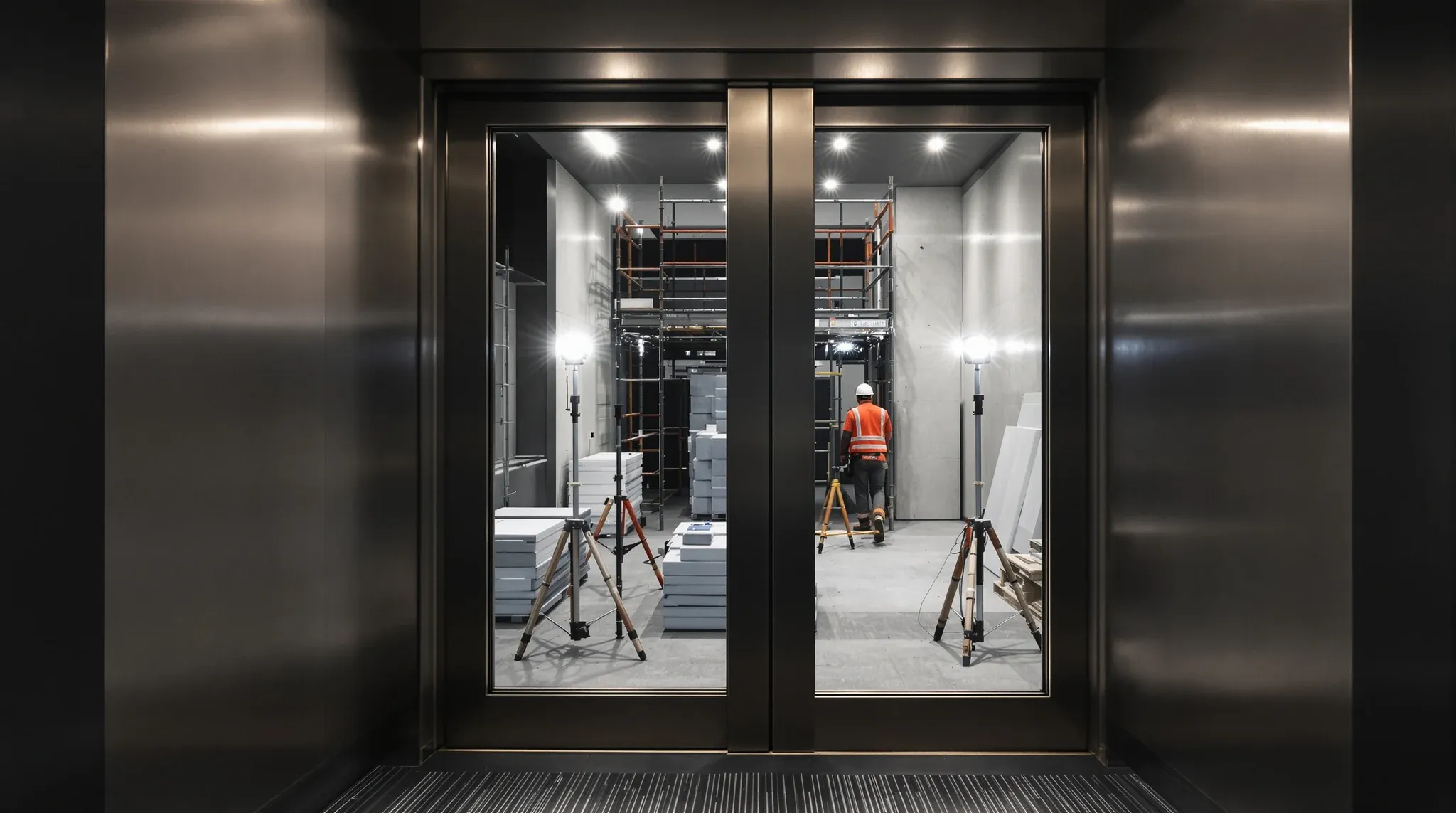
Every office fitout programme runs into delays and constraints. The question is never whether they will show up, it is whether the programme is built to absorb them without the tenancy date slipping or the scope quietly eroding. A well-run programme accepts from the first day that unplanned events are part of the job, and it is built to bend around them rather than break.
The practical difference between a programme that absorbs disruption and one that is derailed by it is rarely luck. It is the shape of the critical path, the choice of what gets sequenced first, the handling of building-side constraints that the tenancy cannot control, and the amount of honest buffer built into the right places. This is where programme discipline earns its keep.
The critical path is the only programme that matters
A fitout programme is not one bar chart, it is dozens of overlapping trade sequences stitched together. Some of those sequences can slip a day or two without anyone noticing. Others cannot slip at all without moving the handover date with them. The difference is the critical path, and identifying it correctly at the start of the programme is what decides whether delays are absorbable or terminal.
For a typical commercial fitout the critical path runs through a predictable set of stages: landlord approvals, long-lead procurement, first fix services, partition set-out, ceiling close-up, final services, finishes and compliance sign-off. The correct order to build an office fit-out follows this spine. Every stage off the critical path has some tolerance. Every stage on it has none.
Knowing which is which at the start lets the programme treat the two categories differently. Non-critical tasks can absorb minor slippage because they sit inside a larger float window. Critical tasks get protected with earlier starts, parallel prep, and earlier procurement commitments. A delay on a non-critical item is noise. A delay on a critical-path item is a programme-level issue that needs active handling from the day it appears.
Sequencing is how the programme creates its own room to move
The second lever is the sequencing inside the programme. Trades that have to happen in a particular order cannot be compressed without creating rework, but trades that can happen in parallel, or in a different order without harming quality, create choice. A well-sequenced programme builds in those choices deliberately so that when an unplanned event hits one trade, another trade can move forward in the meantime.
This is why we put so much weight on programme design at the start. Office fitout programme planning from site measure to handover is not a paperwork step, it is the decision about which dependencies the programme will tolerate and which it will design out. A programme that runs every trade strictly in series has no room for disruption. A programme that runs trades in parallel where possible has several trades to choose from when one of them stalls.
Procurement fits into the same logic. Office fitout procurement, what gets ordered when and why, is one of the most common sources of avoidable slippage, because long-lead items ordered late force the rest of the programme to wait. We treat procurement sequencing as part of the critical path, not as an administrative task the programme happens to wrap around.
Building-side constraints shape the programme before day one
Some constraints on a fitout programme come from the building itself, not from the fitout. Loading dock windows, goods lift availability, after-hours access rules, noise restrictions, protected hours, fire-system shutdowns, landlord-mandated inspections, and the schedules of other tenants on the same floor are all programme inputs the tenancy has no direct control over. They have to be absorbed rather than fought.
These constraints are more common in Sydney CBD buildings than most tenants expect. Base building and building management constraints that affect office fitouts sets out the typical shape of them. The key point is that none of them is surprising to the building. They are standing rules the tenancy is entering into, not events that can be negotiated away once the job is under way.
A programme that understands this up front builds around the windows it can actually use. Deliveries are sequenced against the goods lift slots the building offers. Noisy works are scheduled for the protected hours the building allows. Inspections are booked against the building management calendar, not against the tenancy’s preferred dates. Common constraints in Sydney office fitouts shape the programme long before the first trade arrives on site.
Delays on a live programme and how they get absorbed
Once the programme is running, delays tend to come from a predictable set of sources. A long-lead item slips. A landlord approval takes longer than expected. A base-building shutdown is rescheduled. A services survey finds something that was not on the existing drawings. A trade runs into a condition on site that needs a variation. None of these is unusual. All of them test the programme.
The handling logic is the same every time. The delayed task is assessed against the critical path. If it sits off the critical path, the rest of the programme continues while the issue is resolved in parallel. If it sits on the critical path, the programme coordinator reshapes the sequence so that other critical-path tasks can move forward, or finds a way to re-sequence the delayed task around the constraint. The same stages usually produce the slippage, so a programme designed with those stages in mind has already planned for them.
The softer lever is the live operations side of the programme. A floor that is already occupied by staff needs disruption kept to the windows the business can tolerate. Staging live office fitouts without disrupting the business is a programme design decision, not a site-level workaround. Zones are set, working windows are agreed, and protected areas are held back while the rest of the floor progresses.
A less obvious factor is communication discipline between the trades and the programme coordinator. Most delays do not become problems at the moment they occur. They become problems when the information about them reaches the programme coordinator two days late, by which point the downstream trades are already committed to a sequence that no longer works. A programme that surfaces issues on the day they appear has two days more to respond. That is usually the difference between an absorbed delay and a programme-level slip.
Buffer is not the same as slack, and both have their place
A disciplined programme has honest buffer in the right places, and it does not pretend buffer is slack. Buffer is time set aside for the things that will happen and have to be absorbed: a rescheduled inspection, a minor variation, a delayed delivery, a services survey finding that needs a small redesign. Slack is the ordinary looseness inside a programme where a task can finish a day early or a day late without moving anything else.
The mistake is hiding buffer inside individual task estimates, which makes every task look longer than it needs to be and tempts the programme to spend the buffer early on ordinary slippage. Better to hold buffer at the programme level, against the critical path, where it is visible and defended. Ordinary task slack stays inside the tasks. Buffer stays at the programme level, and it is spent against real events, not against every minor inconvenience.
Tenants sometimes read that buffer as padding, and in an opaque programme it can look that way. The test is whether the buffer is visible, whether it is justified against specific categories of risk, and whether the programme can show what happens to the handover date if the buffer is spent. A programme that cannot answer those questions has not planned its buffer, it has just rounded up.
What a well-run programme looks like at handover
By the time a well-run complete office fitouts programme reaches handover, the delays that hit it during the job are usually invisible to the tenant. The handover date has held, the scope has held, and the compliance paperwork lines up with what was built. That is not because the programme never had a difficult week. It is because the difficult weeks were absorbed by the programme structure rather than pushed onto the tenancy date or the finishing trades.
The programme that gets to that point tends to share a few characteristics. The critical path was identified early and defended throughout. Sequencing was designed with parallel paths where the trades allowed. Building-side constraints were treated as inputs, not obstacles. Procurement was on the critical-path conversation, not outside it. Buffer was visible at the programme level and spent against specific events. None of that is glamorous. It is the unglamorous work that keeps a fitout programme on the rails when the unplanned events arrive.
If you are planning an office fitout on a tight programme or a constrained building, we can help you structure the programme around the critical path and the building’s realities so that the unplanned events are absorbed by the plan rather than by your occupation date.
📞 Call us on 1300 60 93 93