
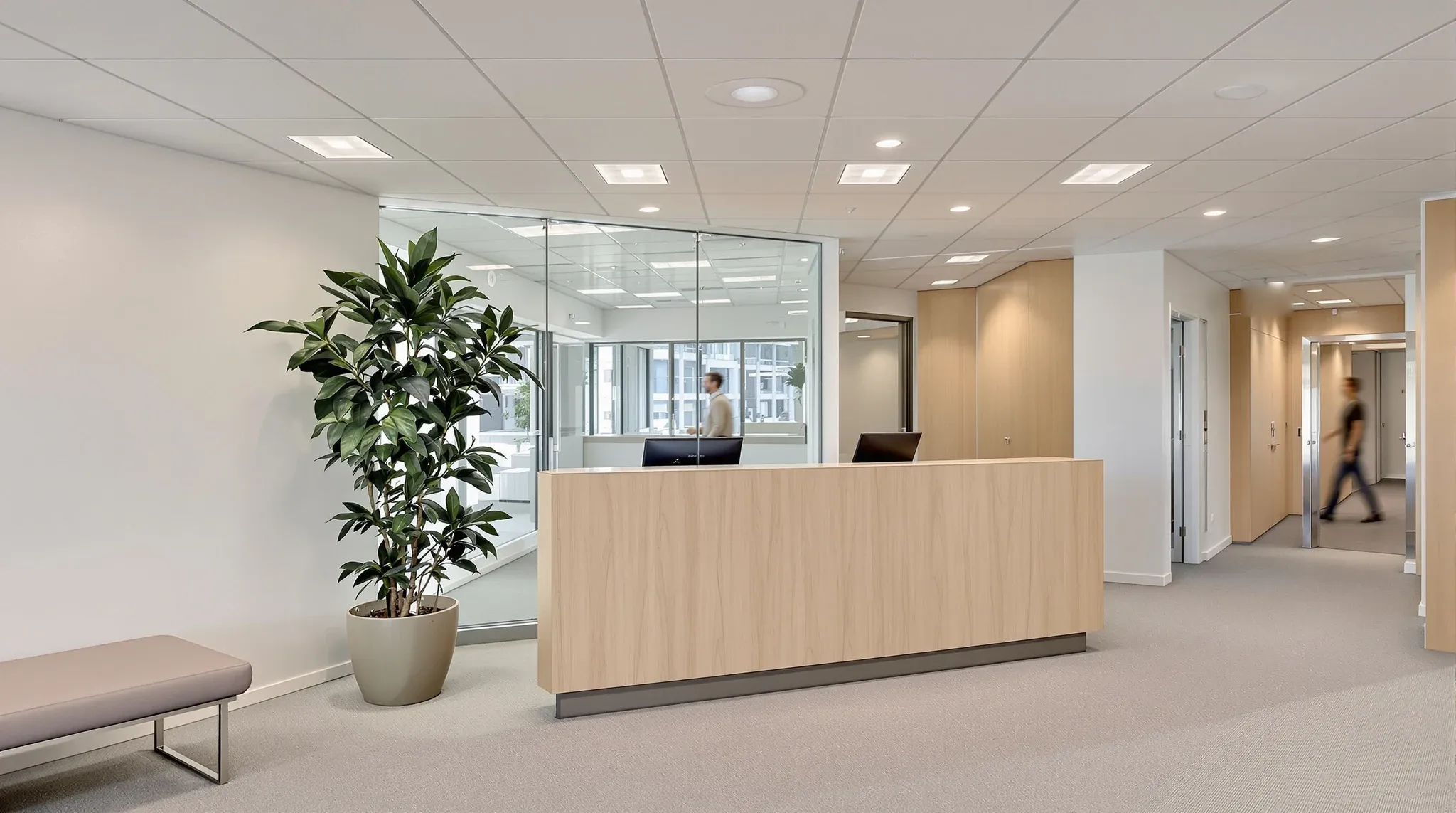
Asset managers see tenant fitouts differently from the tenants who commission them and the landlords who approve them. Their lens is the building as a whole: how each tenant’s fitout contributes to or detracts from the asset’s value, how it affects the building’s competitive position in the leasing market, and how it influences the experience of all occupants. A well-fitted tenancy that enhances the building’s appeal is an asset to everyone. A poorly fitted tenancy creates problems that extend well beyond the individual lease.
For tenants, understanding the asset manager’s perspective provides insight into why certain fitout decisions are encouraged or resisted, and how the quality of tenant works influences everything from lease renewal negotiations to the building’s reputation in the market.
Why Asset Managers Evaluate Fitout Quality Differently
A landlord’s primary concern with a fitout is compliance: does the proposed work meet the building’s standards, and will it leave the premises in a condition that can be relisted at lease end? An asset manager shares these concerns but adds a layer of strategic assessment. How does this fitout affect the building’s overall quality perception? Does it support or undermine the building’s positioning in its market segment? Will it attract or deter prospective tenants who are evaluating the building?
This strategic perspective means asset managers pay attention to details that a compliance-focused review might overlook. The quality of finishes visible from common areas, the impression created by the tenant’s reception when visitors arrive on the floor, the noise that travels from the tenancy into the corridor, and the maintenance standard the tenant maintains throughout the lease all factor into the asset manager’s assessment.
Strategy matters more than style in commercial fitouts, and asset managers understand this intuitively. A fitout that is modest in finish but well designed, properly built, and properly maintained reflects better on the building than one that looks expensive but is poorly executed and badly maintained.
What Asset Managers Look for During Building Inspections
Asset managers conduct periodic inspections of their buildings, and the condition of each tenancy is part of what they assess. These inspections are not as detailed as a make good inspection, but they cover the visible indicators of fitout quality and maintenance standard.
Common items assessed during a routine inspection include the condition of the tenancy entrance and reception area, the standard of maintenance visible from the common corridor, the condition of glass partitions and their manifestation markings, the state of the ceiling grid visible through glass or above partition heads, and any visible maintenance issues such as damaged walls, worn carpet, or malfunctioning lighting. These are surface-level assessments, but they provide the asset manager with a rolling picture of how each tenancy is being maintained.
The asset manager also monitors indirect indicators. Tenant complaints about noise from adjacent tenancies suggest poor acoustic performance in the partitions between them. Repeated HVAC service calls from a particular floor suggest that a tenant’s fitout has disrupted the air distribution. Complaints from visitors about wayfinding or signage suggest that the tenancy’s interface with the common areas is not well managed.
How Fitout Quality Affects Building Value and Tenant Retention
The quality of tenant fitouts across a building directly affects the building’s value, because the building’s value is a function of its rental income and its appeal to prospective tenants. A building where every tenancy is well fitted, well maintained, and professionally presented commands higher rents and lower vacancy than a building where tenant fitouts vary wildly in quality and some tenancies are visibly neglected.
Tenant retention is particularly influenced by fitout quality, though the relationship is indirect. A tenant whose fitout works well for their business is more likely to renew their lease than one whose fitout has become dated, uncomfortable, or poorly maintained. Asset managers who recognise this relationship invest in maintaining the base building to a standard that complements well-fitted tenancies, because the combination of a good building and a good fitout is what keeps tenants in place.
Why good enough rarely works in Sydney fitouts reflects the competitive dynamic that asset managers deal with daily. In a market where tenants have options, the quality of the existing fitout can be the factor that determines whether they stay or move to a competing building that offers a better working environment.
The Link Between Fitout Standard and Rental Outcomes
Asset managers track the relationship between fitout quality and rental outcomes because it directly affects the building’s financial performance. A tenancy that is well fitted and well maintained can command a rental premium at lease renewal. A tenancy that is poorly fitted or has deteriorated creates a rental risk because the tenant may seek to negotiate a lower rent or may choose not to renew at all.
The fitout’s age and condition also affect the leasing prospects for the premises if the tenant does vacate. A tenancy that has been defitted to a clean base building condition is straightforward to market. A tenancy where the outgoing fitout was poorly maintained and the make good was inadequate may require the landlord to invest in additional preparation before the space can be shown to prospective tenants.
Corporate head office fitouts in Sydney illustrate this dynamic clearly. A premium tenant with a well-designed, well-maintained fitout enhances the building’s reputation and attracts other premium tenants. A tenant whose fitout has declined in quality has the opposite effect, particularly on the floors immediately above and below, where the contrast can be visible to prospective tenants during inspections.
How Poor Fitouts Create Downstream Problems for Asset Managers
A poorly built or poorly maintained fitout creates a series of problems that extend beyond the individual tenancy. Acoustic leakage from a tenancy with inadequate partition ratings affects neighbouring tenants and generates complaints that the asset manager needs to address. HVAC modifications that disrupt the building’s air distribution create comfort issues on the affected floor that may require the building’s mechanical contractor to investigate and rectify.
Fire compliance is an area where poor fitouts create particular concern for asset managers. A tenancy with incomplete fire-stopping, non-compliant partitions, or unresolved fire system modifications affects the building’s annual fire safety statement and, in extreme cases, its occupation certificate. The asset manager has a regulatory obligation to ensure the building complies with its fire safety measures, and a tenant fitout that undermines that compliance creates a liability that extends to the building owner.
Make good is the point at which poor fitout quality becomes most visible to the asset manager. A tenancy that strips out cleanly and is handed back in good condition validates the approval process that allowed it. A tenancy that reveals extensive shortcuts, poor workmanship, and undocumented modifications during the defit raises questions about the adequacy of the building’s fitout management process and may prompt the asset manager to impose stricter requirements on future tenant fitouts.
What Asset Managers Want to See in Tenant Submissions
From an asset management perspective, the ideal tenant fitout submission demonstrates three things: that the proposed works are designed to a professional standard, that the contractor has the capability to deliver them properly, and that the fitout will enhance rather than detract from the building’s quality positioning.
Submissions that include professional architectural drawings, a clear specification of materials and systems, a construction programme that shows realistic timelines, and contractor credentials that demonstrate relevant commercial experience create confidence that the fitout will be delivered well. Submissions that are vague, incomplete, or prepared by the tenant themselves without professional input create uncertainty that the asset manager will want to resolve through additional conditions or closer monitoring during construction.
What experienced fitout companies do differently is visible in the quality of their submissions. Professional teams produce documentation that addresses the building’s specific requirements, anticipates the asset manager’s concerns, and demonstrates an understanding of the building as a managed environment rather than an empty space to be filled.
How Fitout Quality Influences Lease Negotiations
Asset managers use fitout quality as a factor in lease negotiations, both for new tenants and for renewals. A tenant who proposes a high-quality fitout may receive more favourable lease terms, including a fitout contribution or a rent-free period, because the asset manager recognises that a well-fitted tenancy adds value to the building. A tenant who proposes a low-quality fitout, or who has a track record of poor maintenance in their current premises, may face more onerous terms.
At lease renewal, the condition of the existing fitout is directly relevant. A tenant whose fitout is in good condition and who has maintained their premises well has a stronger negotiating position than one whose fitout has deteriorated and whose make good liability is increasing. The asset manager factors the cost and risk of the tenant vacating, including the make good process and the re-leasing timeline, into the renewal negotiation, and a well-maintained tenancy reduces that cost and risk.
For tenants, the practical implication is that fitout quality is not just about having a nice office. It is an investment that affects the terms of the lease, the relationship with the building’s management team, and the commercial outcome of the tenancy over its full term.
If you want a fitout that meets the standard asset managers look for and positions your tenancy well for the duration of the lease, we can design and deliver it as a complete office fitout that reflects well on both your business and the building.
Call us on 1300 60 93 93