
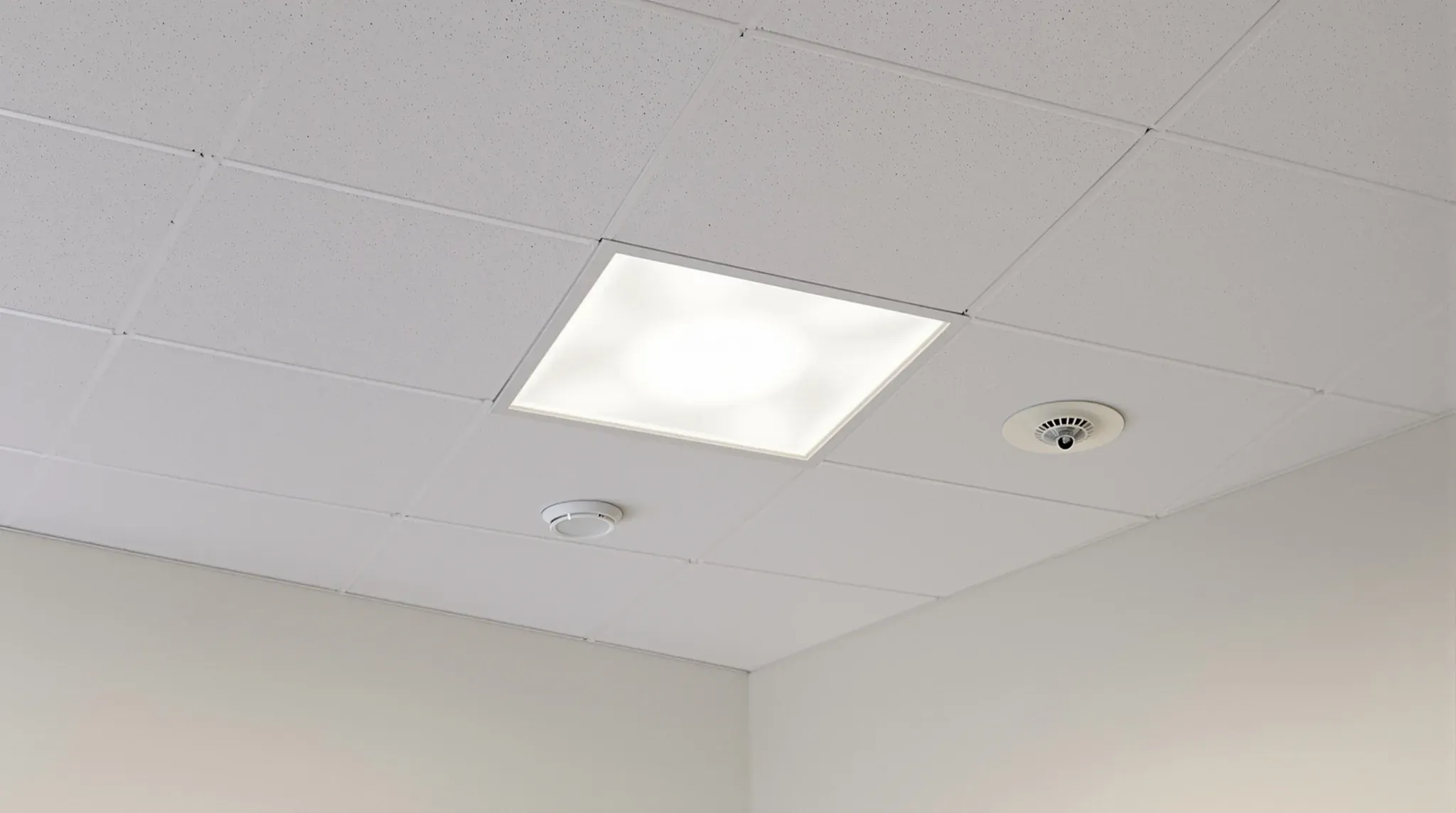
Fit-off is the final stage of a build, when power points, switches, lights, taps and sprinkler heads are fitted to the finished walls and ceilings. Each fitting connects to a cable or pipe left for it at rough-in, the earlier stage when cables, pipes and ducts are run through the open walls and ceiling space. Rough-in is also called first fix, and fit-off is also called second fix.
In a complete office fitout, fit-off comes near the end. It follows the walls, ceilings and painting in the order an office fitout is built. Testing, the defects list and the final clean come after it. A fitout programme or quote usually lists fit-off separately for each trade, such as electrical fit-off and plumbing fit-off. Each of those trades works at rough-in and returns for fit-off.
Rough-In vs Fit-Off
Rough-in work is hidden inside the walls and above the ceiling once they are closed. Fit-off work is the part people see and use in the finished office.
| Rough-in | Fit-off | |
|---|---|---|
| When it happens | While the wall frames and the ceiling space are still open | After the plasterboard walls and ceilings are finished and painted |
| A power point | The cable and the mounting box in the wall | The power point and its cover plate, connected to the cable |
| A tap | The hot and cold water pipes, capped inside the wall | The tap and basin, connected to those pipes |
| A sprinkler | The sprinkler pipe, ending at the ceiling line | The sprinkler head and its trim ring at the ceiling |
Each fitting's position is fixed at rough-in. A power point needs its cable and mounting box in the wall at the right height. Moving one later means cutting into the finished wall to move the cable, then patching and repainting the wall.
In a suspended ceiling, the light panels, air conditioning diffusers, smoke detectors and sprinkler heads all sit in the same grid of tiles. Their positions are set out on the ceiling plan before rough-in. Each cable and sprinkler pipe then ends where its fitting will sit, so a sprinkler head does not land where a light panel needs to go.
Water pipes are usually pressure tested at rough-in, while the walls are still open. A leak found at that stage can be fixed without cutting into a finished wall.
Carpentry is split the same way. Door frames and the backing for wall-mounted fittings go into the wall frames before the plasterboard, and doors and trims are fitted after painting.
Fit-Off by Trade
In a commercial fitout, each services trade fits off its own fittings:
- Electrical: power points, light switches and light fittings.
- Data and security: data outlets on wall plates, and card readers beside doors.
- Plumbing: taps, basins, sinks, toilets and boiling water units.
- Fire services: sprinkler heads at the ceiling and smoke detectors on their ceiling bases.
- Air conditioning: diffusers and return air grilles in the ceiling, and temperature sensors on the walls.
Many office buildings have their own fire contractor for the building's sprinkler and alarm system. In those buildings, that contractor often fits the sprinkler heads and smoke detectors inside each tenancy.
What Must Be Finished Before Fit-Off
Each fitting sits on a finished surface, so we programme each trade's fit-off to start once that surface is complete. For plasterboard walls and ceilings, that means flushing and painting. Flushing is the plastering of the joints and screw heads in plasterboard, so the surface is smooth enough to paint. It is also called setting. Walls under strong or low-angle light usually need a smoother flush finish than a storeroom wall.
A switch plate fitted before painting has to be painted around, or unscrewed and refitted once the paint is dry.
In kitchens and bathrooms, fit-off waits for the joinery and tiles. Sinks and taps go in once the benchtop and splashback are fixed. Toilets are fitted once the floor finish and any wall tiles are down. The power points above a kitchen bench usually go on after the splashback, because their plates sit on its face.
Sprinkler heads are never painted. A head with paint on it has to be replaced, because the paint can delay or stop it opening in a fire. In a plasterboard ceiling, the ceiling around each head is painted before the head is fitted. The plastic cap on a new head stays on until the ceiling work around it is finished.
Smoke detector heads usually go on once the dusty work is over. Fine dust from sanding plasterboard joints can reduce how well a detector senses smoke and shorten its working life. The bases and their cables can go in earlier.
Testing and Commissioning After Fit-Off
Once the fittings are in, each system is switched on, tested and adjusted until it works as designed. This stage is called commissioning.
The electrical testing checks the earthing, the insulation on the cables and that each circuit is wired correctly. In NSW, the person who tests the electrical work then submits a Certificate of Compliance for Electrical Work.
Each data cable is tested from its wall outlet back to the patch panel in the comms room. A cable that fails is repaired or replaced before the office's network equipment is connected.
The air conditioning is then balanced. Dampers in the ducts are adjusted until each room receives the airflow it was designed for.
The sprinkler and fire detection systems are usually tested once the heads and detectors are fitted.
Defects, Touch-Ups and the Final Clean
A defects list follows testing. It sets out, room by room, the items to fix before handover. Typical items are a crooked switch plate, a grille out of line with the ceiling grid or a scuff on new paint. The paint is then touched up wherever installing the plates, grilles and lights left marks.
The final clean removes construction dust from the ceilings, light fittings, grilles and glass. It also takes the protective film off new fittings and surfaces. The handover inspection then checks each room against the drawings and the defects list, with the test results ready.
We can measure your tenancy, quote the complete fitout and coordinate each trade from rough-in through fit-off, testing and the final clean.
📞 Call us on 1300 60 93 93