
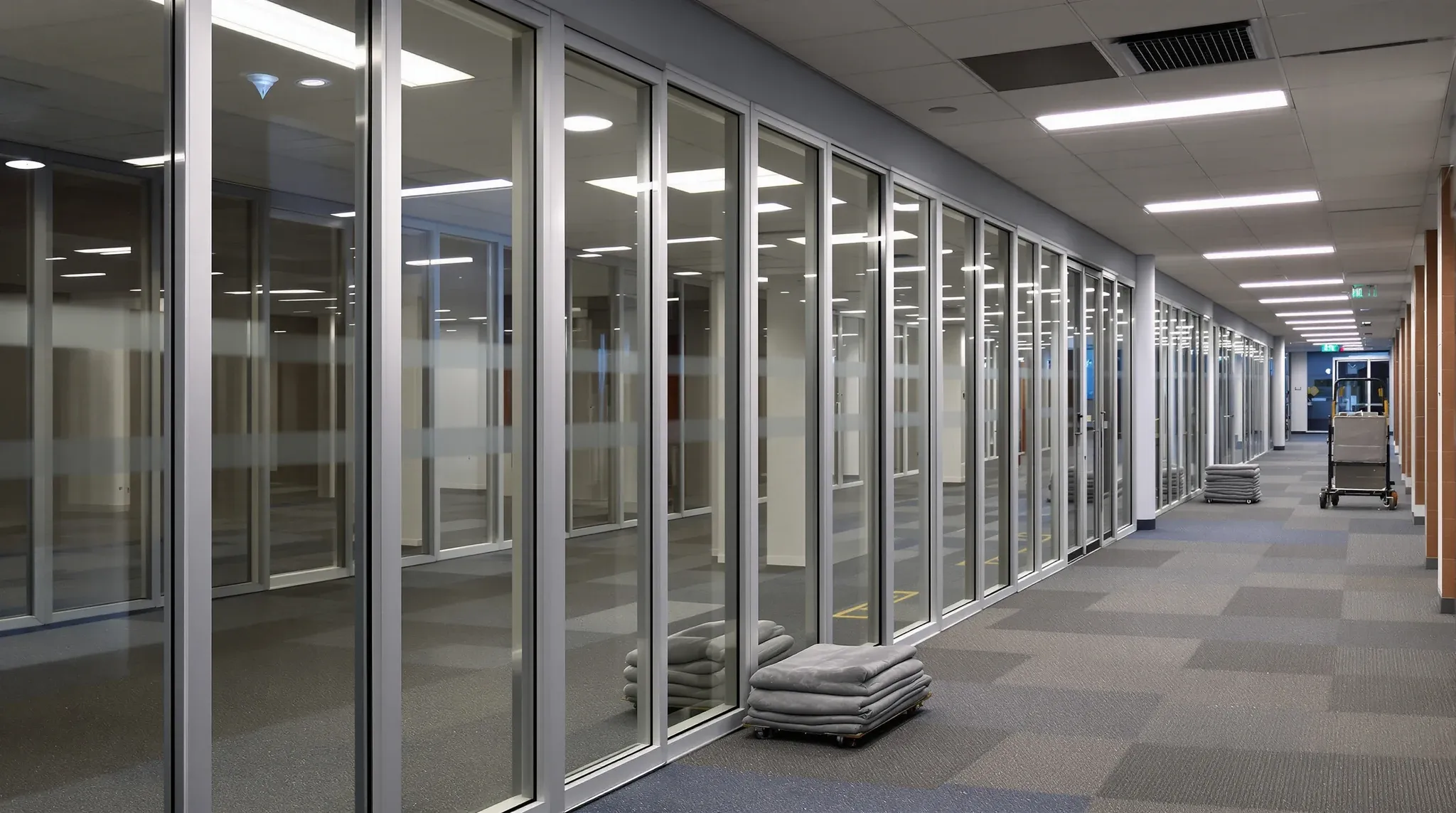
When a glass-fitted office reaches lease end, a sequence of decisions and deadlines begins that most tenants have not thought about in detail. The glass partitions that defined the workspace for years now need to be assessed, discussed with the landlord, and either removed or formally agreed to stay. That process does not happen in a single conversation, and it does not fit neatly into the final weeks of a lease. It follows a timeline that, when managed well, spreads across the final year of occupancy.
Understanding that timeline matters because compressed deadlines are where costs escalate and disputes begin. A tenant who knows what needs to happen at each stage, and when, can manage the exit far more effectively than one who discovers the requirements as they arise.
The Timeline Starts Earlier Than Most Tenants Realise
Most commercial leases require the tenant to give notice of their intention to vacate, and that notice period is usually six to twelve months before lease expiry. The notice itself is a formality, but it triggers a practical sequence that demands attention well before the physical work begins.
For a glass-fitted office, the timeline effectively starts when the tenant decides not to renew or when renewal negotiations fail. At that point, the make good obligation becomes a live issue. The glass partitions that were an asset during the lease now represent a scope item that needs to be quantified, discussed, and resolved.
Tenants who delay engagement beyond the notice point lose negotiating leverage. Starting the planning process early is as important for the exit as it was for the original fitout. The decisions that need to be made about glass at lease end are not simple, and they require time for inspections, conversations, and potentially formal agreements that all need to be in place before work commences.
Twelve to Nine Months Out: Reviewing the Lease and Glass Scope
The first practical step is to pull out the lease and read the make good clause carefully. Specifically, tenants need to understand whether the glass partitions are captured by the clause, whether any exemptions apply, and whether the condition report from the start of the lease includes or excludes the glass.
At this stage, it is worth engaging someone with experience in commercial make goods to do a site walk-through. The purpose is not to produce a detailed scope yet, but to get a preliminary understanding of what the glass-related make good will involve. Is the glass in good condition? Is the system a type that has retention value? Are there complications like structural connections, integrated services, or fire-rated interfaces that will affect the removal scope?
This preliminary assessment sets up the conversation with the landlord that follows. Going into that conversation with a realistic understanding of the glass scope, the likely cost, and the potential for negotiation puts the tenant in a stronger position than arriving with nothing but the assumption that the landlord will be reasonable.
Six Months Out: Engaging the Landlord and Scoping the Work
Six months before lease expiry is the ideal window to engage formally with the landlord or managing agent about the make good, including the glass. The conversation should cover the landlord’s expectations for the space, whether they have an incoming tenant, and whether glass retention is something they would consider.
If the landlord wants the glass removed, this is the point to get a formal scope of works prepared. The scope should cover not just the glass removal itself but the associated restoration work: floor repairs where channels were fixed, ceiling tile replacement where the partition met the grid, and wall patching where glass met plasterboard. These consequential items are often a larger cost than the glass removal itself.
If the landlord is open to retention, the conversation needs to result in a written agreement that specifies exactly what stays, what condition it needs to be in, and whether the tenant has any obligation to repair or refurbish the glass before handover. Verbal agreements about glass retention have a tendency to unravel when the landlord’s property manager changes or when the incoming tenant has different requirements from what was originally discussed.
Three Months Out: Contractor Engagement and Building Approvals
With the scope established and the landlord’s position clear, the next phase involves engaging a contractor and obtaining the necessary building management approvals. For glass-fitted offices, this phase takes longer than many tenants expect because of the coordination involved.
The contractor needs to inspect the glass system, confirm the removal methodology, and provide a programme that fits within the building’s access and working hour restrictions. Timelines in fitout and make good projects tend to slip at predictable stages, and the building approval process is one of them. Submitting the scope of works, safety plans, and contractor details to building management takes time, and most buildings require two to four weeks for approval before work can begin.
This is also the stage where the tenant’s relocation logistics need to align with the make good programme. Furniture and equipment need to be moved out before the glass removal can start. IT infrastructure needs to be decommissioned. Staff need to know when their last day in the premises will be and where they are going. All of this needs to happen in a coordinated sequence that allows the make good to begin on time.
Final Weeks: Physical Work, Inspections, and Handover
The physical work phase for a glass-fitted make good typically runs three to six weeks depending on the tenancy size and complexity. Glass removal usually happens in the first week, once the space has been cleared of furniture and loose items. This allows the floor, ceiling, and surface restoration work to proceed across the full tenancy without the glass system constraining access or creating a safety risk.
During the physical work, the landlord or their representative will typically conduct one or more inspections. The first inspection usually happens after the strip-out is complete, to confirm that everything has been removed and to identify any issues before restoration work begins. A second inspection happens at the end, to confirm the space meets the required standard before handover.
The final inspection is the critical milestone. If the landlord identifies deficiencies, the tenant has a limited window to rectify them before lease expiry. Common deficiencies in glass-related make goods include incomplete floor repair where channels were removed, mismatched or damaged ceiling tiles in areas adjacent to former glass partitions, and residual adhesive or sealant on surfaces that were in contact with the glass system.
Handover itself is typically a formal event: the tenant returns the keys, both parties sign off on the condition of the premises, and the bond or bank guarantee is released once the landlord confirms the make good is satisfactory. Where deficiencies remain unresolved at handover, the landlord typically retains part or all of the bond to cover rectification costs.
What Happens When the Timeline Slips
Timeline slippage in a glass-fitted make good creates a cascade of consequences. If the glass removal starts late, the restoration work behind it is compressed. If the restoration is rushed, the quality suffers and the final inspection is more likely to identify deficiencies. If deficiencies need to be rectified, the handover is delayed, and the tenant may be liable for holding-over charges at a rate significantly above the standard rent.
The most common causes of slippage are late engagement with the landlord, delayed contractor procurement, and underestimation of the building approval timeline. For glass-fitted tenancies, an additional cause is the discovery during removal of complications that were not anticipated, such as structural fixings that are harder to remove than expected, or fire-rated interfaces that require specialist trades to address.
Experienced fitout teams anticipate common glass partition complications and build contingency into the programme. This does not eliminate risk, but it reduces the likelihood that a single unexpected issue derails the entire timeline. Tenants managing the process themselves, or using a contractor without commercial glass experience, are more exposed to these risks.
How Glass Complexity Affects Each Stage
Not all glass fitouts create the same make good complexity. A simple configuration of framed glass meeting rooms with standard hardware is relatively straightforward to scope, remove, and restore. A complex configuration involving frameless panels, structural silicone connections, integrated blinds, automated doors, and acoustic interlayers requires more specialist assessment, more careful removal, and more extensive restoration work.
The system type also affects the landlord negotiation. High-quality systems from recognised manufacturers with ongoing parts availability are more likely to attract a retention offer than budget systems with proprietary components that cannot be serviced. If the glass system is a genuine asset, making that case to the landlord with supporting documentation from the manufacturer or installer strengthens the negotiation.
Planning a smooth relocation requires understanding how the glass complexity affects the overall exit timeline. A simple glass make good might add two weeks to a standard programme. A complex one might add four to six weeks, which means the entire exit timeline needs to shift earlier to accommodate the additional work.
If your lease is ending and you have glass partitions to deal with, we can assess the scope, advise on timing, and manage the full defit and make good from planning through to handover.
Call us on 1300 60 93 93