
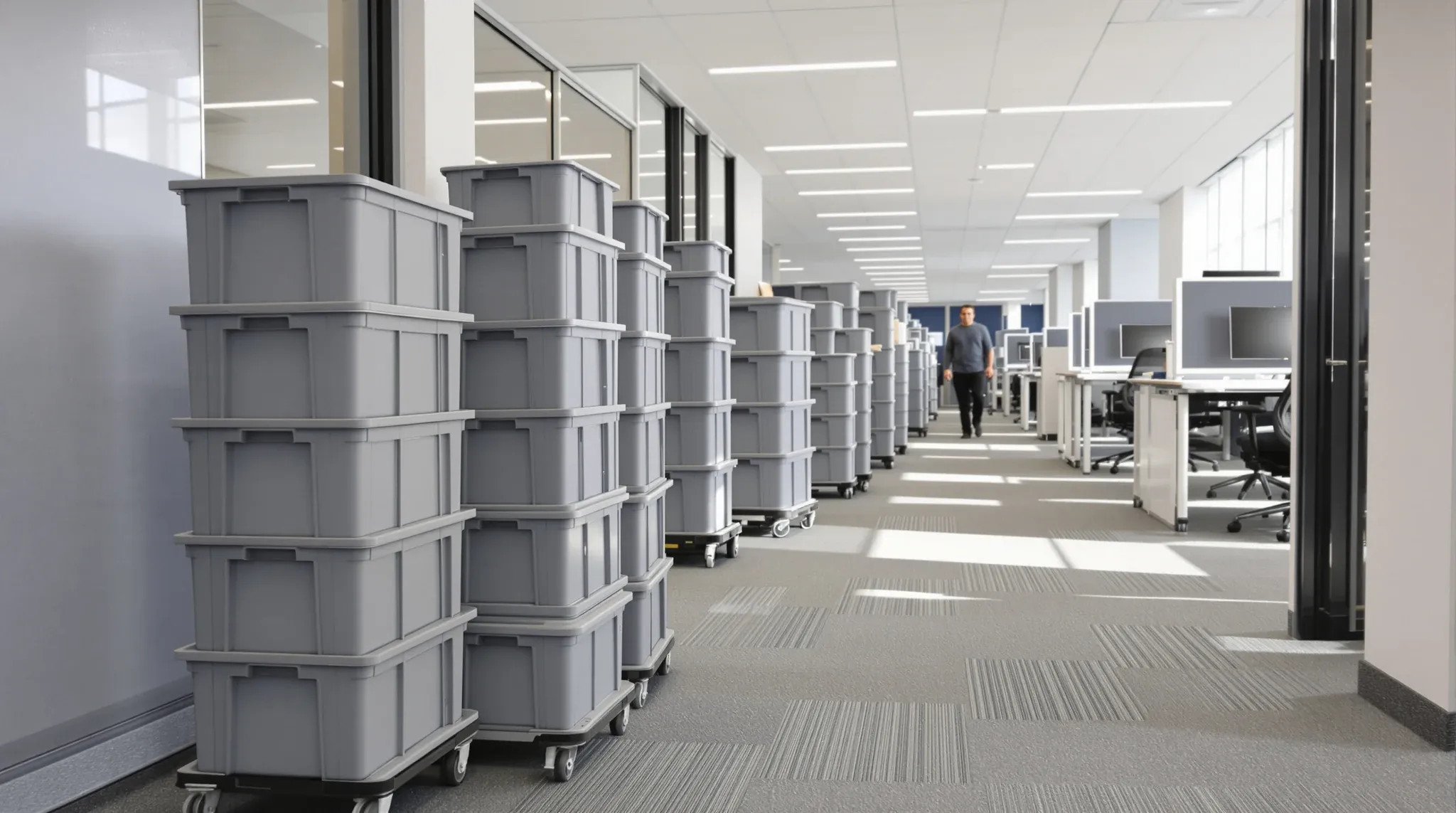
An office relocation involves more moving parts than most businesses anticipate until they are in the middle of one. The fitout of the new space has to be designed, approved, and built. The old space has to be vacated and restored. The staff have to move without losing more than a day or two of productive work. The IT infrastructure has to transfer without data loss or extended downtime. And all of this has to happen within a window defined by two lease dates that may not align as neatly as the business plan assumed. The businesses that relocate well are the ones that treat the move as a project with its own timeline, dependencies, and decision points rather than as something that happens naturally once the new lease is signed.
This article covers how to plan an office relocation and fitout in Sydney so that the transition is controlled, the costs are predictable, and the business keeps operating through the changeover.
Why Relocation Timing Is a Commercial Decision, Not Just a Logistics Problem
The timing of an office relocation is determined by the interaction between the old lease expiry, the new lease commencement, the fitout programme, and the business’s operational calendar. Most businesses focus on the new lease date and work backwards, but the critical constraint is often the old lease because the make-good obligations, the notice period, and the timing of the final rent payment create a fixed deadline that the entire programme has to land against.
Starting the planning process too late relative to the old lease expiry compresses the programme for everything else. The fitout design gets rushed. The approval process with the new landlord gets squeezed. The procurement of long-lead items gets delayed because the decisions they depend on were made too late. Each compression creates cost: expedited freight, overtime labour, provisional decisions that have to be revised, and compromise on finishes or systems that the business would have specified differently with more time. Starting the planning early enough to run the programme at a normal pace is one of the most effective things a relocating business can do, and it costs nothing compared to the premiums that late starts generate.
Lease Overlap: How Much Is Enough
Almost every office relocation requires a period where the business is paying rent on both the old and the new space simultaneously. This overlap period allows the new fitout to be completed while the business continues operating from the old office. The question is how long the overlap needs to be, and the answer depends on the scope of the new fitout, the make-good requirements at the old office, and how much operational disruption the business can absorb.
A minimal overlap of two to four weeks is possible when the new space requires only light work and the old space has modest make-good obligations. A more typical overlap for a full fitout is six to ten weeks, allowing time for the fitout to be completed, defects to be addressed, IT infrastructure to be installed and tested, and the physical move to happen without rushing. Businesses that try to minimise the overlap to reduce double-rent exposure often find that the savings are consumed by the additional costs that a compressed programme generates: premium labour rates, expedited deliveries, and the productivity loss from moving into a space that is not quite finished. The overlap period is an investment in a controlled transition, not wasted cost, and the amount of overlap should be based on what the programme actually needs rather than on a desire to minimise the number on the rent schedule.
Sequencing the Fitout to Land on the Move Date
The fitout programme for the new space needs to be built around the move date, which is typically determined by the old lease expiry minus the make-good period. Working backwards from the move date, the programme needs to allow for: the physical move itself, IT commissioning and testing, defects rectification, the fitout construction, landlord approval, and the design process. Each of these phases has a minimum duration that cannot be compressed without consequence, and the total duration determines when the design process needs to start.
In Sydney, landlord approval for a commercial fitout typically takes two to four weeks depending on the building and the complexity of the work. The construction phase for a full fitout of a 200 to 400 square metre office typically takes four to six weeks. IT commissioning takes one to two weeks if planned in advance but can take longer if the infrastructure decisions are made late. Defects rectification takes three to five days in a well-run project. The move itself takes one to three days depending on the size of the business. These durations are not arbitrary. They reflect the practical reality of how fitout projects run in Sydney’s commercial buildings, and a programme that does not allow for them will either run late or produce a compromised result.
Staff Transition and the Communication Plan
The people who work in the office are affected by the relocation in ways that extend beyond the physical move. They need to know what is happening, when it is happening, and what it means for their daily work during the transition. A communication plan that keeps staff informed without overwhelming them reduces anxiety, manages expectations, and prevents the informal speculation that fills any information vacuum during a period of change.
Understanding what a full fitout involves helps staff contextualise the timeline and the decisions being made. The communication does not need to include every detail of the fitout programme, but it should cover the key dates: when the new space will be ready, when the move will happen, what the seating arrangements will be in the new office, and what the staff need to do to prepare. The businesses that manage staff transition best are the ones that communicate early and honestly about what the relocation involves rather than presenting it as a seamless event that requires no adjustment.
IT and Data: The Infrastructure That Cannot Be Late
IT infrastructure is the most time-sensitive element of an office relocation because it has the longest lead time for the components that cannot be substituted and the lowest tolerance for delay. Internet connectivity at the new office needs to be ordered weeks or months in advance depending on the carrier and the building. Server infrastructure needs to be planned for the new space and the migration sequenced to minimise downtime. Phone systems, whether cloud-based or on-premise, need to be configured for the new address and tested before the move.
The interaction between the fitout and the IT installation is critical because the IT infrastructure needs physical elements that the fitout provides: data cabling routes, power to the comms room, adequate cooling for any on-site equipment, and patch panel locations that match the desk layout. If the fitout and the IT are planned separately, the data points may not align with the furniture layout, the comms room may not have adequate power or cooling, and the cabling routes may conflict with partition walls or ceiling systems. A structured planning approach that includes IT as a parallel workstream from the start prevents the last-minute discoveries that cause the most disruption and the most cost during the final week before the move.
Operational Continuity During the Changeover Week
The changeover week, when the business physically moves from the old office to the new one, is the period of highest risk for operational disruption. Phones may be unavailable for a period. Files may be in transit. Desks may not be fully set up on day one. Staff may be disoriented in the new layout. The objective is not to eliminate all disruption, which is unrealistic, but to contain it within a defined period and ensure that the core business functions, client communication, financial transactions, and time-sensitive work, continue without interruption.
Planning the changeover week means identifying the critical functions that cannot tolerate downtime and ensuring that those functions have continuity arrangements in place. This might mean maintaining phone forwarding from the old number during the transition. It might mean ensuring that key staff have remote access to systems during the move period. It might mean scheduling the physical move over a weekend so that the office is functional, even if not fully settled, by Monday morning. The specific arrangements depend on the business, but the principle is the same: identify what cannot fail, plan around it, and let the less critical elements settle over the first week rather than demanding that everything works perfectly from the moment the doors open.
What to Resolve Before You Leave the Old Office
The old office requires attention during the relocation that is easy to overlook when the focus is on the new space. The make-good obligations need to be understood, scoped, and scheduled before the lease expires. Any items that the business intends to take to the new office, furniture, IT equipment, signage, need to be identified and excluded from the make-good scope. Items that are being left behind or disposed of need to be removed before the make-good work begins.
The make-good itself needs to be completed within the period allowed by the lease, and the landlord or their representative will inspect the space before releasing the tenant from their obligations. Businesses that leave the make-good planning until after the move frequently discover that the work takes longer than expected, the cost is higher than budgeted, and the landlord’s expectations do not align with what the tenant assumed. Addressing the make-good early in the relocation planning process, ideally at the same time as the new fitout design, prevents these late-stage surprises and allows the make-good cost to be factored into the overall relocation budget rather than emerging as an unplanned expense at the end.
We deliver complete office fitouts and defit and make-good services for relocating businesses in Sydney. If you are planning a move and want the fitout and the transition managed together, we can help.
📞 Call us on 1300 60 93 93