
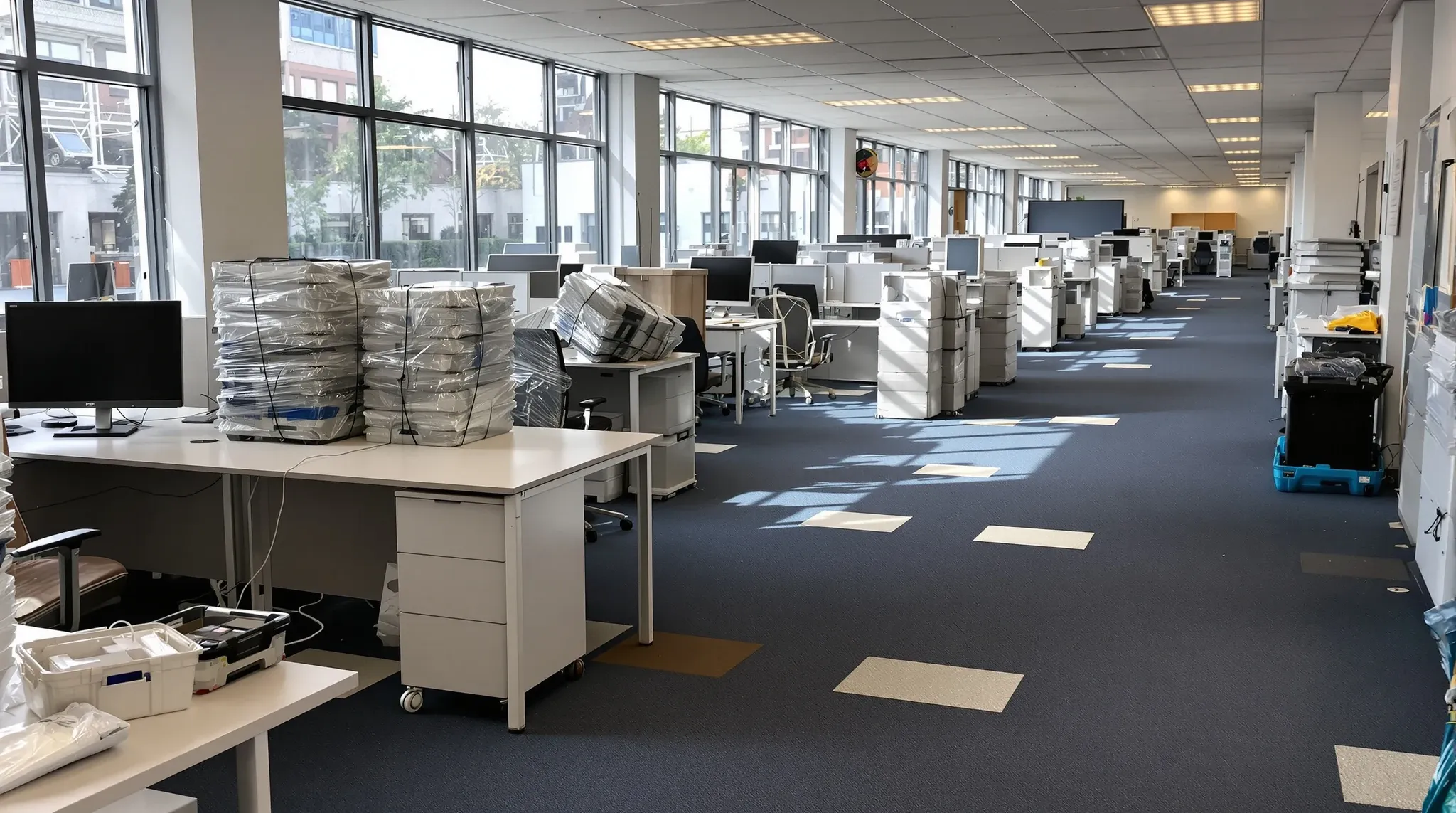
Relocating an office is one of the most complex operational undertakings a business can face. It combines property decisions, fitout planning, IT infrastructure migration, staff management, and lease obligations into a single project that typically needs to happen within a tight window. The businesses that get it right plan methodically and start early. The businesses that struggle make the same mistakes that have tripped up tenants for decades, and most of those mistakes are entirely preventable with better planning and earlier attention to the details that matter most.
These are the five most common mistakes that businesses make when relocating to a new office, along with two additional pitfalls that experienced operators know to watch for. Each one has practical consequences that affect cost, timeline, and the team’s ability to function during and after the move.
Starting the Fitout Too Late
The most common relocation mistake is not allowing enough time for the new office fitout before the current lease expires. Tenants frequently underestimate how long a commercial fitout takes from design approval to handover, and the result is a compressed programme that either delays the move-in date or forces compromises in the fitout quality to meet an immovable deadline.
A typical office fitout for a small to medium tenancy takes eight to twelve weeks from the start of construction to handover, plus four to six weeks of design and documentation before construction begins. Adding time for landlord approval, building management coordination, and council approvals where required, the total programme from first design meeting to move-in day is often sixteen to twenty weeks or more. Tenants who start the fitout process six months before their current lease expires often find themselves running out of time.
The practical solution is to begin the fitout planning process at least nine to twelve months before the intended move date. This allows time for property search, lease negotiation, fitout design, landlord approval, construction, and a buffer for the unexpected delays that inevitably arise. Starting the planning process early is the single most effective thing a relocating business can do to avoid programme pressure and the compromises it forces.
Overlapping Lease Costs Without Planning for Them
Most office relocations involve a period where the business is paying rent on both the old and new premises simultaneously. The new lease typically starts before the fitout is complete, which means rent is running on the new space before the team can occupy it. At the same time, the current lease continues until its expiry date, regardless of when the team physically moves out. This overlap period can last several weeks to several months, depending on the fitout programme and the alignment of lease dates.
The mistake is not acknowledging this overlap in the relocation budget. Businesses that plan for the overlap as a known cost can manage it by negotiating a rent-free fitout period on the new lease, aligning the move date as closely as possible with the old lease expiry, and budgeting the double rent as a project cost rather than being surprised by it when the invoices arrive. Businesses that do not plan for the overlap often face unbudgeted costs that strain the relocation budget and create pressure to rush the fitout to minimise the overlap period.
Negotiating a fitout incentive or rent-free period with the new landlord is the most effective way to reduce the financial impact of the overlap. Most landlords expect to provide a fitout period and factor it into the lease economics. The length of the rent-free period is negotiable and depends on the lease term, the tenant’s covenant strength, and the market conditions at the time. Securing the longest possible fitout period reduces the overlap cost and gives the fitout programme more breathing room to deliver a quality result.
Underestimating the IT and Communications Migration
The IT migration is frequently the most technically complex and time-sensitive element of an office relocation, yet it is often one of the last items to receive detailed planning attention. Moving the phone system, internet connection, data network, server infrastructure, and cloud services to a new premises involves coordinating with multiple service providers, testing systems in the new location, and managing a cutover that minimises downtime for the business.
The lead times for telecommunications services are particularly long and frequently catch businesses off guard. Ordering a new internet connection, setting up the building distribution frame connection, and provisioning phone services at the new address can take four to eight weeks depending on the provider and the building’s existing infrastructure. If these orders are not placed early enough, the IT team faces a situation where the fitout is complete and the furniture is installed, but the business cannot operate because the phones and internet are not connected.
The IT migration plan should be developed in parallel with the fitout design, not sequentially after it. The comms room layout, data cabling specification, and network configuration in the new office all need to align with the IT team’s requirements, and these requirements influence the fitout design. Electrical and data cabling in the new office should be specified in consultation with the IT team to ensure the infrastructure supports the migration plan and the ongoing operational requirements.
Poor Staff Communication and Change Management
A relocation affects every person in the business, yet many relocations are managed primarily as a property and construction project with minimal attention to the human side of the change. Staff who are not informed about the timeline, the new location, the new workspace configuration, and how their daily routines will change develop anxiety, resistance, and low morale that can persist well beyond the move-in date.
The most common complaint from staff during a poorly communicated relocation is uncertainty. They do not know when they are moving, what their new workspace will look like, whether they will still sit near their team, or how the commute to the new location will affect their daily schedule. This uncertainty is more damaging to morale and productivity than any specific negative aspect of the move itself, because people can adapt to known challenges far more easily than they can manage unknown ones.
Effective relocation communication starts early and continues through every phase of the project. Announce the move as soon as the decision is confirmed. Share the timeline and key milestones as they are established. Show the new space in person or through design visualisations when available. Explain the desk configuration and any changes to work settings. Address commute concerns directly, including public transport options and any flexible work adjustments the business will offer. And provide a clear point of contact for questions throughout the process. Staff who feel informed and involved arrive at the new office with positive expectations rather than unresolved anxiety.
Leaving Make Good Planning Until the End
The make good obligation on the outgoing lease is a significant cost that many relocating businesses leave to the last moment. Make good works, which involve returning the old office to the condition specified in the lease, need to be completed before the lease expires. If the make good planning starts after the team has moved to the new office, the remaining time before lease expiry may be insufficient to complete the works, leading to either rushed work at premium cost or a holdover period that extends the rent on the old space beyond the intended expiry date.
The make good scope should be assessed and budgeted as early as possible in the relocation planning process. A pre-make good assessment of the current office identifies what work is required, estimates the cost, and determines the time needed for completion. This information feeds into the relocation budget and timeline, ensuring that the make good is planned as a coordinated part of the relocation rather than an afterthought that creates financial and programme pressure at the end.
In some cases, the landlord may accept a negotiated make good payment in lieu of physical works, which eliminates the need for construction activity in the old space entirely. This option is worth exploring early in the relocation planning, as it can simplify the programme significantly and remove the risk of make good works running over time. Understanding make good obligations before the relocation starts prevents the outgoing lease from becoming a financial burden that overshadows the excitement of moving into the new office.
Choosing the Wrong-Sized Space
Relocating businesses sometimes select a new space based on current headcount without adequately considering growth projections, hybrid attendance patterns, or the actual space utilisation of their current office. The result is either a space that is too large and burdens the business with unnecessary rent, or a space that is too small and requires a further relocation or expansion within the first few years of the lease.
The right-sizing exercise should consider the realistic peak attendance rather than total headcount, particularly for businesses with hybrid work arrangements. It should also consider the space allocation per person that the team actually needs, not just the number of desks, but the meeting rooms, collaborative spaces, breakout areas, and utility zones that make the office functional. A space that accommodates the right number of desks but does not have enough meeting rooms or breakout capacity will feel cramped and underserviced from day one.
Working with an experienced fitout team during the space selection process helps tenants assess whether a particular premises can accommodate their brief before committing to the lease. A test fit, where the proposed layout is overlaid on the floor plan to confirm that all the required elements fit, reveals whether the space works before the lease is signed rather than after. Understanding what experienced fitout teams look for during assessment helps tenants evaluate prospective spaces with greater confidence.
Not Coordinating the Physical Move
The physical relocation of furniture, equipment, files, and personal belongings from the old office to the new is a logistically complex operation that requires professional coordination. Businesses that try to manage the move informally, using staff cars and borrowed utes, typically find that the process takes far longer than expected, equipment is damaged in transit, and the first day in the new office is chaotic rather than productive.
A professional office relocation company manages the packing, labelling, transport, and unpacking of all items, following a detailed move plan that specifies where every item goes in the new space. The move is typically scheduled over a weekend so that the team leaves the old office on Friday afternoon and arrives at the new office on Monday morning with everything in place. This requires advance planning, including labelling every item and destination, confirming building access for the removal trucks at both ends, and coordinating with the building management at both sites.
The connection between the fitout completion and the physical move needs to be seamless. The new office should be fully cleaned, the furniture installed, the technology connected, and all services operational before the move happens. A one-day gap between fitout handover and move day provides a buffer for final cleaning, IT commissioning, and resolution of any snags that the fitout contractor needs to address before the team arrives.
If you are planning an office relocation and want to avoid these common mistakes, we can help coordinate the fitout, manage the programme, and ensure the move happens on time and on budget.
Call us on 1300 60 93 93