
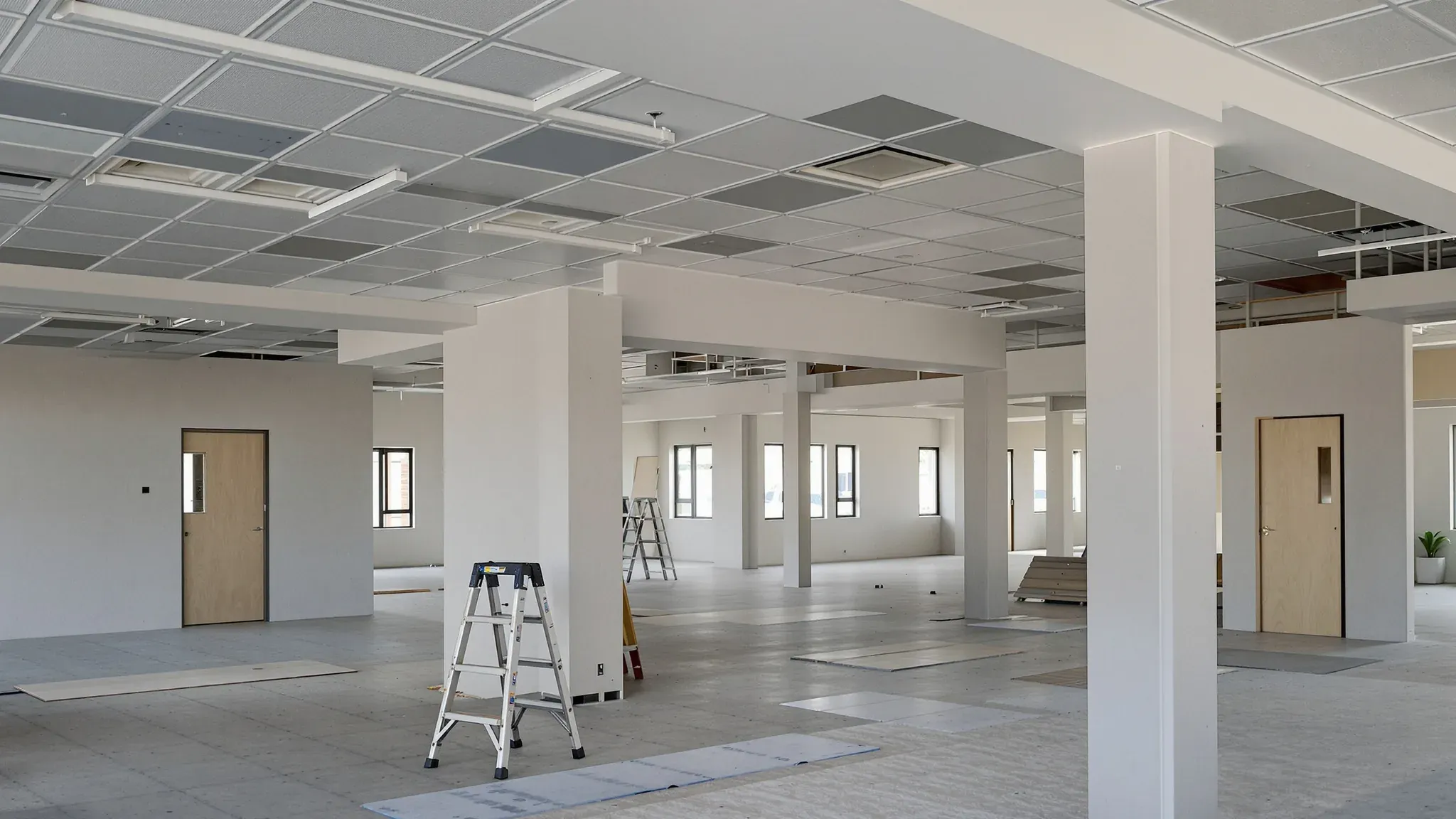
An office fitout over Christmas is planned around the weeks the office is empty. The noisiest and dustiest work can be done while staff are away, but much of the construction industry and many of its suppliers stop over the same weeks, so the break holds fewer working days than the calendar suggests.
On site, that means the approvals, selections and orders are finished before staff leave in December. The break then carries the strip out and the work inside the walls and above the ceiling, and the glass, finishes and fit-off follow once the office reopens.
Counting the Working Days in the Break
In 2026, Christmas Day falls on a Friday and Boxing Day on a Saturday, so NSW adds a public holiday on Monday 28 December (opens in a new tab). New Year's Day is Friday 1 January 2027.
Many construction workers also work to a rostered day off (RDO) calendar, which fixes their days off for the year in advance. The 2026 NSW calendars published by the construction, electrical and plumbing unions all put RDOs on 29, 30 and 31 December. Trades who work to them stop on Christmas Day and are not due back before Monday 4 January.
If the office closes after Friday 18 December and reopens on Monday 11 January, those trades have up to nine working days inside the break, four before Christmas and five in the first week of January, depending on the 2027 calendars. If the office reopens on Monday 4 January, they have four. Last season's calendars also marked the first full week of January as optional annual leave, so some crews may not be back until the second week.
Not every trade works to those calendars, so when we book each trade we confirm the days it will be on site. Saturdays can add time where the building allows weekend work, and we ask for them when we book access.
What Fits in the Break and What Runs into January
A single job, such as a new suspended ceiling over one area or one new meeting room, usually takes a few days. That can fit inside the break if the materials are on site before it starts. A complete fitout usually takes 4 to 8 weeks, which is longer than the working days the break holds.
When we build a complete office fitout across the break, we put the noisy and dusty work into the days staff are away and leave the quieter work for January. In the break, that usually means:
- strip out of the old walls, ceilings and floor coverings, and any core holes cut through the slab
- new power, data, air conditioning ducts and sprinkler changes above the ceiling
- steel stud framing, insulation and plasterboard for the new walls
- setting and sanding the plasterboard joints (filling and smoothing them before paint), which raises fine dust
- the new ceiling grid, and first coats of paint where the days allow
After staff return, the work that is quieter or depends on finished walls follows. That covers glass fronts and doors, carpet tiles, the fit-off (fixing power points, lights and data outlets onto the cabling run earlier), final paint, balancing the air conditioning to the new rooms, and defects. Where staff are back at their desks while this runs, we stage the works around staff by zone and keep any remaining noisy items for after hours.
The break is also the one time the whole floor is clear at once. On a refurbishment where the walls are staying, work that touches every desk, such as new carpet tiles across the floor or new power and data to every workstation, can be held for the break even if smaller items start earlier in zones.
Approvals Settled Before Staff Leave
Building management approves a fitout before work starts. The guide one large landlord gives its office tenants requires whole-floor drawings plus mechanical, fire, hydraulic and electrical drawings, which the building's own consultants review before written approval is given. That review runs on the building's timetable, so for work over Christmas we lodge the drawings early enough for written approval to be in hand before the first day on site.
Depending on the scope and the building, the works may need a complying development certificate before they start, and an occupation certificate from the certifier before staff use the new space. NSW planning guidance lists internal alterations such as fitouts among the work that can be approved as complying development. Where the whole job finishes inside the break, we book the certifier's final inspection for before the first working day in January. Where staff return to part of the floor while work continues, the certifier confirms what is needed before they move back in.
In a strata building, approvals and access often run through the strata manager. Some strata management offices close from the week before Christmas until early January with an emergency line only, so those approvals and access arrangements are confirmed before they close.
Orders Placed Before Suppliers Close
Many manufacturers and suppliers close from the week before Christmas into January. Last season, one major glass manufacturer closed its offices and production sites on Friday 19 December and reopened on Monday 12 January. An aluminium powder coater (the finisher that colours aluminium frames) asked for orders by the end of November to finish them before its own break.
Anything made or coloured to order, such as door frames, glass and light fittings or finishes not held in stock, is ordered before those cut-offs. We confirm the long-lead items with each supplier when the selections are signed off. Materials are delivered before the break and stored inside the tenancy, and one landlord's guide asks for deliveries to go straight from the dock by goods lift to a stacking area within the fitout.
Toughened glass cannot be cut or drilled once it has been toughened, so each glass panel is made to sizes we measure on site. Where the walls and ceiling around a glass front are being built in the break, the glass cannot be measured until they are up, and with glass plants often closed into January, it goes in after staff return. Where a glass front goes into an opening that is not changing, we can measure it before the break and have it made while the plant is still running.
Lifts, Docks and Access over the Holidays
For a corporate fitout on one floor of a multi-tenant tower, the building's rules still apply while your staff are away. One large landlord's rules bar drilling, demolition, core holing and cutting between 7.30am and 6.30pm on weekdays. Some neighbouring businesses close over the break and others keep trading, so we ask building management which floors around ours will be occupied and whether noisy work can run in the day.
Contractor access, goods lift time and loading dock time are all booked through building management or security, and the same guide says access may be refused if a contractor's attendance has not been advised in advance. Before staff leave in December, we book each day the trades will be on site, the goods lift and loading dock for every delivery and waste removal, and access for any weekend work.
In many office buildings, the air conditioning runs on business days only. One landlord's tenant information lists its hours as 8am to 6pm Monday to Friday, excluding public holidays, with air outside those hours available at extra cost. For any weekend or public holiday work in summer, we book the air conditioning for the floor at the same time as access.
Cutting plasterboard and taking down old walls raises dust that can set off smoke detectors, so they are isolated or covered while that work runs. That landlord's fitout guide does not allow any area to be left without its fire systems overnight or over weekends and public holidays. We book isolations for each working day and have them reinstated before the site closes, including on the last day before Christmas.
Power shutdowns are arranged the same way. Where the electrician needs to isolate the floor's switchboard to connect new circuits, building management is told beforehand, and we agree the time with your IT provider so equipment in the comms room is shut down properly first.
The tenancy is empty but holds new materials and the business's own equipment. Keys and access passes for the trades are signed out through building management and returned when the works finish, and we agree with you who holds the office keys and alarm codes over the break.
Working Back from the First Day in January
We set the programme from the first day staff are back at their desks, then work back through the break. On site, the dates run in this order, latest first:
- the first working day in January, with the IT cutover tested before staff arrive
- the certifier's final inspection and a clean of the finished areas
- each day of the break a trade is working, with the lift, dock and fire isolations booked to match
- the last day in December, when desks in the work area are cleared and anything staying is covered or moved (furniture moving sits outside our build scope)
Before the break, the decisions run back from there:
- materials delivered and stored on site
- orders placed before each supplier's last order date, which last season fell as early as the end of November
- drawings approved by building management and, where needed, the certifier
- glass, ceilings and finishes selected and signed off
Where selections are settled after the suppliers' cut-offs, the break can still carry the strip out and the work above the ceiling. The glass and finishes are then ordered when suppliers reopen in January and installed once they arrive.
For an office fitout over Christmas, we sequence the strip out, framing and ceiling work into the days the trades are on site while your staff are away.
📞 Call us on 1300 60 93 93